J.R.R. Tolkien & his works » Tolkien’s fiction and scholarly work » Books written by J.R.R. Tolkien » The Lay of Aotrou and Itroun
The Lay of Aotrou and Itroun
By J.R.R. Tolkien; edited by Verlyn Flieger, with a note on the text by Christopher Tolkien (2016)
A Lord accepts a magical remedy without knowing its price. His wife receives the happiness he wanted, then bears the consequences of a bargain kept from her. Tolkien’s Breton lay and its earlier versions make a compact, unsettling companion to his other retellings of older legends.
Review
The first thing I would put beside this book is a copy of The Welsh Review for December 1945. Tolkien’s poem appeared there during his lifetime, many years before it became a HarperCollins hardback. Verlyn Flieger’s 2016 edition brings that published poem together with the two ‘Corrigan’ poems, a fragment, manuscript material and comparisons with its Breton sources. Christopher Tolkien supplies the note explaining the surviving texts. It is a small book with a much longer history inside it.1
A bargain without a price
Aotrou and Itroun are the Breton words for Lord and Lady. At the beginning, the Lord is frightened by the prospect of dying without an heir. His thoughts turn to empty halls, an untended grave and strangers inheriting the house. Tolkien makes that fear concrete before introducing the witch. The trouble begins in a recognisable human anxiety: the wish to keep a family and a place from disappearing.
The witch gives him a potion and refuses his gold. She will ask for payment after the remedy has worked. That postponement is the danger. Aotrou accepts the help while leaving its price undefined. When twins are born, the happiness is real; it is also happiness obtained through a bargain his wife has not been allowed to understand. The poem keeps returning to the difference between what a person wants and what he is prepared to acknowledge about getting it.2
This becomes especially uncomfortable at the feast. Aotrou speaks about renewed love, hope and prayer while the potion is hidden in his wife’s wine. The ceremony looks like a celebration of their marriage. We know something Itroun does not. Her pleasure in her husband and her hope for children are genuine, but they exist within a scene he has arranged around a concealed act. The poem does not need an explanation from the narrator to make that secrecy felt.3
The wife who has been kept outside the story
After the birth, Itroun wants her husband to stay with her. She does mention a desire for venison and clear water, yet twice asks him not to leave. He rides out all the same. The hunt carries him through Broceliande to a fountain, where a beautiful fairy demands his love. She is the being whose help he accepted. At this meeting he tries to deny knowing her.
The demand makes the original bargain impossible to contain. To pay would mean betraying the marriage for whose future he sought help. To refuse brings the threat of death. There is courage in his refusal, but the earlier deception remains part of the story. I would resist reducing the poem to an uncomplicated portrait of a good husband defeating temptation. Tolkien has made his position more difficult than that.
The later scenes belong increasingly to Itroun. She asks when her husband will return; the household answers around the truth. Bells sound, people weep, and she is told that a stranger has died. Preparing to go to church, she asks which clothes to wear and is persuaded into mourning dress. These ordinary questions make the concealment painful. She is the person most affected by the events and the last to be told what they mean.4
By the time she recognises her husband’s bier, the earlier dreams of children in a garden have become unbearable. The children exist, but the parents will not see them grow up. Tolkien ends by leaving their later lives outside the narrative. The poem’s economy matters here: a short statement about what the dead cannot know carries more weight than an account of the years that followed. The promise that began the story has been fulfilled and emptied at the same time.5
Hearing the poem
Despite its older vocabulary, the narrative is usually easy to follow. Repeated sounds and phrases guide the movement between the house, the road, the forest and the sea. Trees and water appear in scenes of pleasure as well as fear. The setting becomes less secure without suddenly changing into an entirely different country. A reader can hear a landscape being made threatening.
The principal poem is written in rhyming, eight-syllable couplets. It is worth keeping that clear beside Tolkien’s other long poems. Christopher Tolkien specifically corrects the description of it as alliterative verse: alliteration may be conspicuous, but it does not organise the metre. Read a few lines aloud beside The Fall of Arthur and the difference is audible. Here the rhyme helps carry the narration forward; the older words and repeated consonants give particular phrases their weight.6
The Christian ending also deserves to be heard in the context of the whole poem. Its prayer against despair does not erase what has happened to the family. Church bells and the voice of the fairy have already sounded across the same landscape. The prayer belongs to the narrator’s response to the tragedy; it is not a rescue introduced after the deaths. That distinction allows the ending to remain both religious and deeply sad.
What Tolkien added to the Breton story
The shorter ‘Corrigan’ poems are essential to the edition. They prevent us from treating every feature of the long poem as something Tolkien simply found in a source. In ‘The Corrigan’ II, the father’s fatal meeting follows the familiar hunt into an enchanted place. The earlier bargain for children is absent. The fragment printed in Part Three introduces the childlessness and the first visit to the witch. With that change, an accidental encounter begins to become a consequence of an earlier decision.
Flieger traces this development through the surviving texts. The difference is substantial even though several scenes remain recognisable. The fountain no longer introduces a danger entirely unknown to the Lord. His denial there has a history behind it. This is one of the useful things a developmental edition can show: the decisive revision may be an added cause, not a more elaborate description of the fairy.7
The book also gives readers a way to compare languages without requiring them to know Breton. Its last part sets selected opening and closing verses beside the Breton text and French and English versions. Flieger identifies Tolkien’s connection with Villemarqué’s Barzaz-Breiz and records his ownership of the 1846 edition. The presentation makes literary transmission visible. A collected ballad, its translations and Tolkien’s new English poem are related objects, each shaped by the person working on it.8
The Corrigan and Galadriel
Flieger proposes a connection between the dangerous fairy of these poems and Galadriel. The fountain, the phial and the encounter with a beautiful woman whose power unsettles a mortal reader give that proposal substance. It is a comparison worth making, and it is Flieger’s argument, not a discovery made for this review.
It should remain a comparison rather than become a claim that the Corrigan simply changed her name and entered The Lord of the Rings. Galadriel’s refusal of the Ring is central to the person she is in the published novel. Her gift to Frodo does not conceal an unnamed price. Reading the two encounters together can sharpen our sense of those differences as well as their shared imagery. The older poem helps us see the dangerous possibilities contained within the image of an otherworldly lady; it does not supply a complete biography of the later character.9
The value of Flieger’s edition
My reason for recommending this edition is the opportunity to read the poem, then look closely at what changed. Flieger’s commentary includes words a modern reader may need explained, identifies traditional motifs and shows departures from the sources. Those are different kinds of help. A gloss can clear a difficult line; a comparison can change our understanding of the whole action.
‘The Corrigan’ I gives a good example. Its story concerns a stolen child and the changeling left in his place. Flieger follows the revisions by which a threat involving a cross-hilt sword replaces the beating found in an earlier version and the source tradition. She also notices a change in who is described as royalty in the fairy world. These are small textual details with consequences for the scene. The commentary earns its place because it shows us exactly where to look.10
For a first reading, I would begin with the published lay before moving through every draft. Let the repeated landscape, the bargain and Itroun’s questions do their work. Then read ‘The Corrigan’ II and the fragment. The addition of the Lord’s first visit will be much easier to understand once the completed story is familiar. The textual apparatus becomes an explanation of a poem already heard, rather than a barrier placed in front of it.
Which edition to collect
The 1945 journal appearance and the 2016 book are different collecting objects. The Welsh Review preserves the poem’s original published setting among the other contents of a literary periodical. The book provides an edited group of related texts and commentary that the journal did not contain. A collector should not describe the 2016 volume as the poem’s first publication, or the journal as containing Flieger’s later edition.
HarperCollins published the UK hardback on 3 November 2016, ISBN 9780008202132, and the UK paperback on 30 May 2019, ISBN 9780008202156. The publisher lists 128 pages for each. A later printing can share an ISBN with an earlier one, so the number is useful for choosing a format but does not establish a first impression. For that, ask to see the copyright page and the printing statement.11
Tolkien Library’s photograph of its former NH0009 copy shows the green covers of the December 1945 Welsh Review. That copy is sold; its record remains useful for recognising the original periodical. For reading, I would choose the Flieger edition. For collecting, the attraction of the journal lies in seeing this disturbing Breton poem as a contemporary reader could first have encountered it.12
The book sits naturally beside The Story of Kullervo, The Fall of Arthur and The Legend of Sigurd and Gudrún. Each shows Tolkien making English literature out of an older body of story, but their forms and results differ. Aotrou and Itroun is particularly concentrated. A concealed bargain and a few unanswered questions are enough to bring a household down.
Notes
1. Christopher Tolkien, ‘Note on the Text’, in The Lay of Aotrou and Itroun, ed. Verlyn Flieger (HarperCollins, 2016). The fair copy is dated 23 September 1930; first publication was The Welsh Review, IV.4 (December 1945). ↩
2. Tolkien, ‘The Lay of Aotrou and Itroun’, lines 1–90, especially the Lord’s fears and the witch’s deferred payment. ↩
3. Tolkien, ‘The Lay of Aotrou and Itroun’, lines 119–155: the anniversary feast, the cup and the concealed potion. The discussion of secrecy is this review’s reading of the scene. ↩
4. Tolkien, ‘The Lay of Aotrou and Itroun’, lines 209–243 and 389–476: Itroun’s request that he remain, the household’s evasions, the clothing and the bier. ↩
5. Tolkien, ‘The Lay of Aotrou and Itroun’, closing passage, lines 477–508. The relationship between fulfilment and loss is this review’s interpretation. ↩
6. Christopher Tolkien, ‘Note on the Text’, paragraph correcting Carpenter’s description of the metre. Compare The Fall of Arthur, Appendix, ‘Old English Verse’. ↩
7. Flieger, introductions to ‘The Corrigan’ II and ‘The Fragment’; Tolkien, ‘The Corrigan’ II and the untitled twenty-nine-line fragment, Parts Two and Three. Christopher Tolkien’s ‘Note on the Text’ also distinguishes the plots. Exact dates of the Corrigan poems are not established. ↩
8. Flieger, ‘Introduction’, discussion of Barzaz-Breiz and Tolkien’s 1846 two-volume copy dated 1922; Part Four, ‘Comparative Verses’. This review has used Flieger’s source account and collation, not independently inspected Tolkien’s own volumes. ↩
9. Flieger, ‘Introduction’, proposed Corrigan–Galadriel connection. Compare The Lord of the Rings, II.7, ‘The Mirror of Galadriel’, especially the temptation and the gift to Frodo. The contrast between the transactions is this review’s comparative reading, not proof of a direct character transformation. ↩
10. Flieger, ‘The Corrigan’ I, ‘Notes and Commentary’, discussion of lines 37–40, 57–60 and 61–64 and the earlier drafts. Her account distinguishes the threat in Tolkien’s fair copy from the beating in earlier/source versions. ↩
11. HarperCollins, HarperReach catalogue records for UK hardback ISBN 9780008202132 (3 November 2016) and paperback ISBN 9780008202156 (30 May 2019). The publisher supplies format, date and page count; a particular copy’s impression must be checked separately. Source online Paperback record ↩
12. Tolkien Library, NH0009, The Welsh Review, IV.4 (December 1945), sold-copy record and original photographs. The copy’s condition is not generalised to other copies. Sold-copy archive ↩
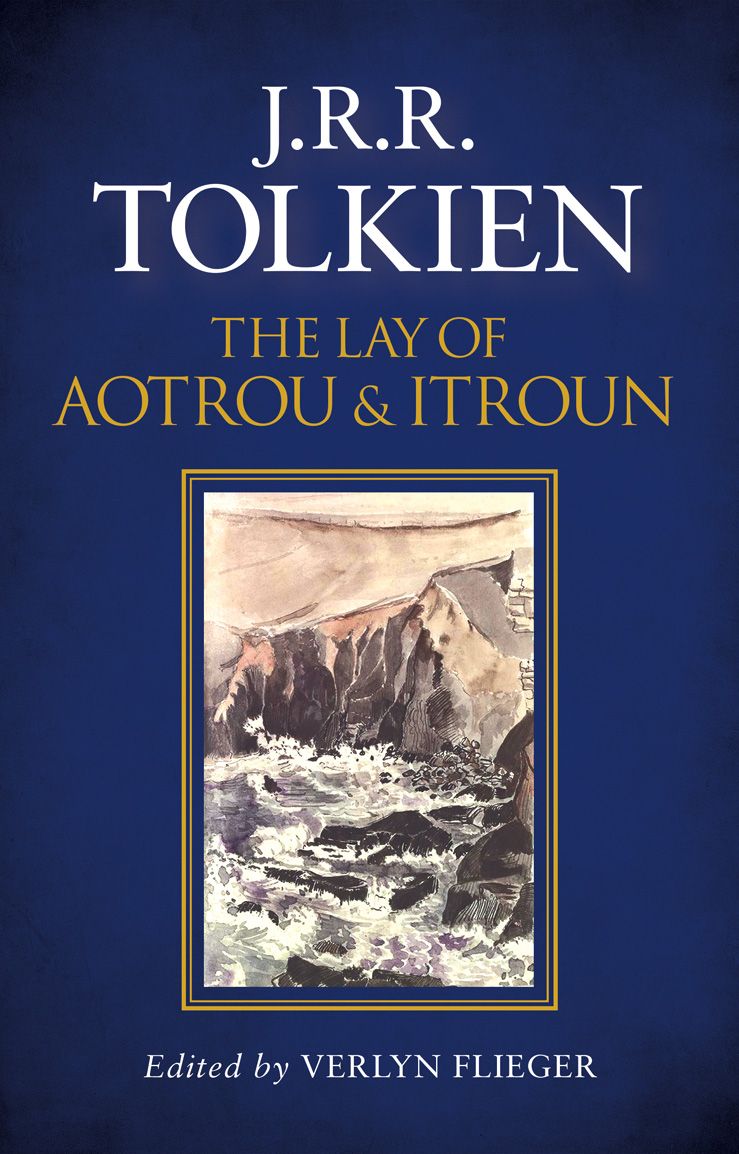
Book details
Author: J.R.R. Tolkien
Editor: Verlyn Flieger
Note on the text: Christopher Tolkien
UK publisher: HarperCollins
Hardback: 3 November 2016; 128 pages; ISBN 9780008202132
UK paperback: 30 May 2019; 128 pages; ISBN 9780008202156
First publication of the lay: The Welsh Review, IV.4, December 1945
Find a copy
No copy of the Flieger edition is currently listed in our shop. Our NH0009 Welsh Review record is a sold-copy archive, retained for its publication history and photographs.
The links below are affiliate links. Tolkien Library may earn a commission from qualifying purchases, at no extra cost to you. As an Amazon Associate I earn from qualifying purchases.
- Amazon.co.uk — UK paperback, ISBN 9780008202156
- Amazon.com — US paperback, ISBN 9781328557520
- AbeBooks — compare UK hardback copies, ISBN 9780008202132
Check the seller’s photographs, format, impression and condition. An ISBN alone does not establish a first printing.