
Tolkien: The Lay of Aotrou and Itroun, 1945 — NH0009
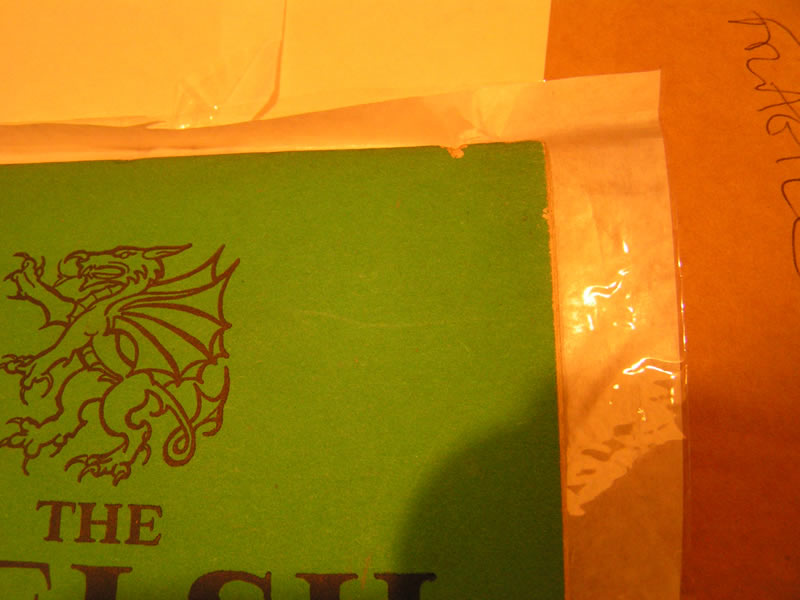
The Welsh Review, Vol. IV, No. 4, December 1945, edited by Gwyn Jones. Includes Tolkien’s The Lay of Aotrou and Itroun. A very good copy with minor cover wear and rust to the staples.
The Welsh Review, Editor - Gwyn Jones, Vol. IV, No. 4, December 1945, Very Good
- Author
- J.R.R. Tolkien
- Publication Year
- 1945
- Condition
- Very Good
- Language
- English
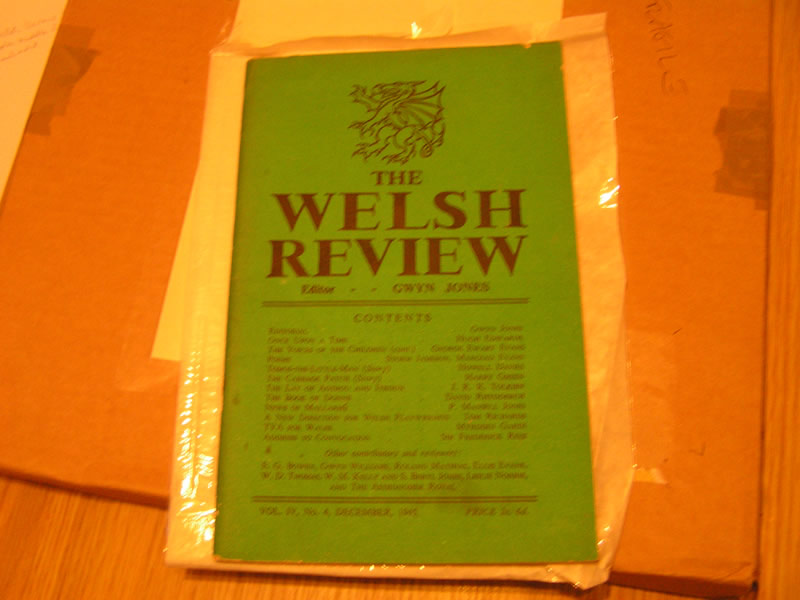
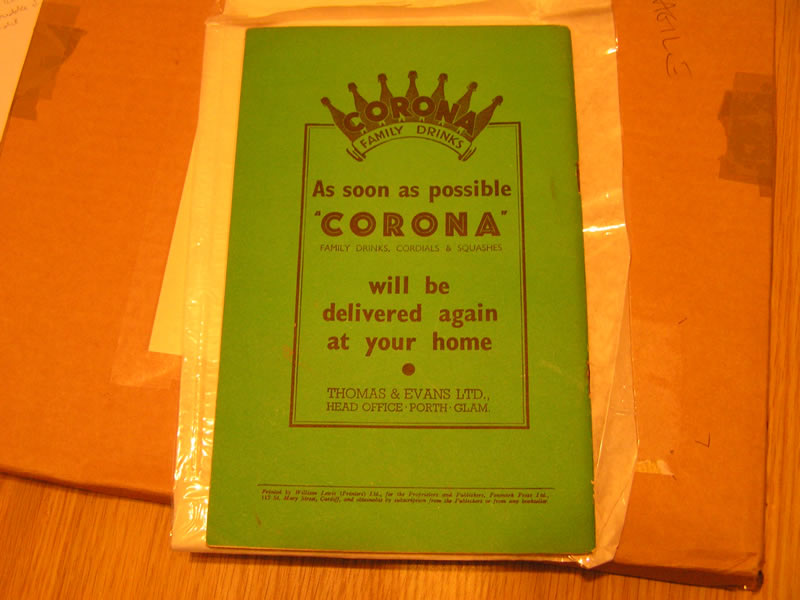
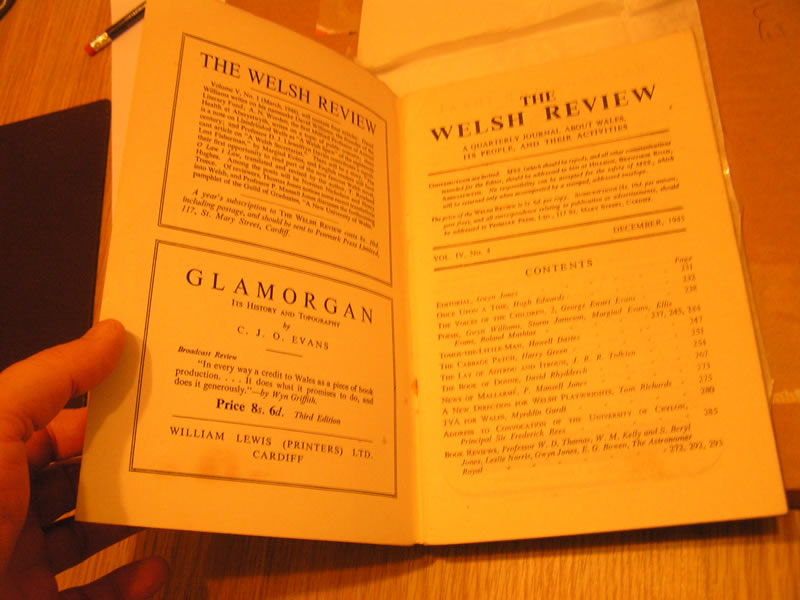
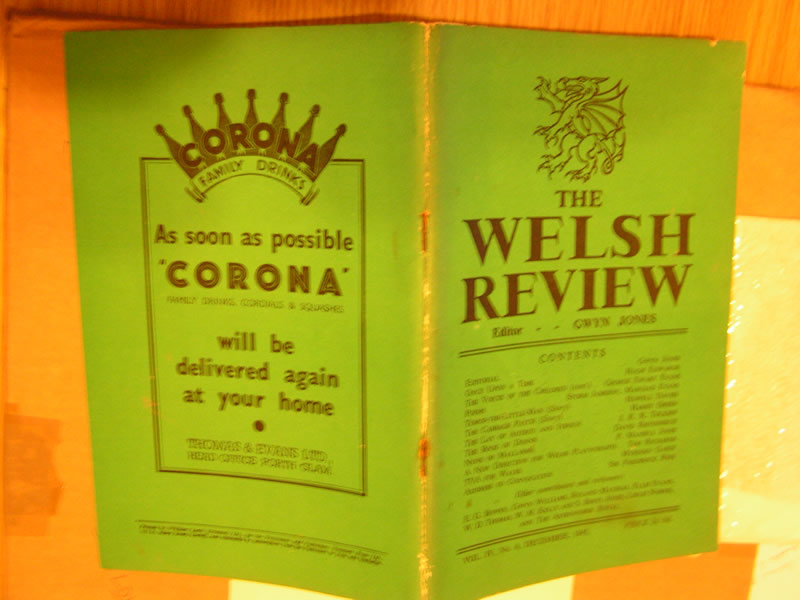
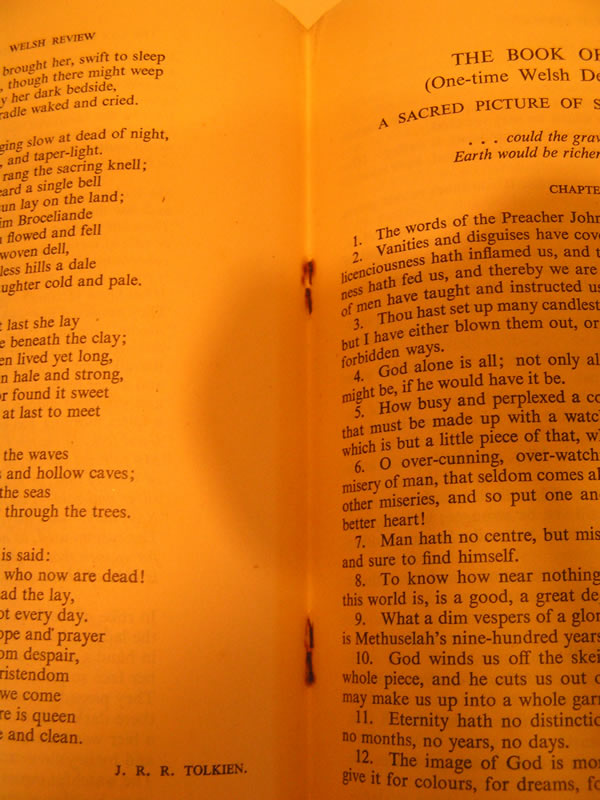
The Welsh Review, Editor - Gwyn Jones, Vol. IV, No. 4, December 1945, Very Good
Includes the poem by J.R.R. Tolkien, written in 1930, The Lay of Aotrou and Itroun
The Welsh Review, editor - Gwyn Jones, Vol. IV, No. 4, December 1945.
Includes the poem by J.R.R. Tolkien, written in 1930, The Lay of Aotrou and Itroun.
A Very Good copy of this extremely scarce booklet.
Only the most minor of rubbing to the edges of the covers.
Interior is clean and free from any markings or writing.
The staples are a little rusty but the book itself is in Very Good condition.
From Wikipedia:
Aotrou and Itroun are Breton words for "lord" and "lady". The poem is modelled on the genre of the "Breton lay" popular in Middle English literature of the 12th century, and it explores the conflict of heroic or chivalric values and Christianity, and their relation to the institution of marriage.
In the poem, Aotrou and Itroun are a couple of Breton nobility. They are childless, and Aotrou seeks the help of a witch. When Itroun is with child, the witch reappears, revealing herself as the Corrigan, and asks for Aotrou's love as payment. Aotrou sacrifices his knightly honour to Christian values, and breaks his word.
"I gave no love. My love is wed;
my wife now lieth in child-bed,
and I curse the beast that cheated me
and drew me to this dell to thee."
Cursed by the Corrigan to die in three days, Aotrou takes the consequences and places his trust in Providence:
In three days I shall live at ease
and die but when it God doth please
in eld, or in some time to come
in the brave wars of Christendom.
Aotrou passes away after three days, his wife dies of broken heart and they are buried together, and they do not live to see their offspring grow up.
A scarce original 1945 appearance of Tolkien’s The Lay of Aotrou and Itroun in The Welsh Review.
Related Tolkien treasures


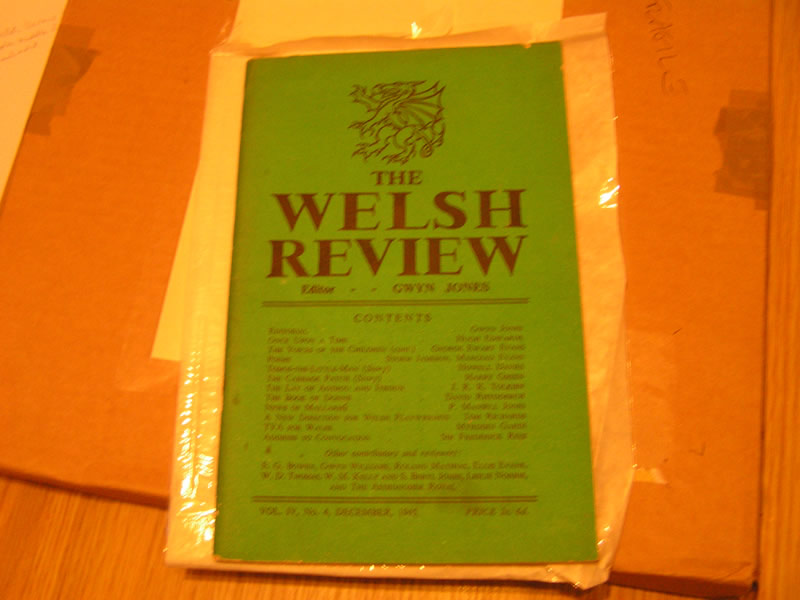
The Welsh Review, Vol. IV, No. 4, December 1945, edited by Gwyn Jones. Includes Tolkien’s The Lay of Aotrou and Itroun. A very good copy with minor cover wear and rust to the staples.