Tolkien Library Store - Original cloth bindings - The Lord of the Rings

#cb0016 - The Lord of the Rings — All Second UK Impressions, 1954–1955 - € 32.500
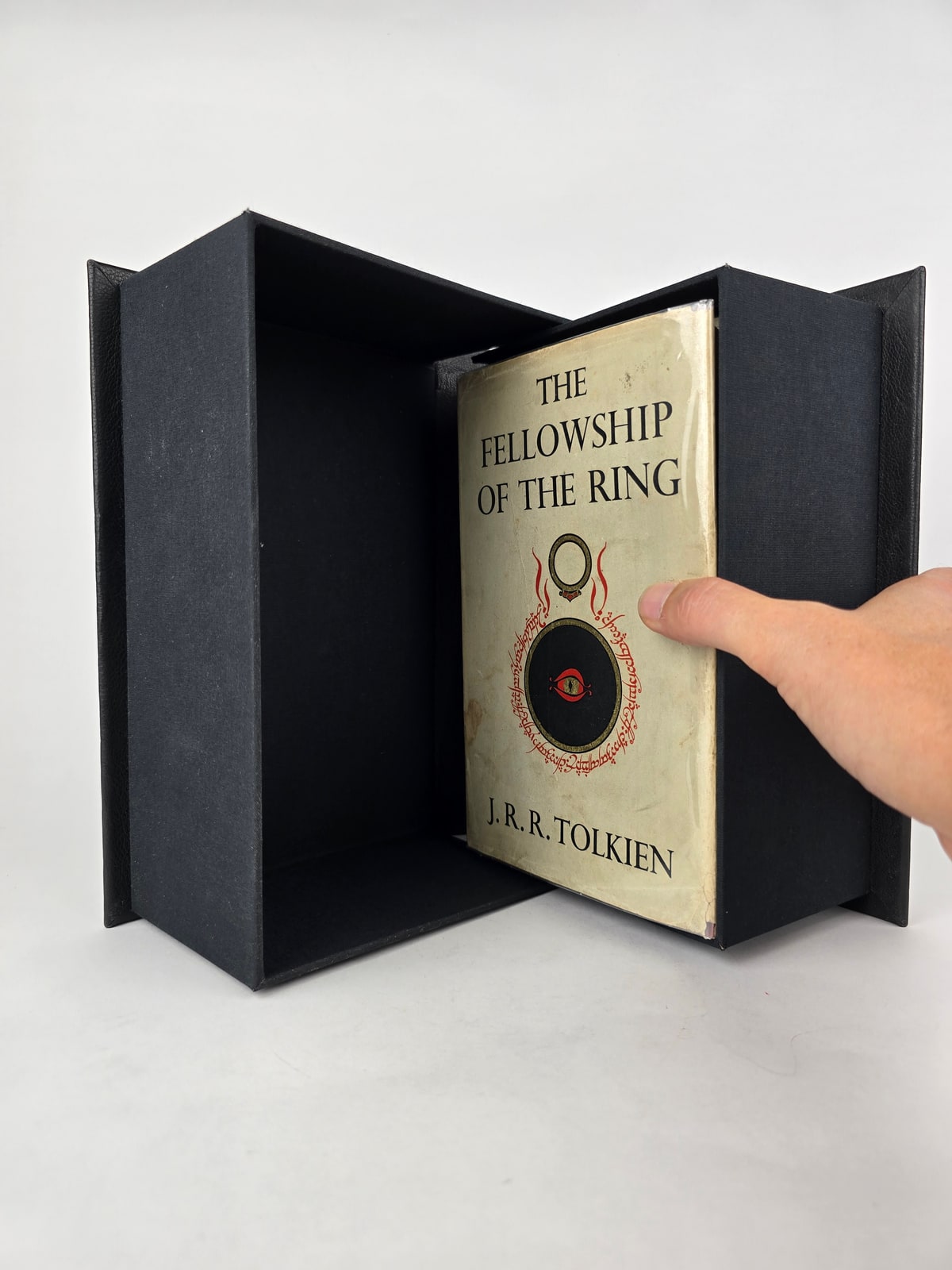
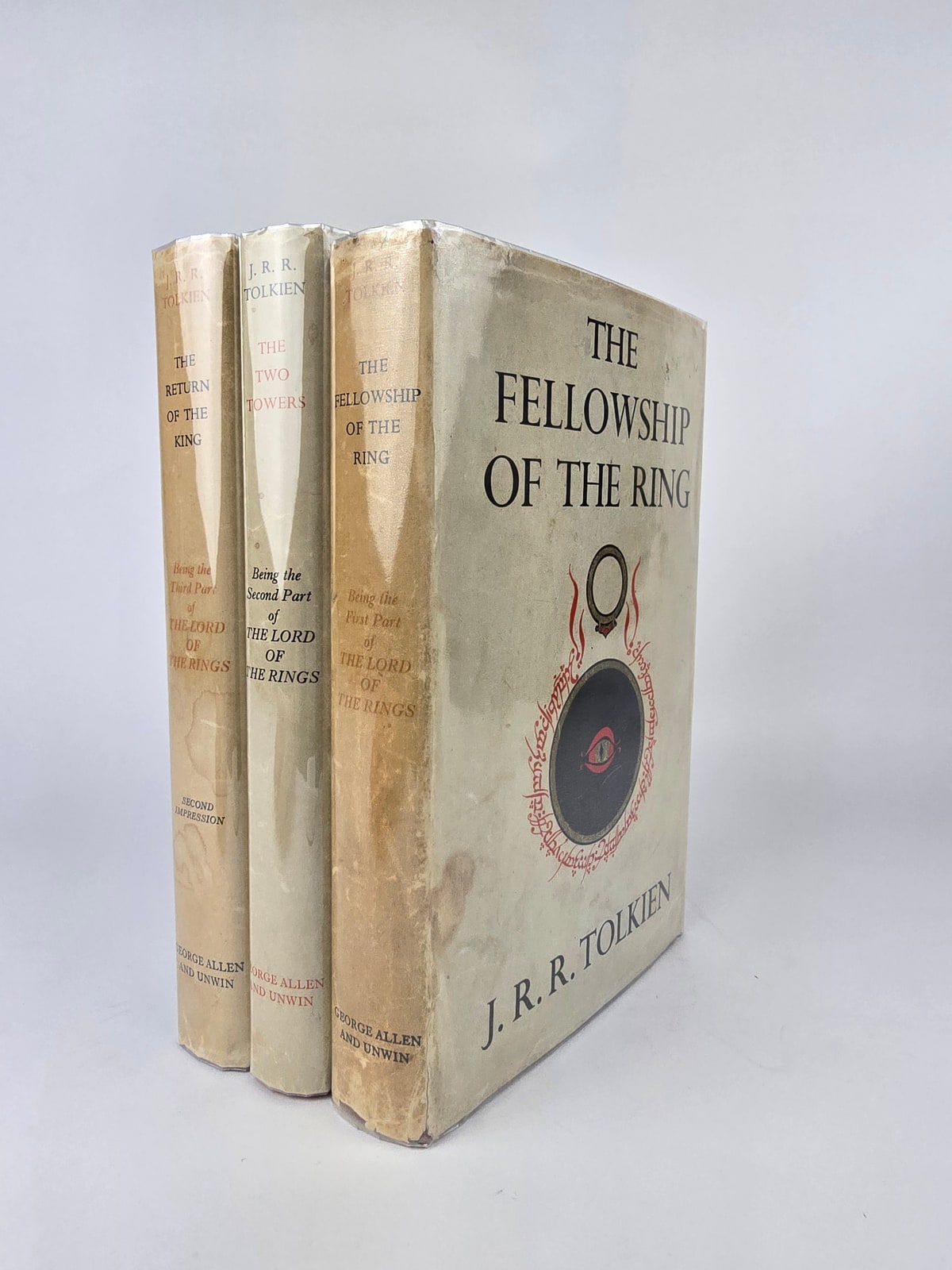
A complete 2/2/2 set of the first UK edition, 1954–1955, in original red cloth with original unrestored dust jackets and all three folding maps, housed in a black gilt-decorated custom clamshell.
> Enquire about this book
A complete 2/2/2 set of the first UK edition, 1954–1955, in original red cloth with original unrestored dust jackets and all three folding maps, housed in a black gilt-decorated custom clamshell.
> Enquire about this book
The Lord of the Rings — All Second UK Impressions, 1954–1955
The First UK Edition — A Complete 2/2/2 Set
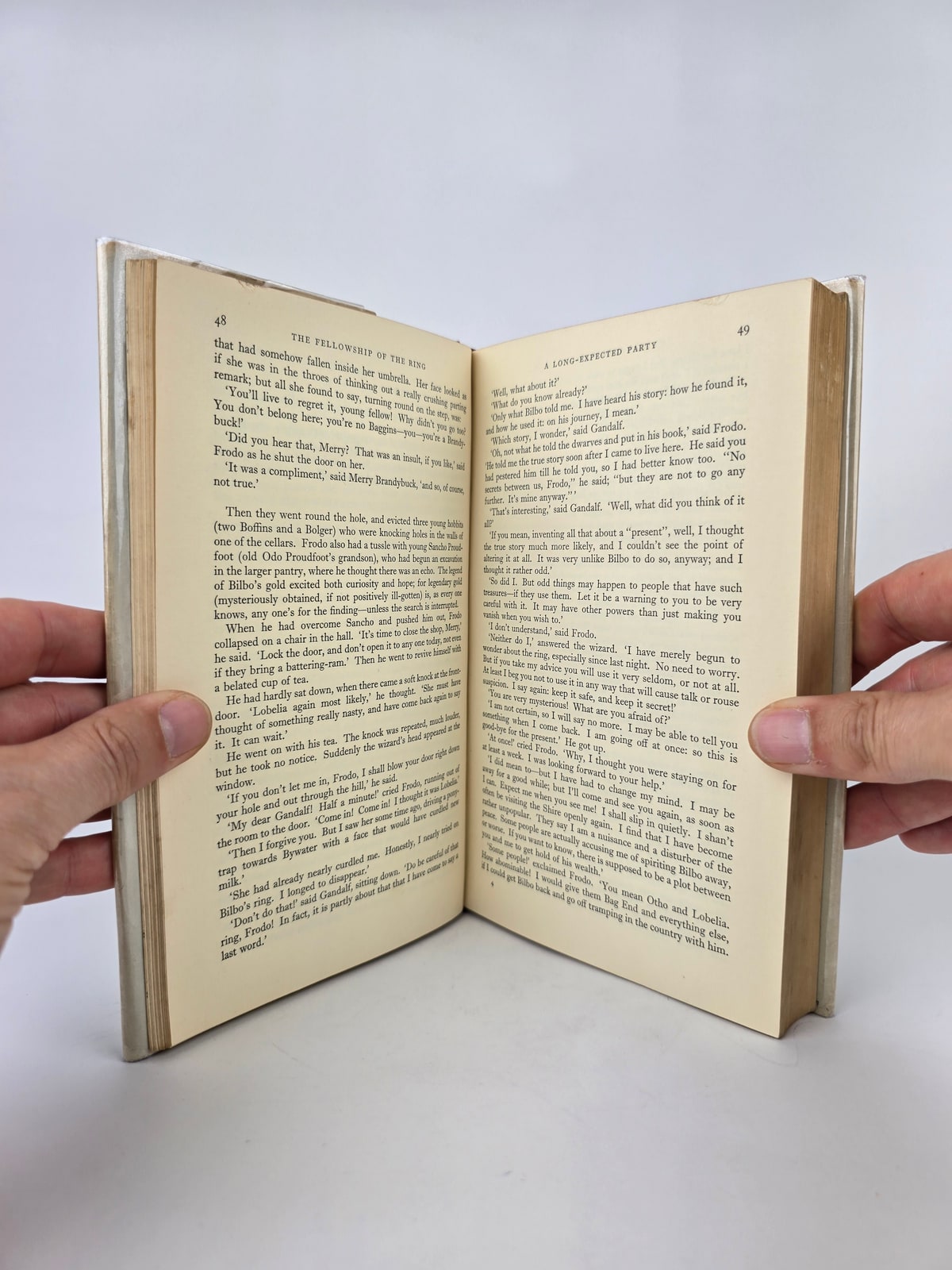
All three second impressions of J.R.R. Tolkien’s The Lord of the Rings, published in London by George Allen & Unwin: The Fellowship of the Ring, December 1954; The Two Towers, 1955; and The Return of the King, November 1955. The volumes retain their original red cloth bindings, illustrated dust jackets and folding maps, and are housed together in a gilt-decorated black custom clamshell.
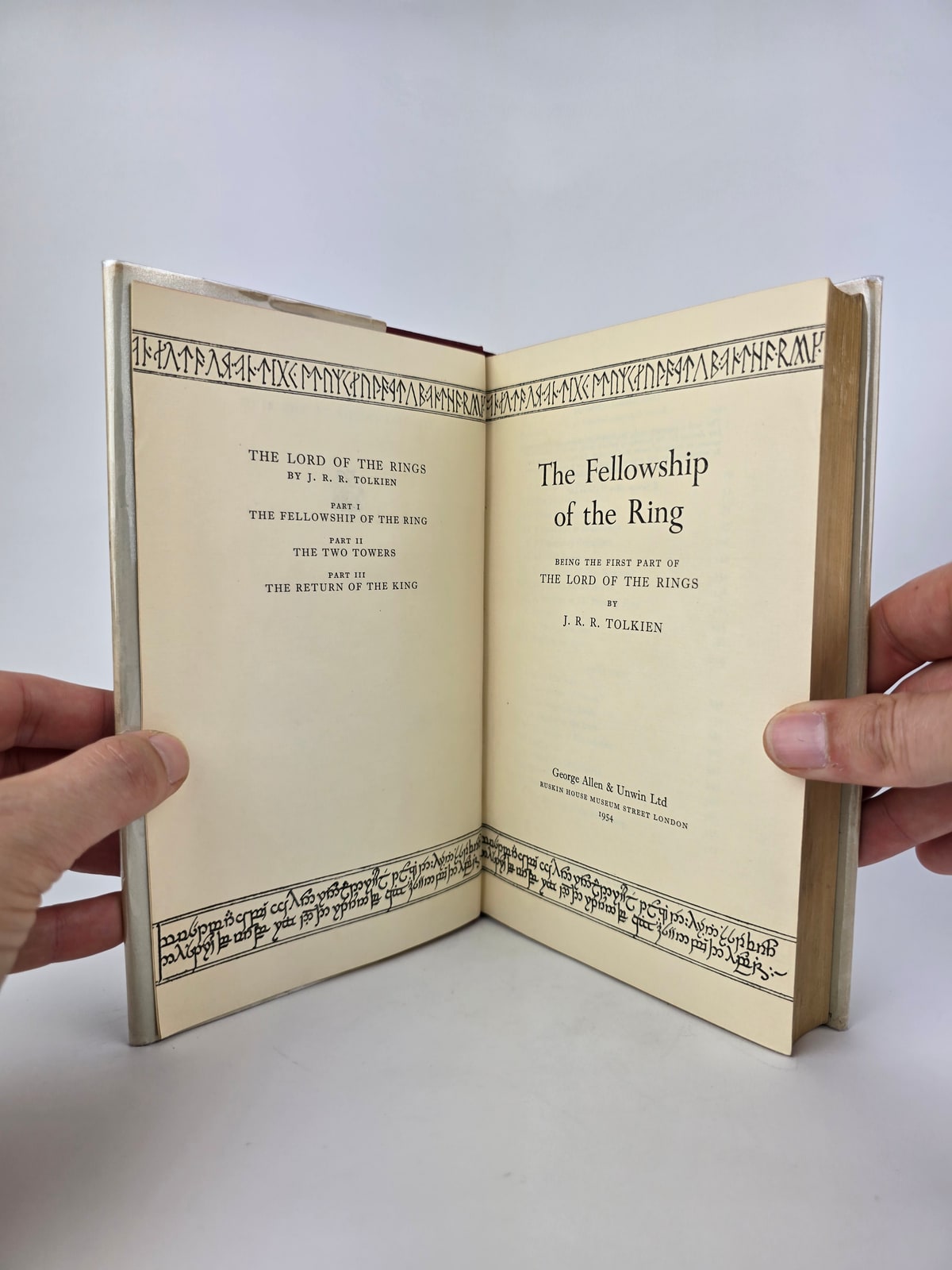
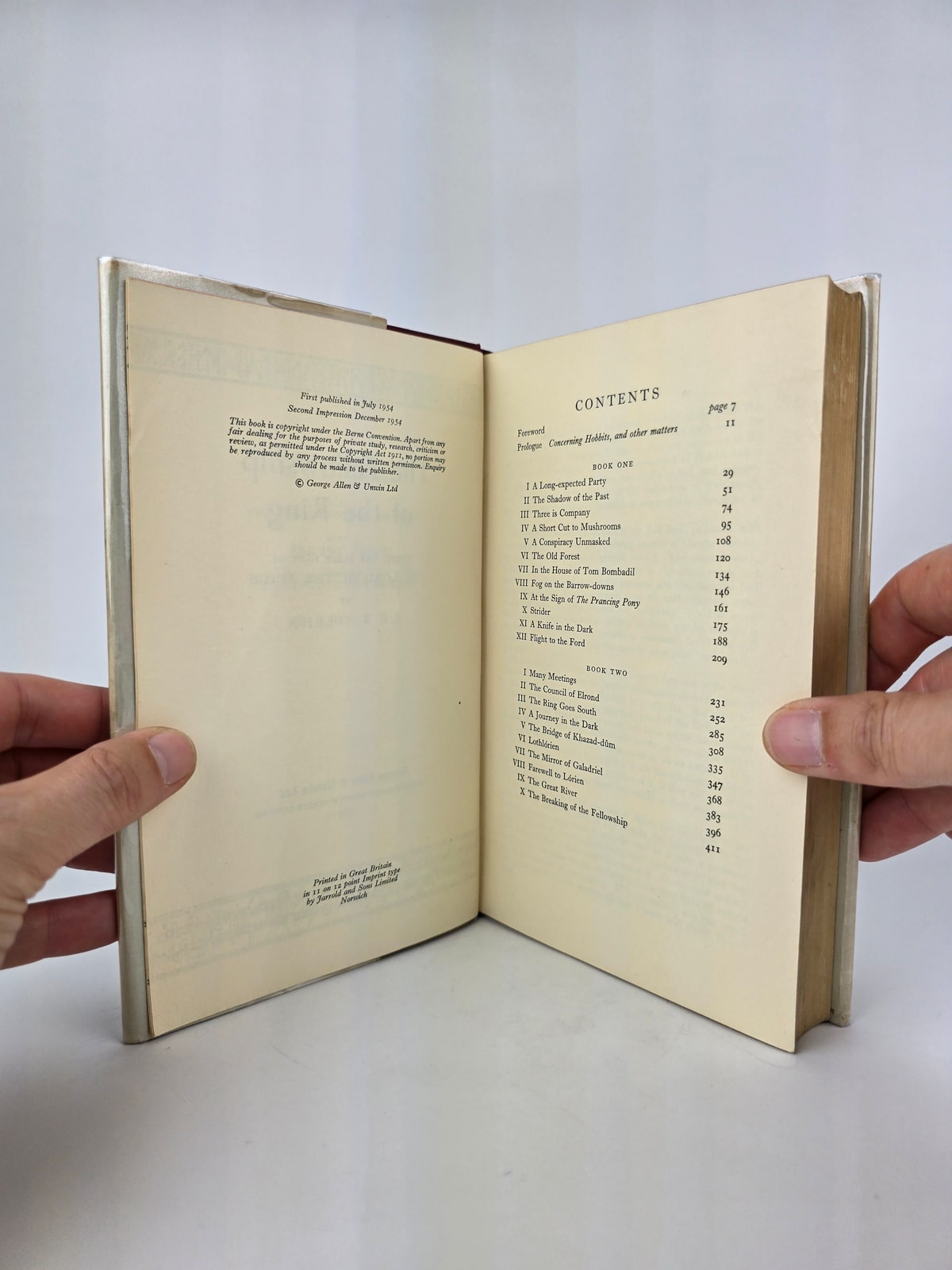
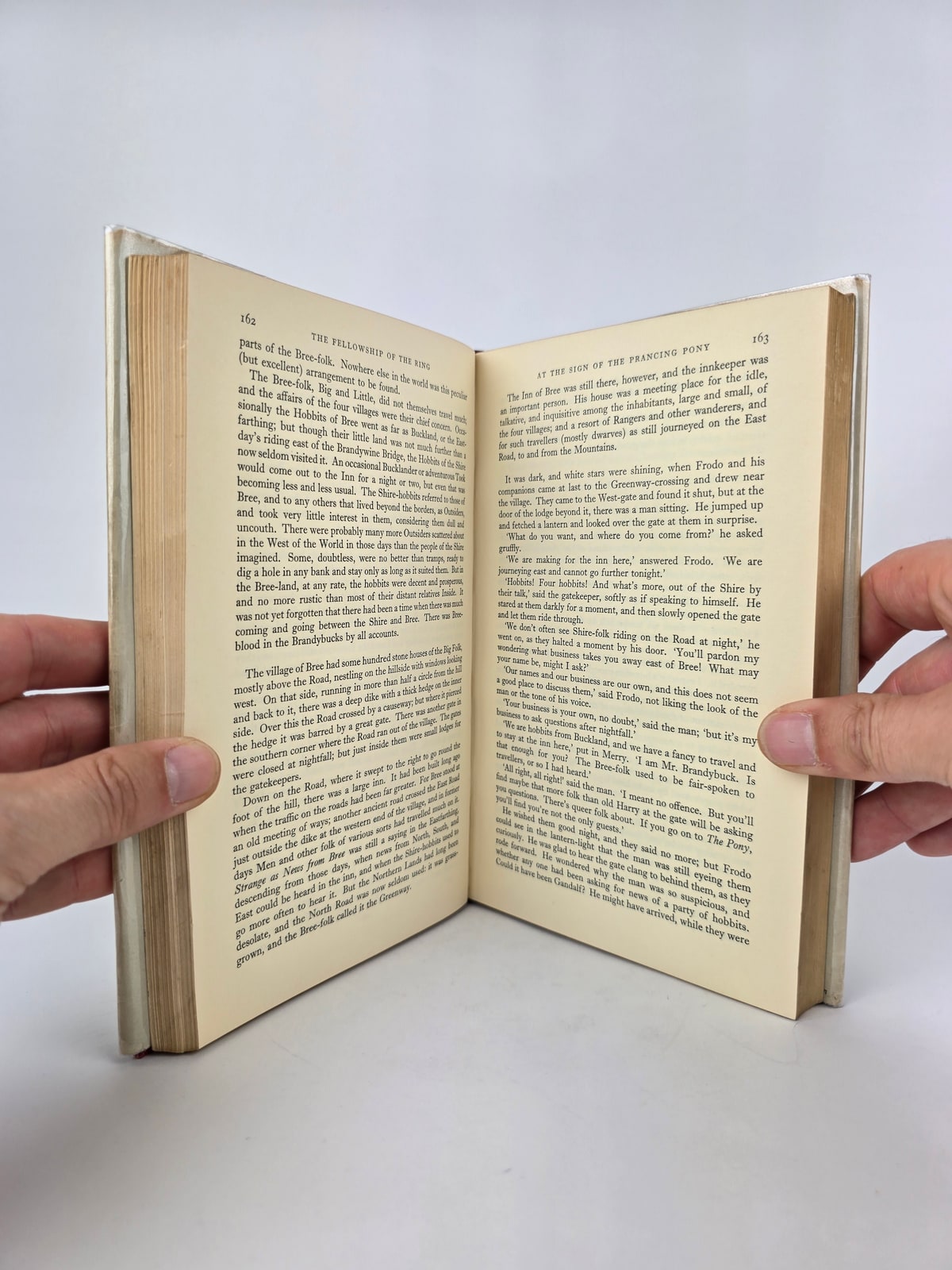
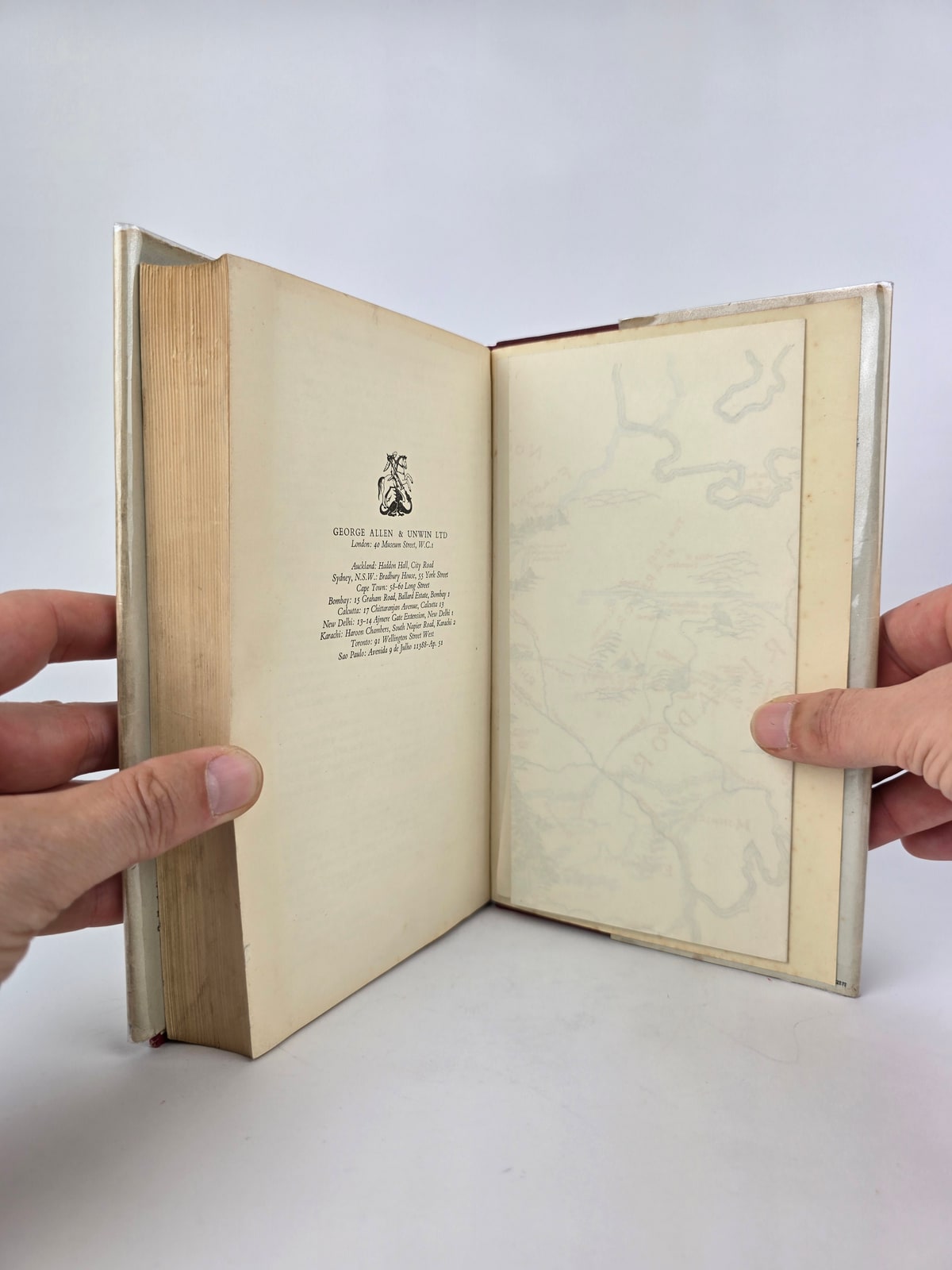
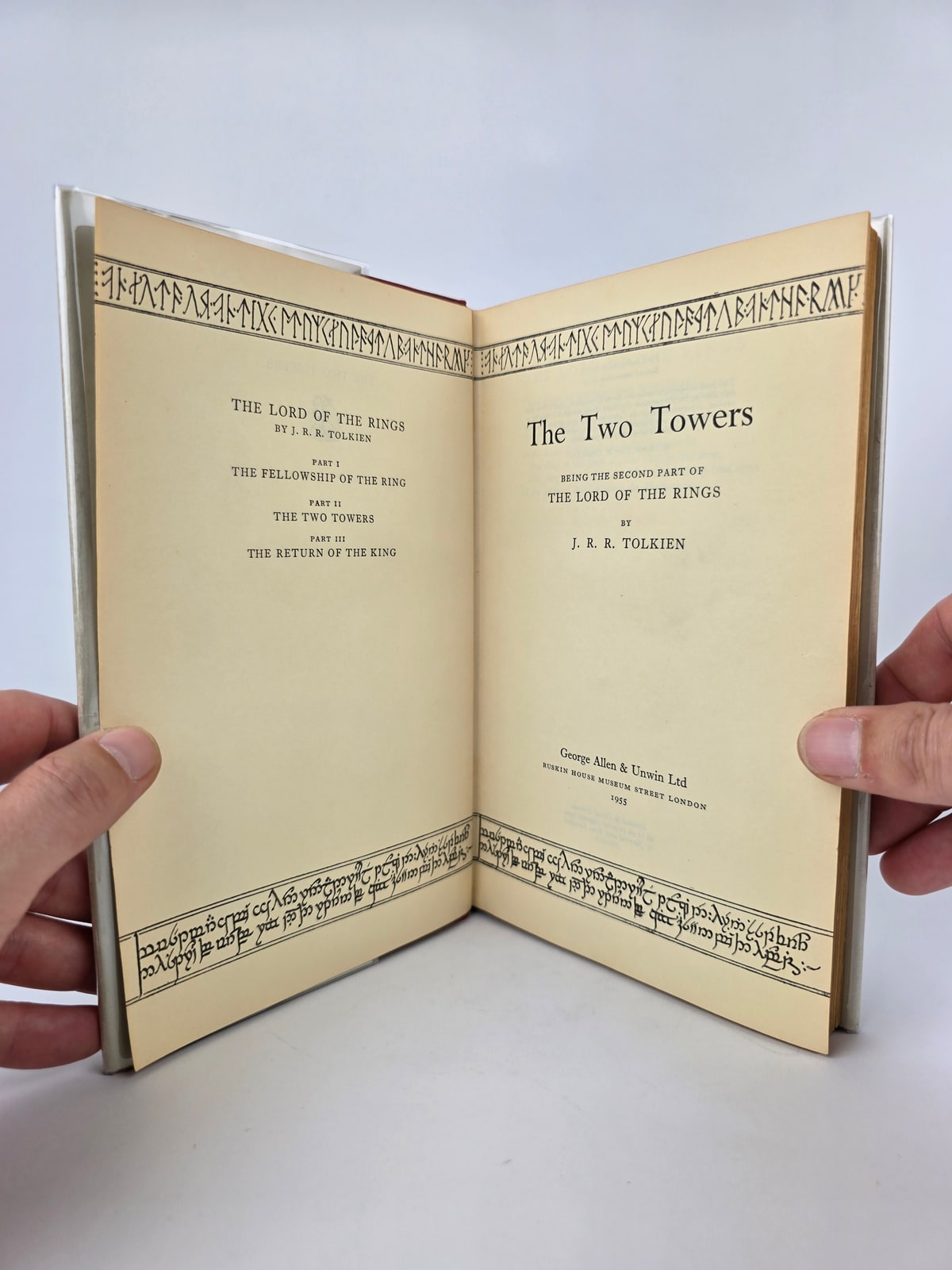
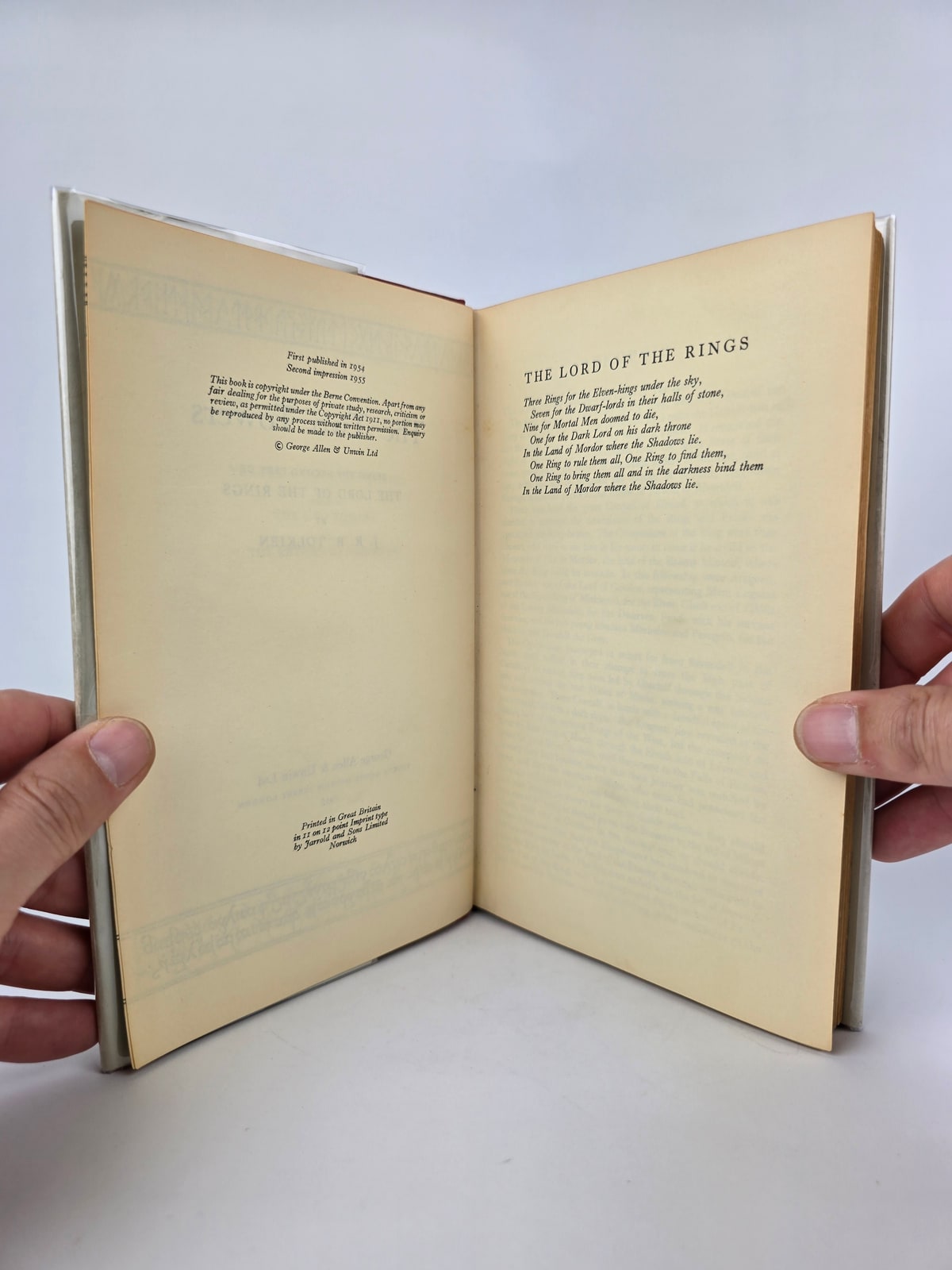
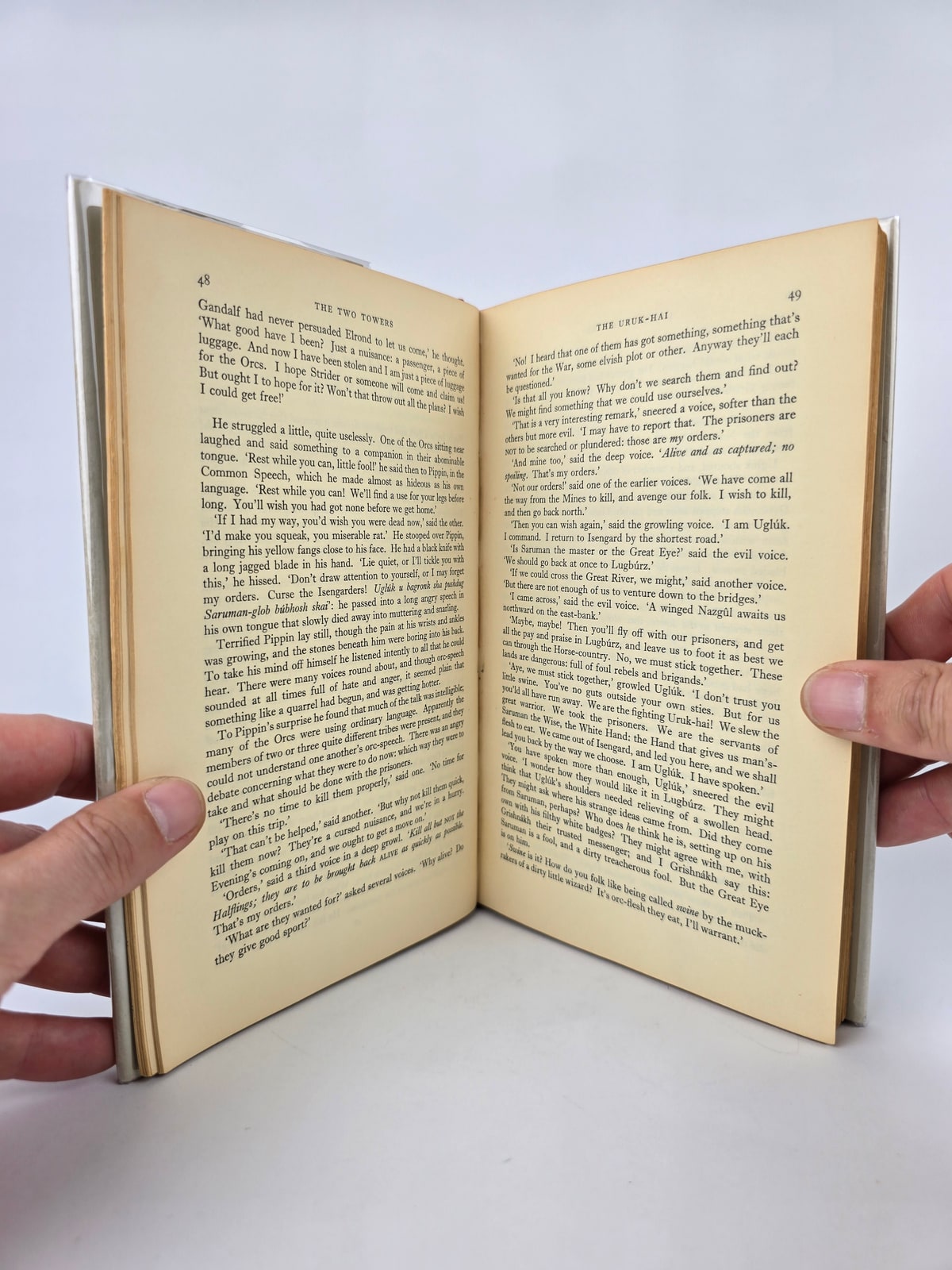
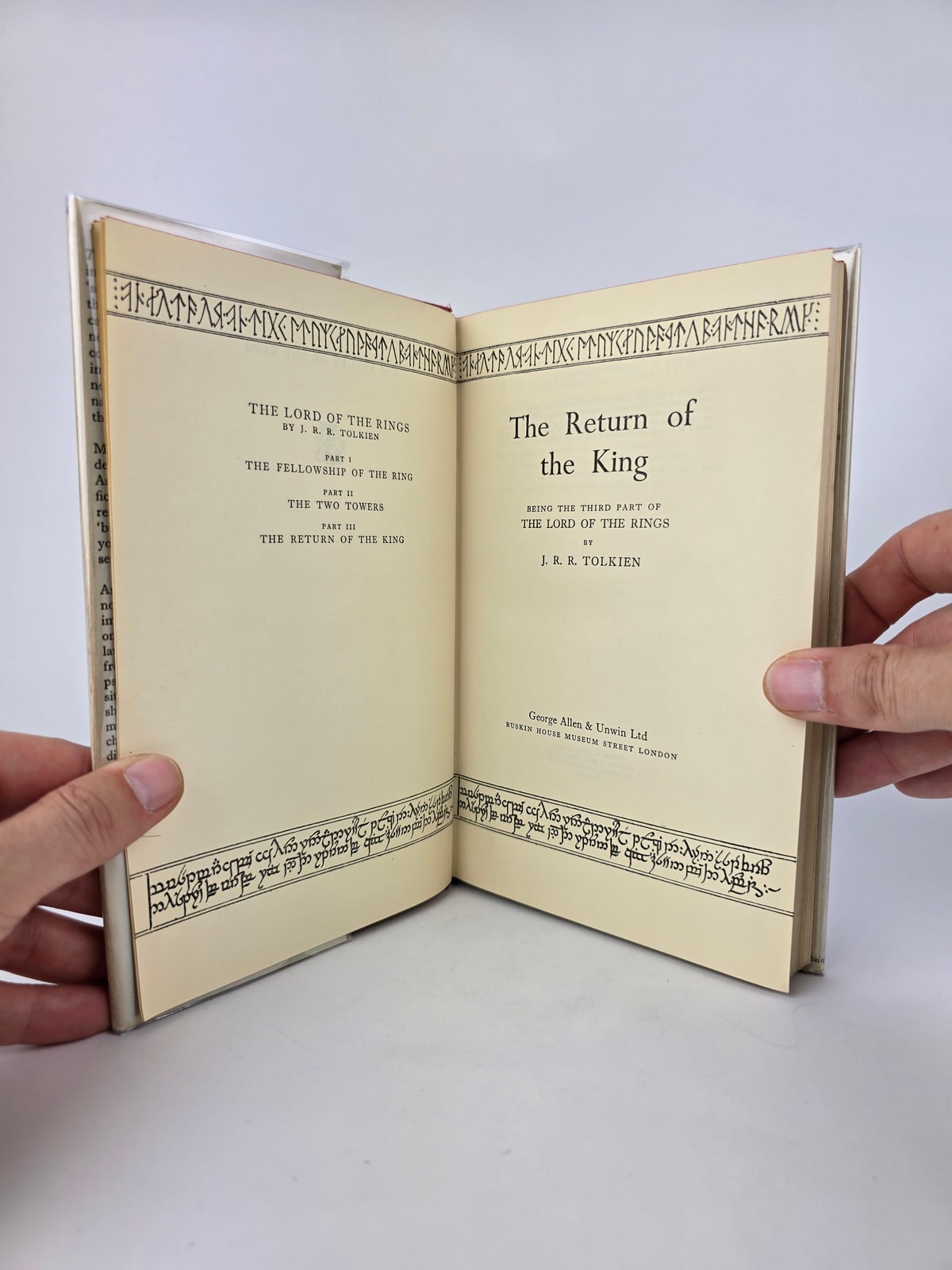
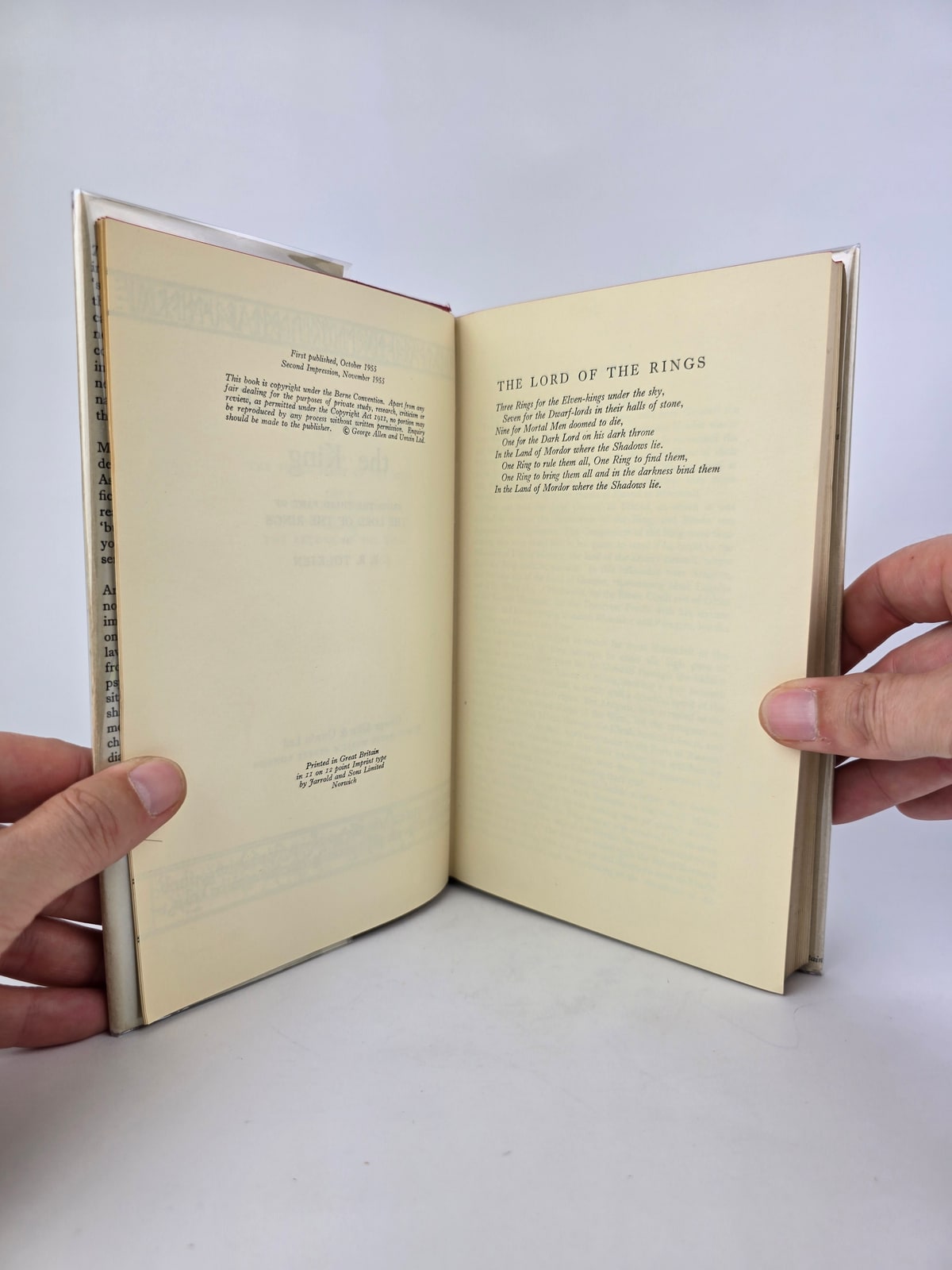
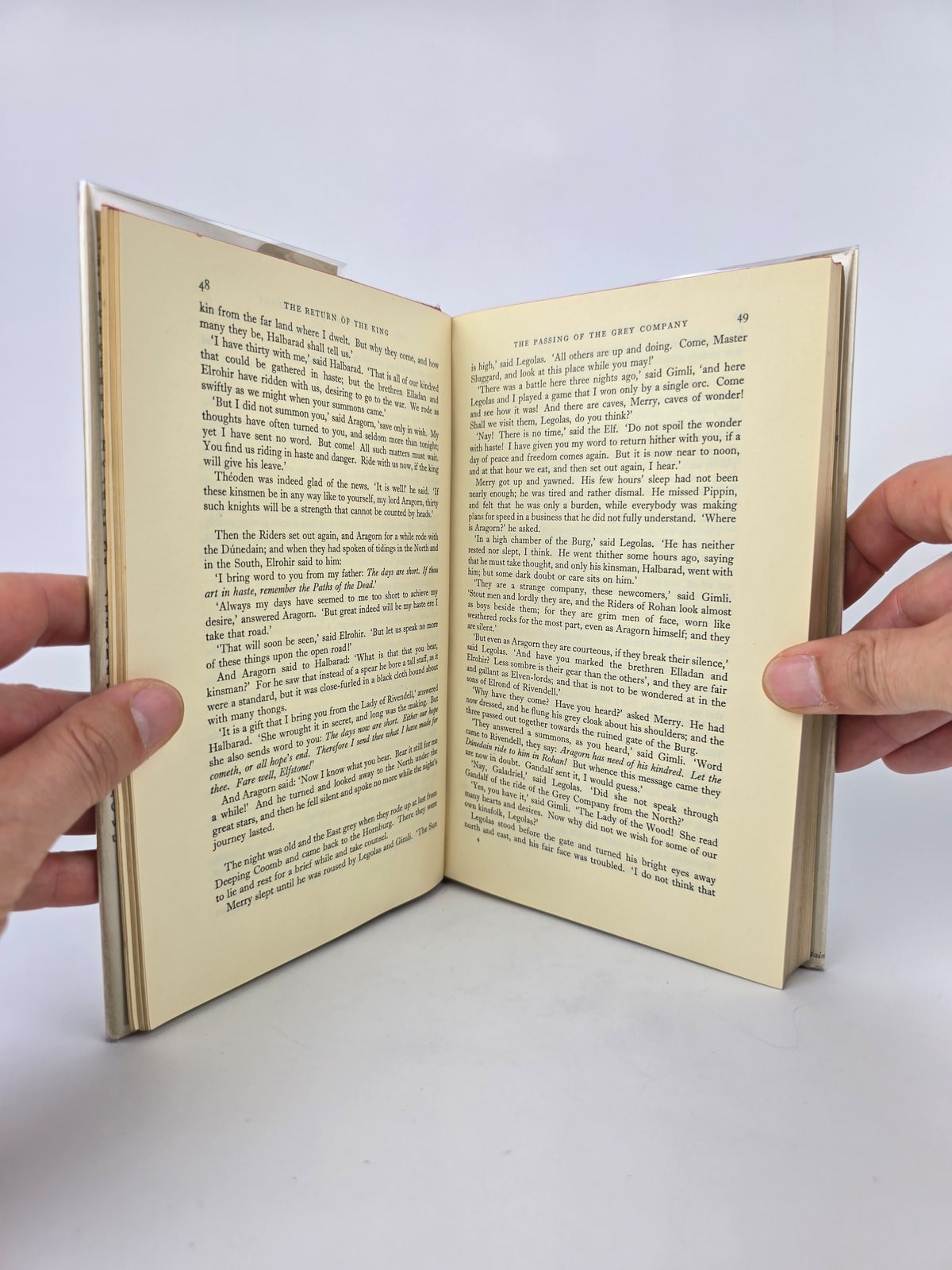
The copyright pages identify the second impression of each volume. The Two Towers also carries the date 1955 on its title page, identifying the genuine second impression rather than the later, undated third impression that was mistakenly labelled second. Each volume was printed in Great Britain by Jarrold and Sons Limited, Norwich, in 11 on 12 point Imprint type.
Printing History and the Reset Fellowship Text
The Fellowship of the Ring was reset for its second impression, first available in December 1954. The publisher’s printing records give a run of 2,640 copies. This is the early reset text of the first edition, preceding the substantially revised second edition of the 1960s.
The second impression of The Two Towers first appeared in January 1955, from a printing of 3,000 copies. Copies for the British edition were bound in January and March; some of the remaining sheets were later supplied to Houghton Mifflin for the American edition. The Return of the King states November 1955, although the first bound copies of this second impression became available in December. Its recorded printing was 4,000 copies.
Original Cloth, Illustrated Jackets and Maps
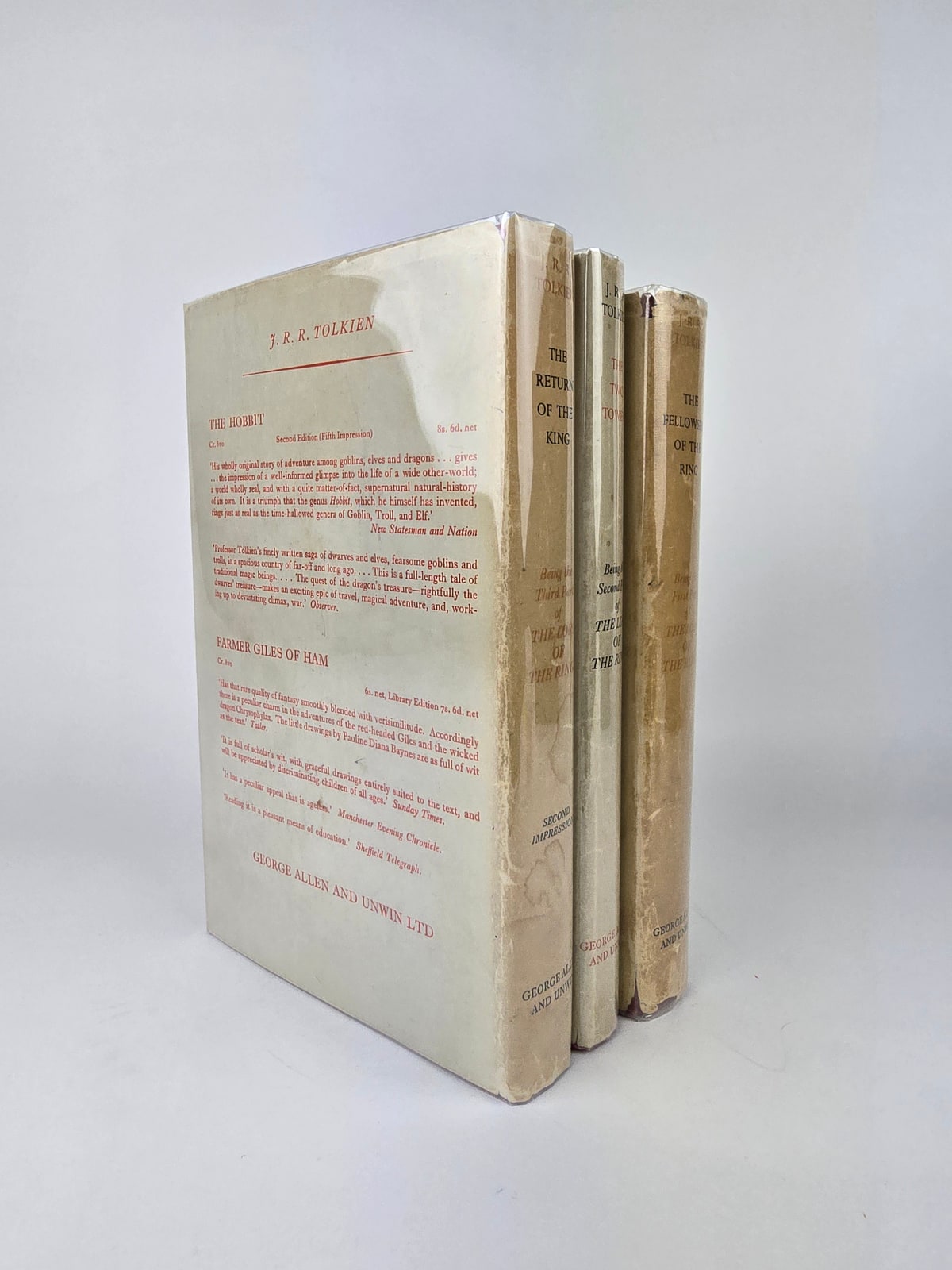
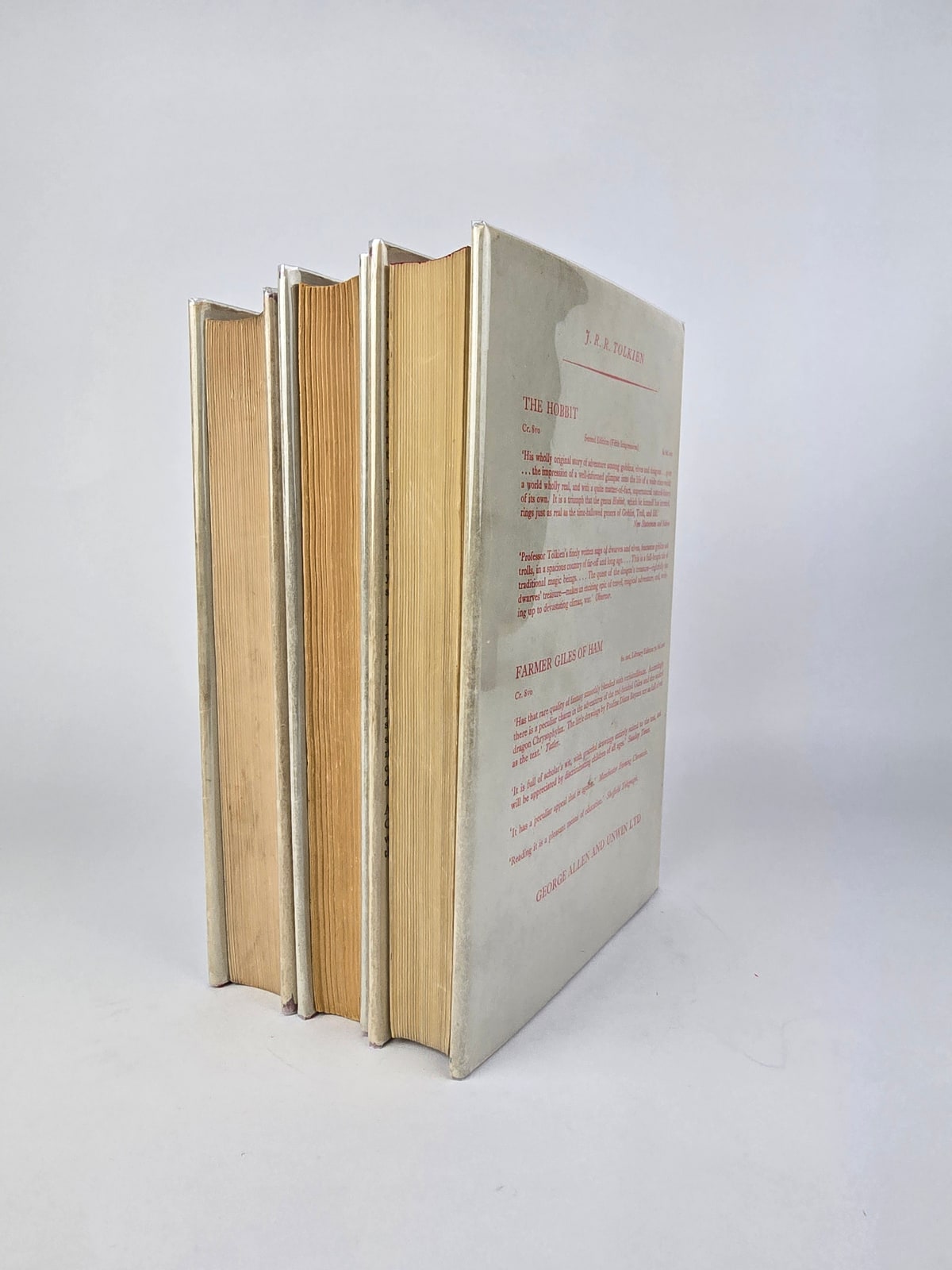
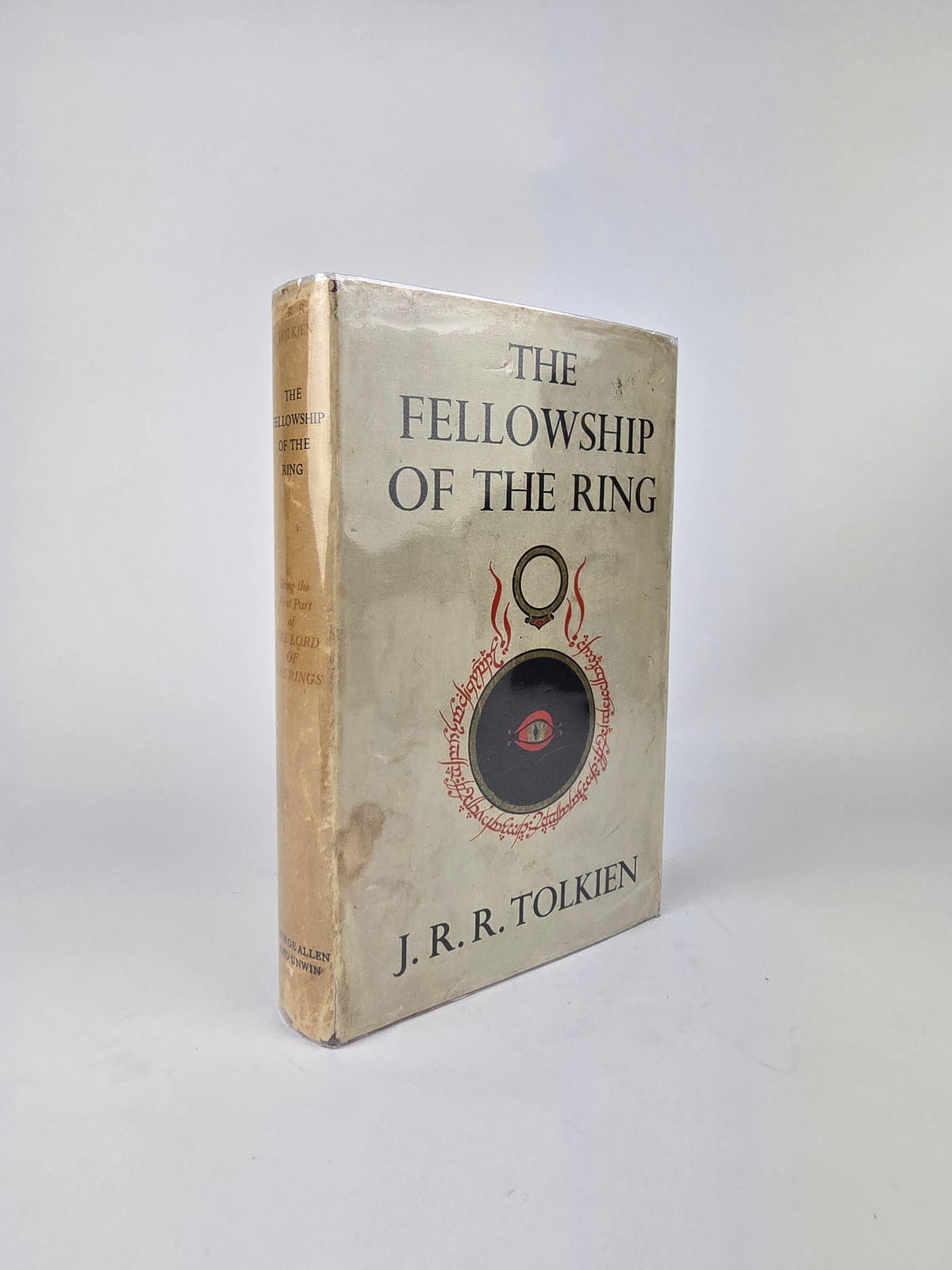
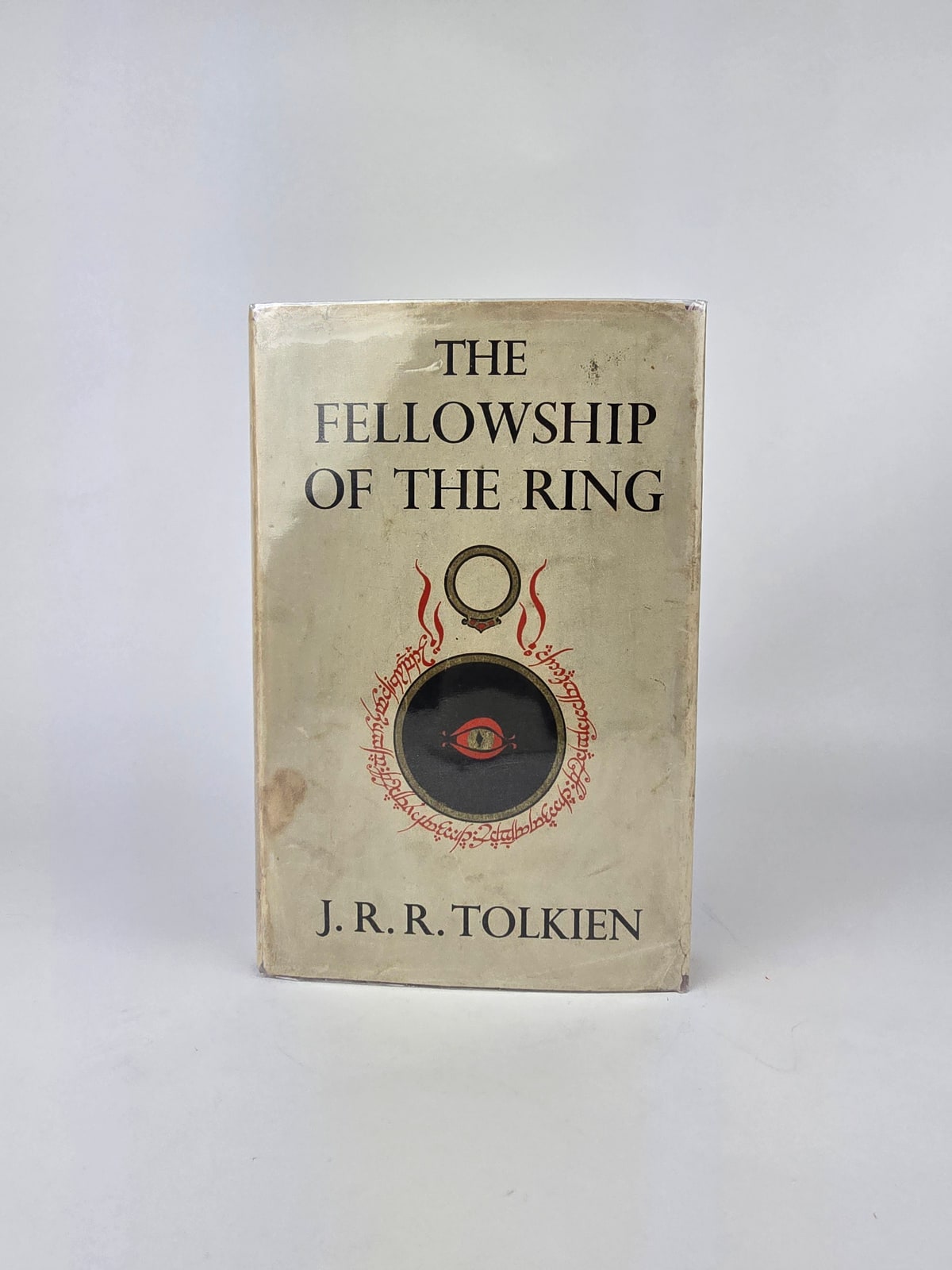
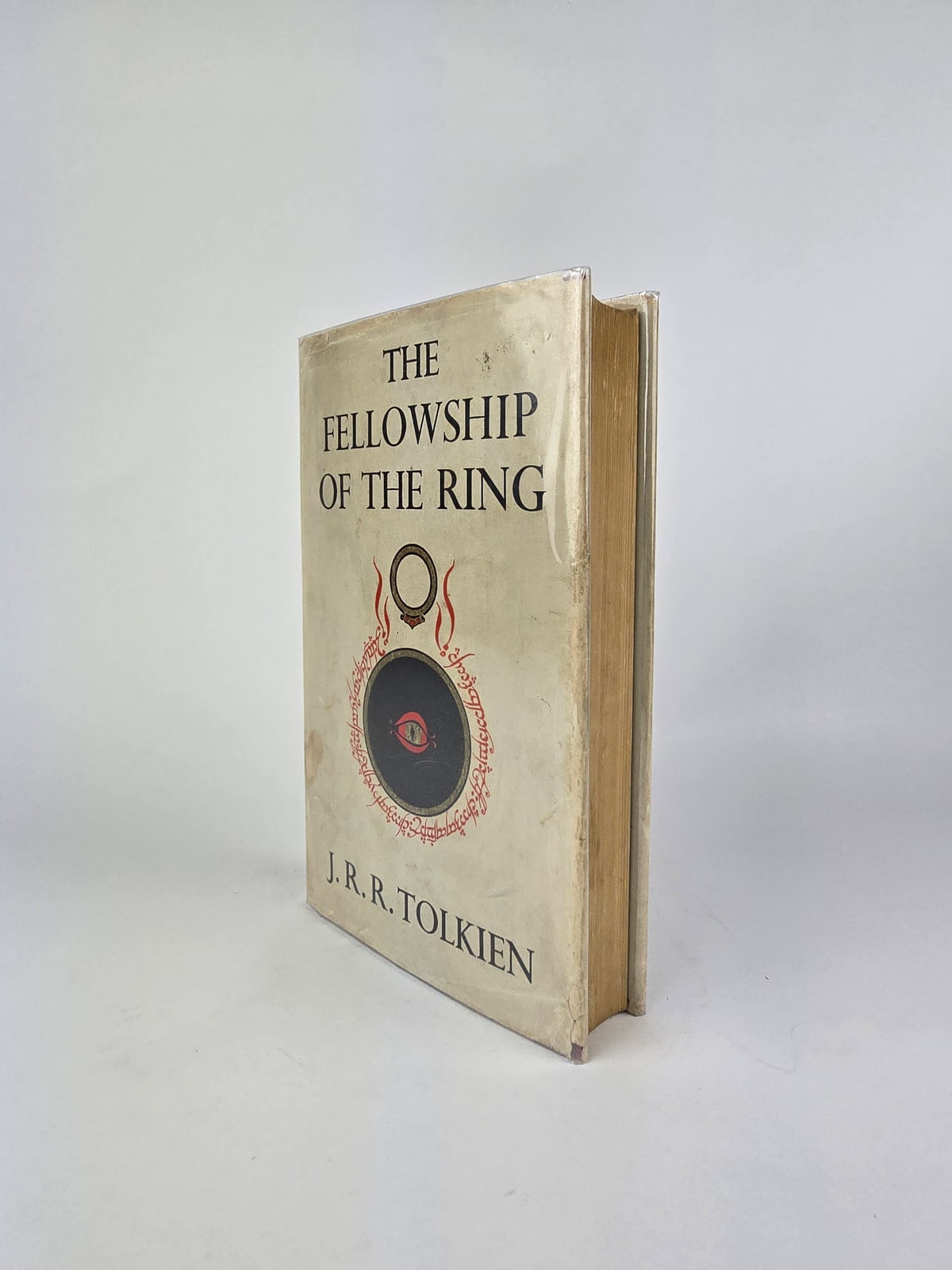
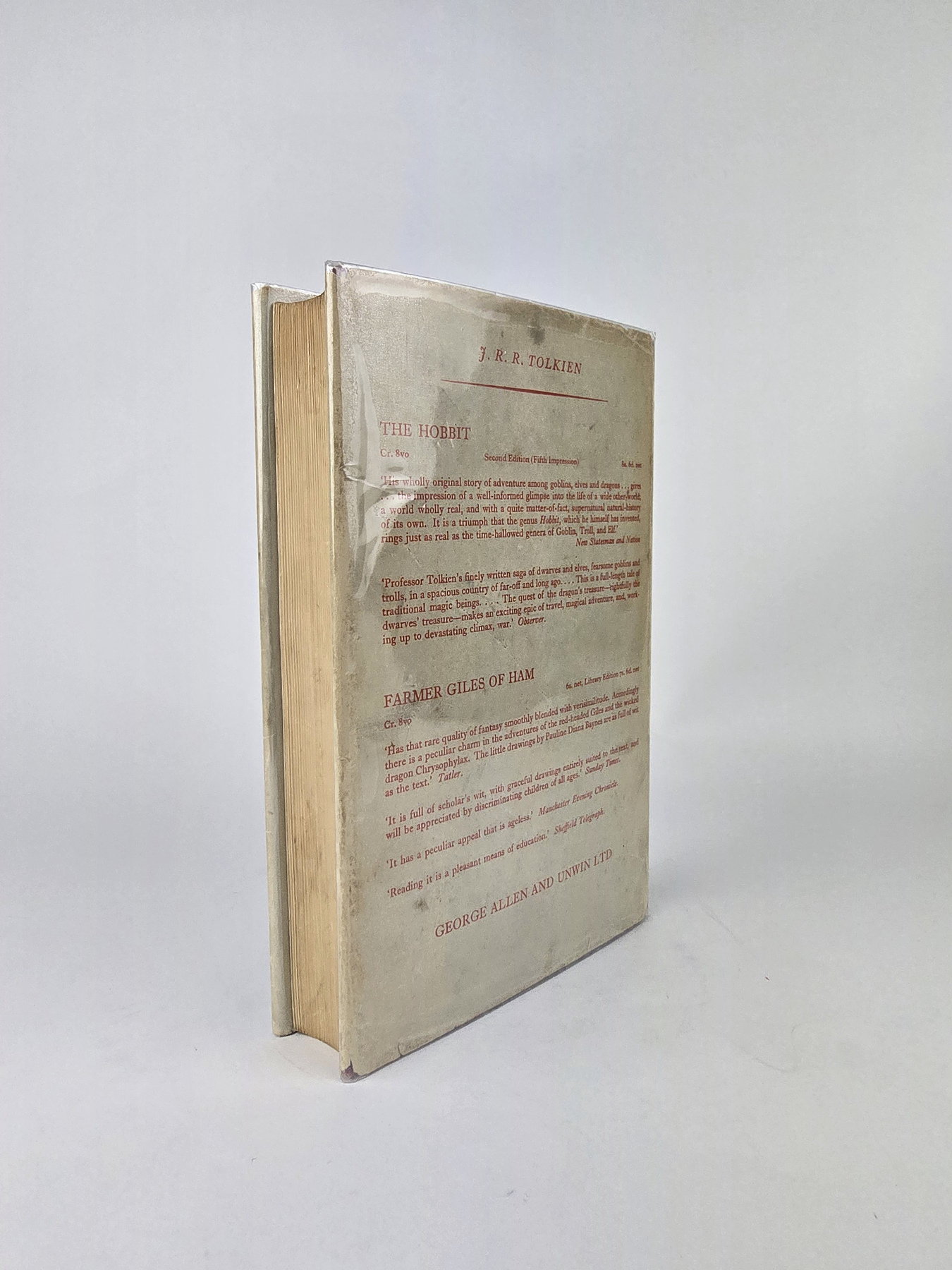
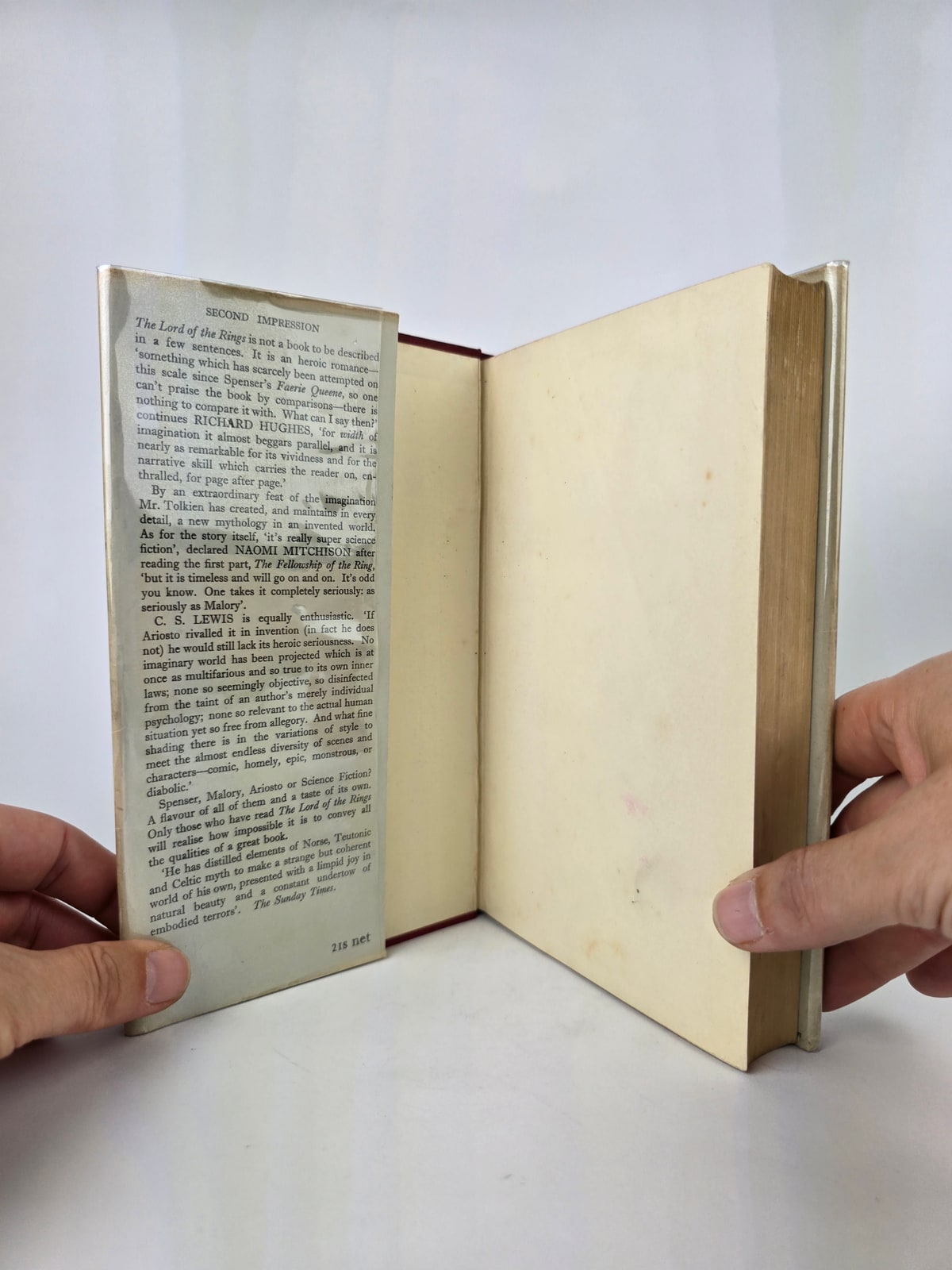
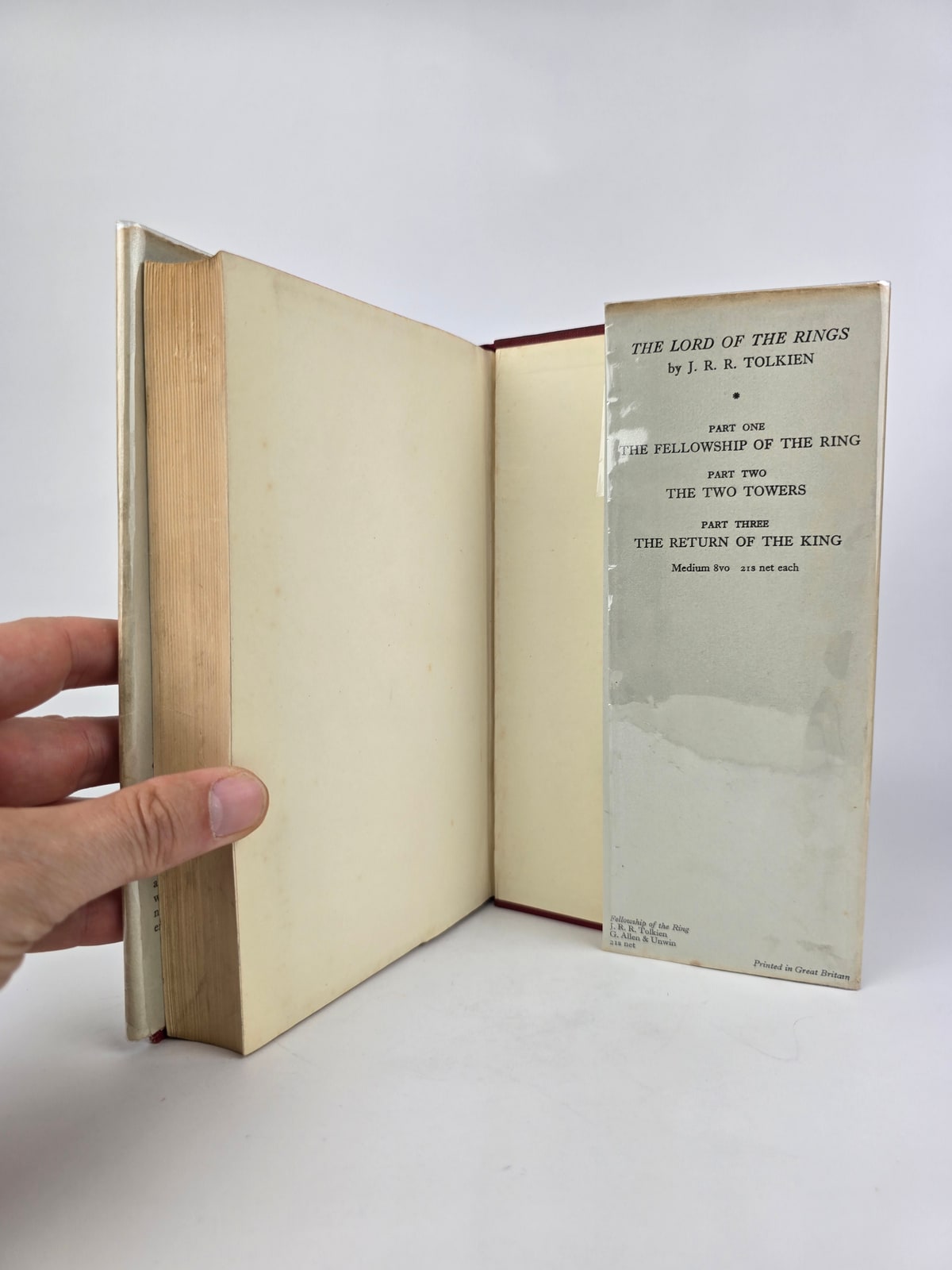
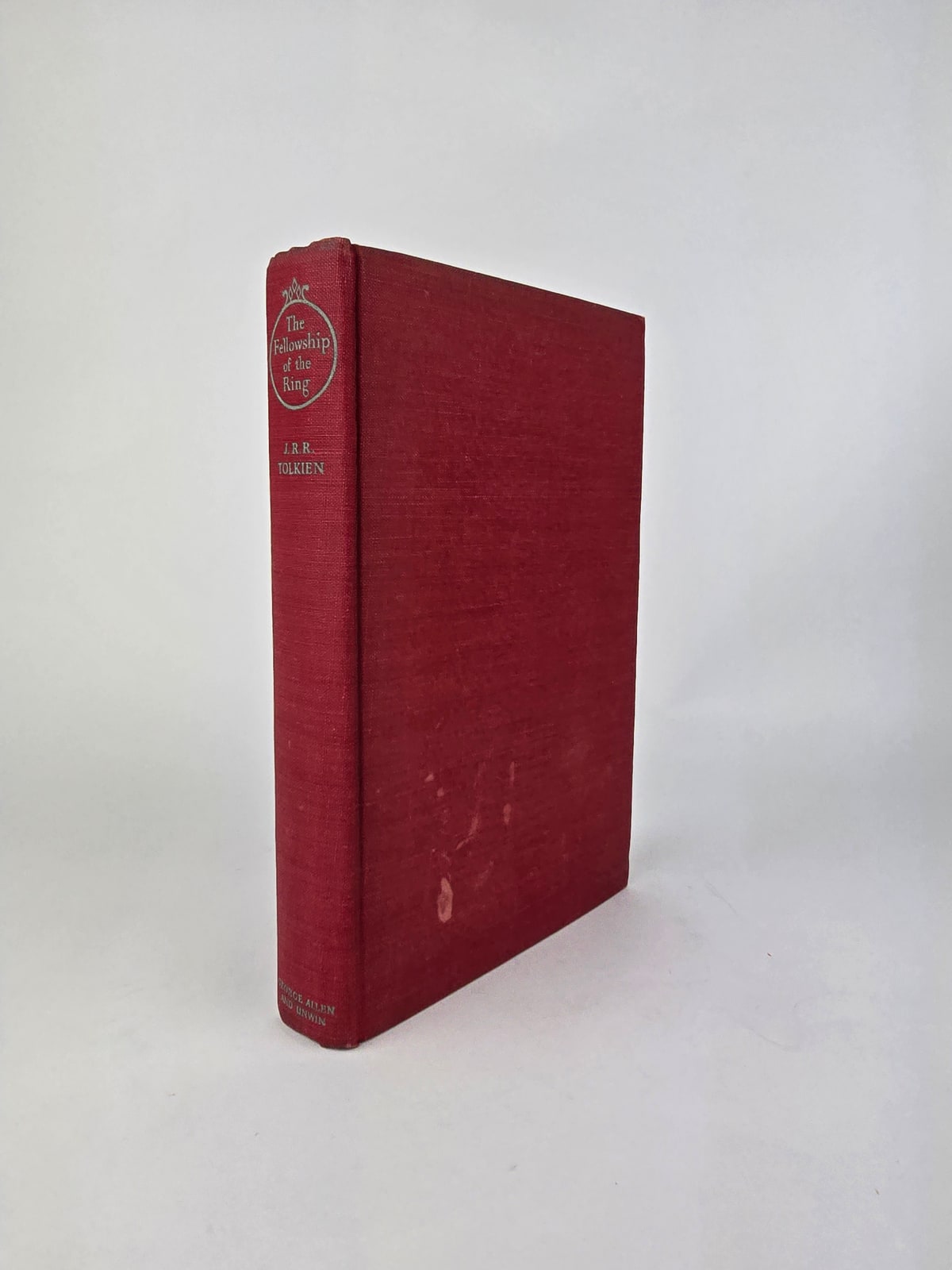
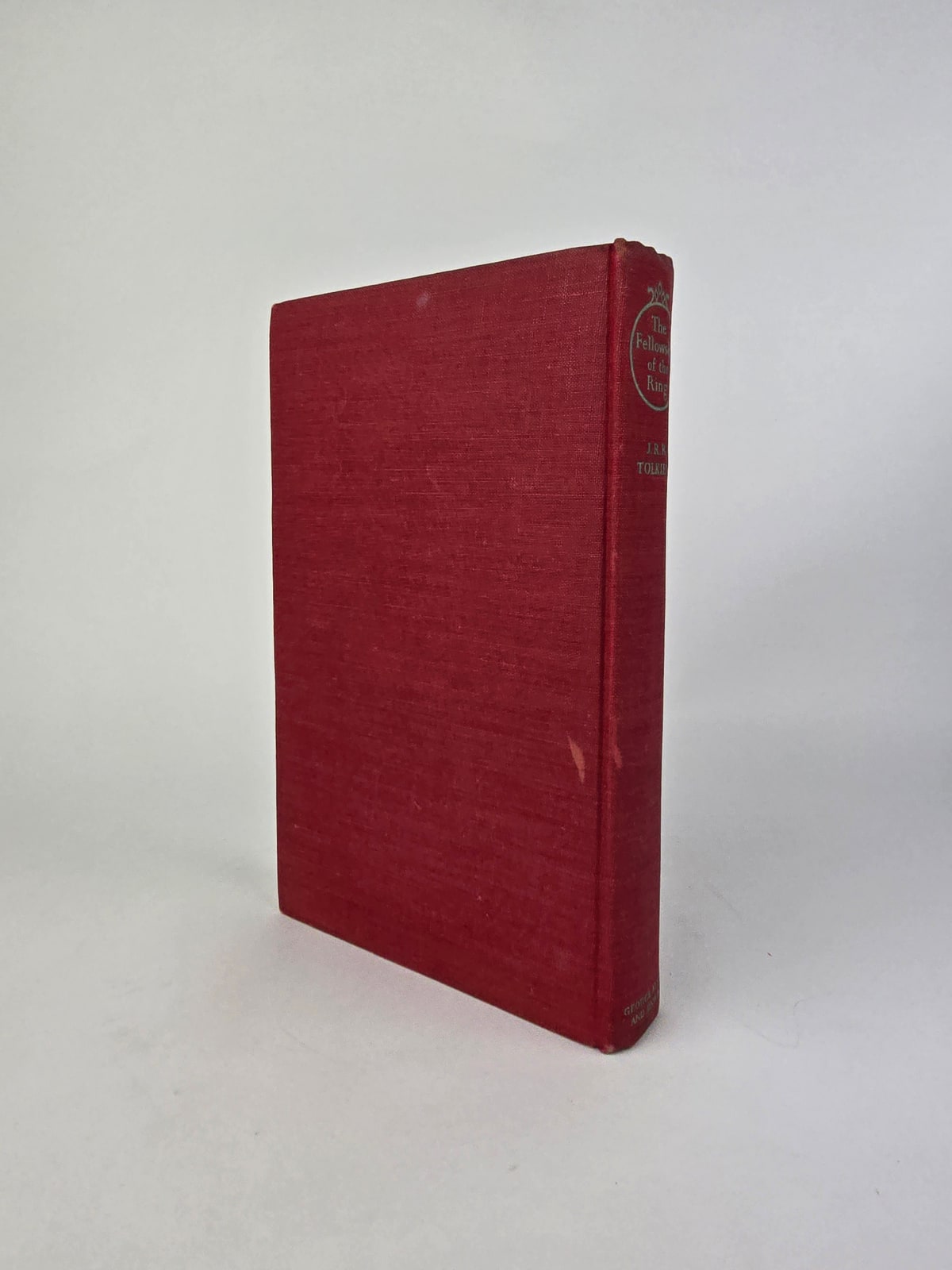
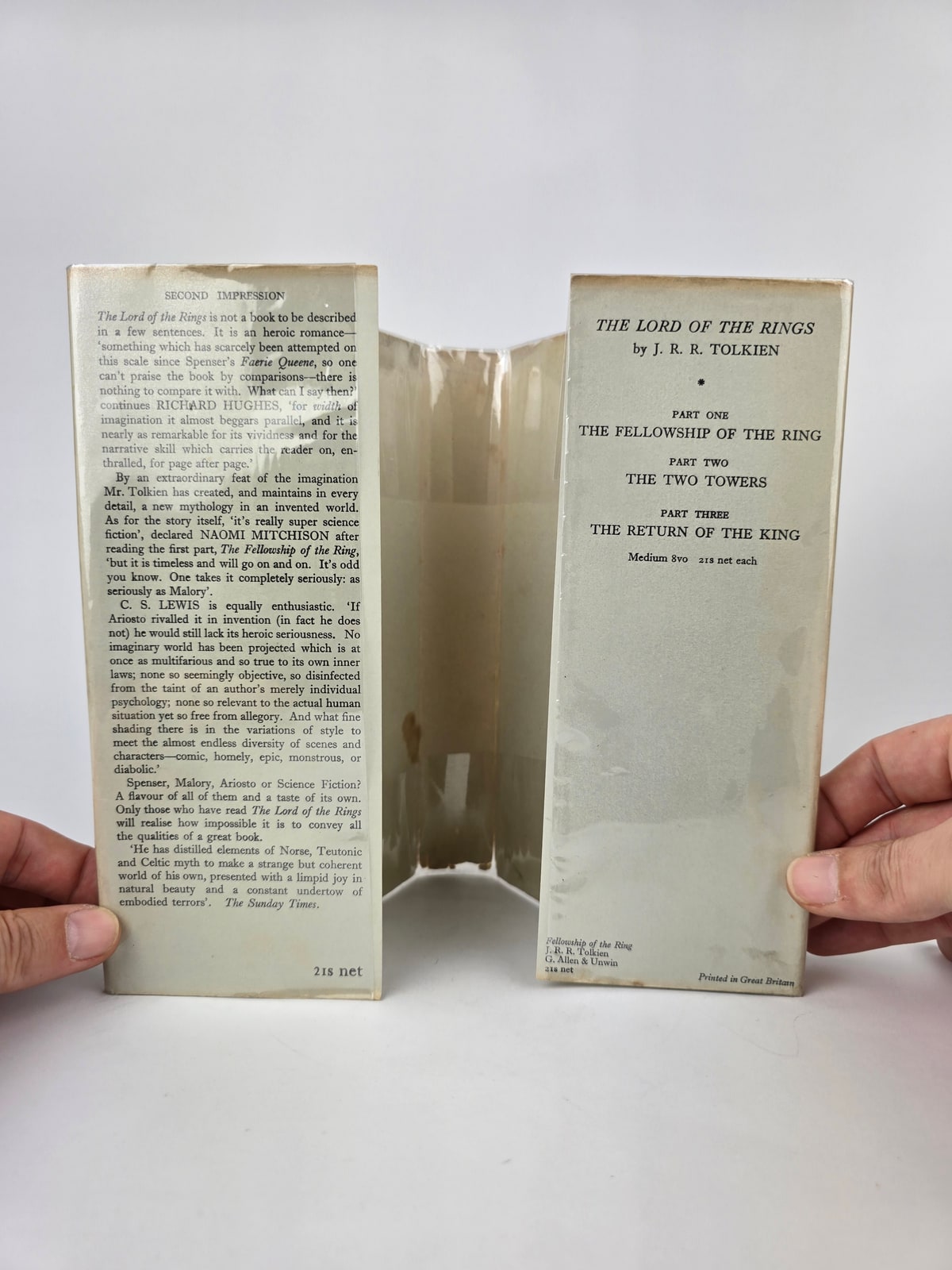
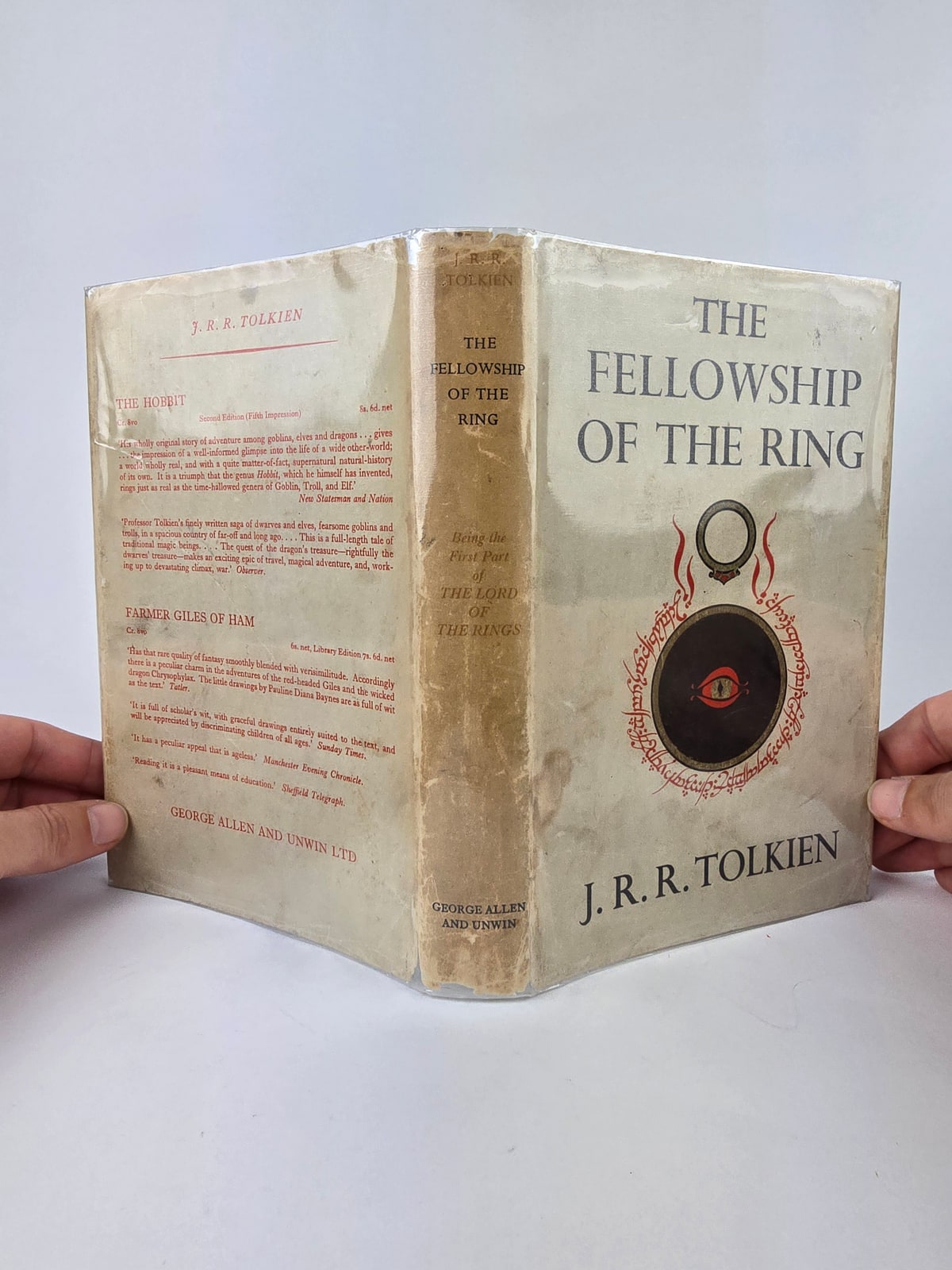
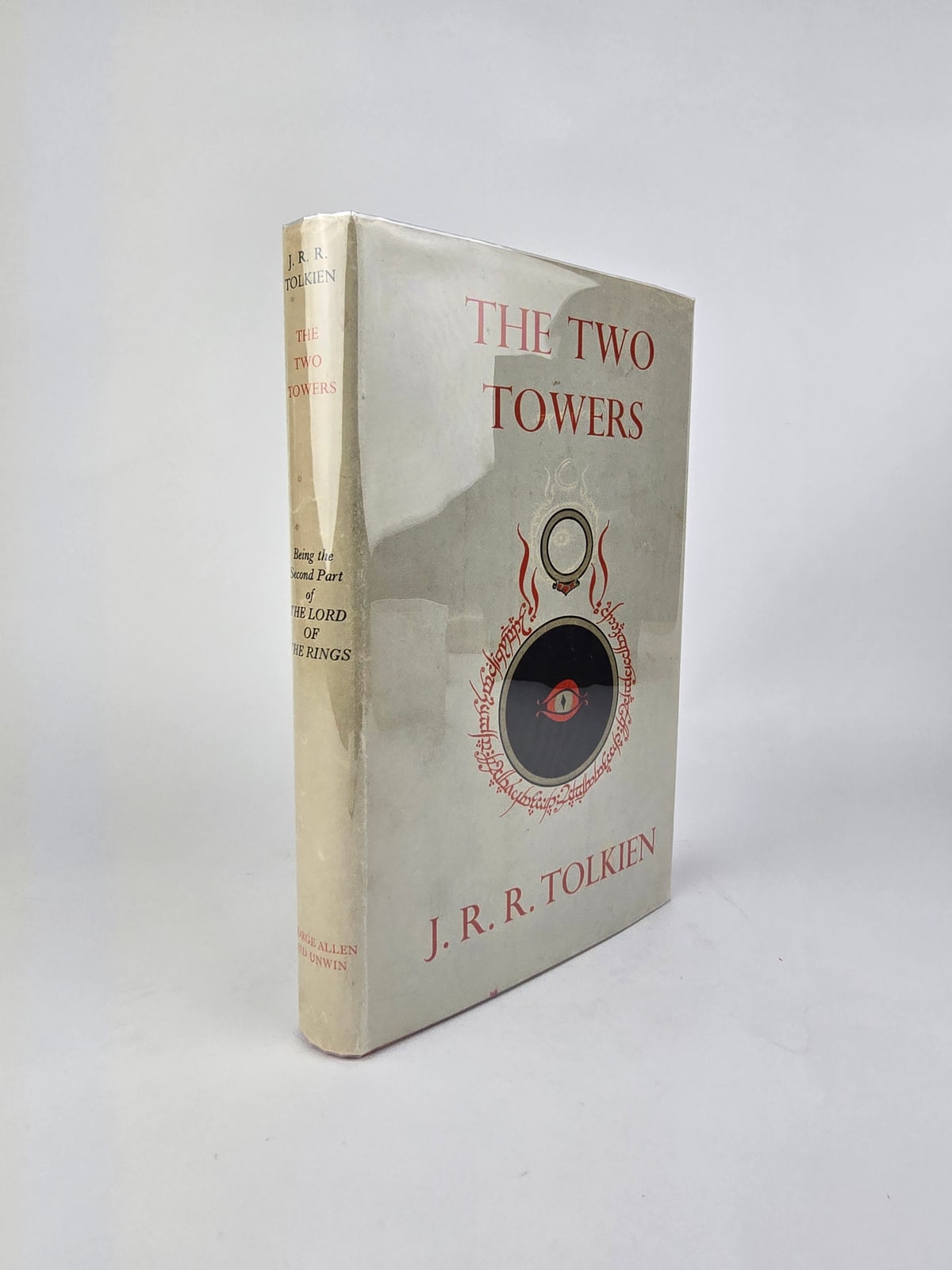
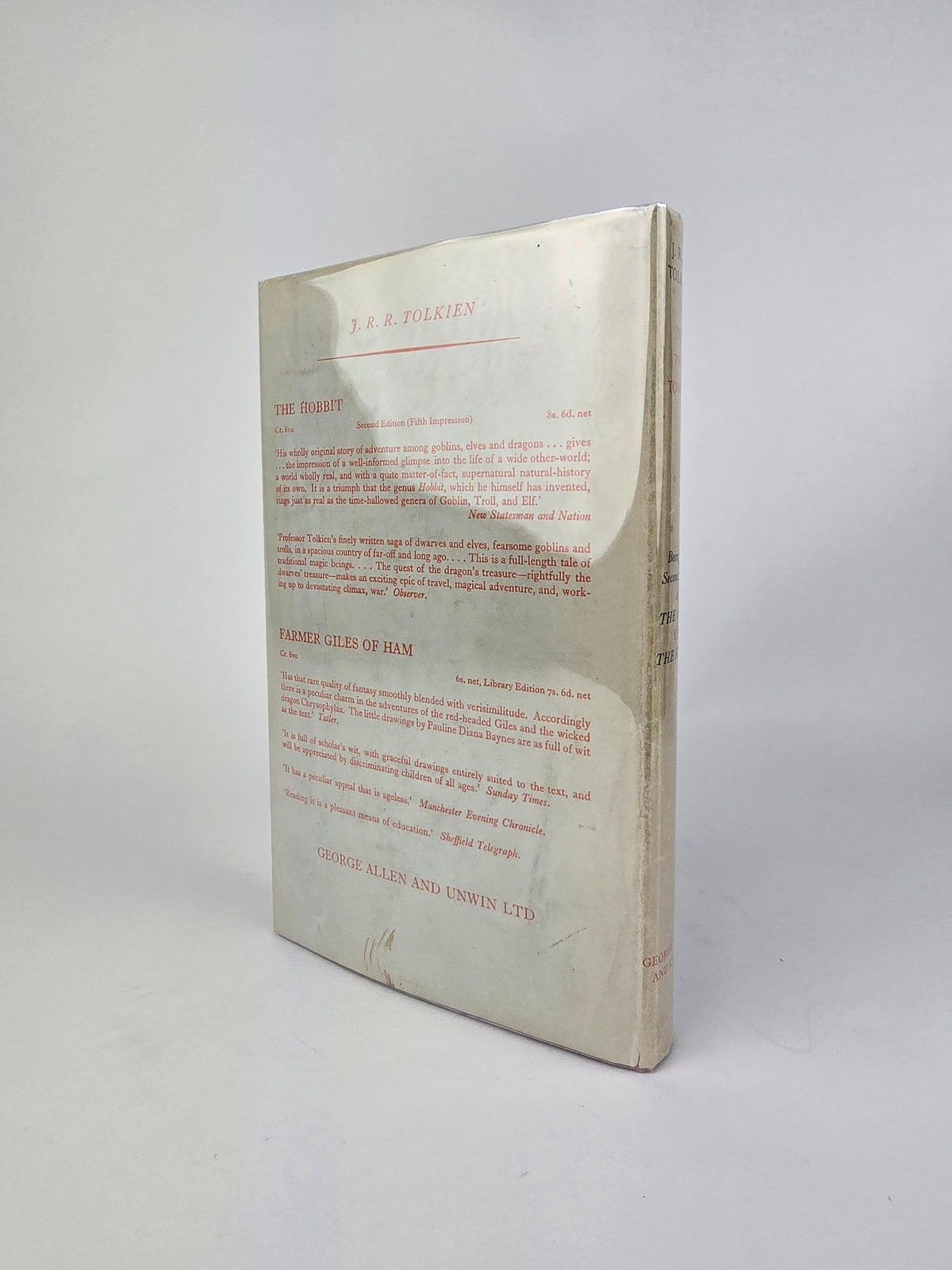
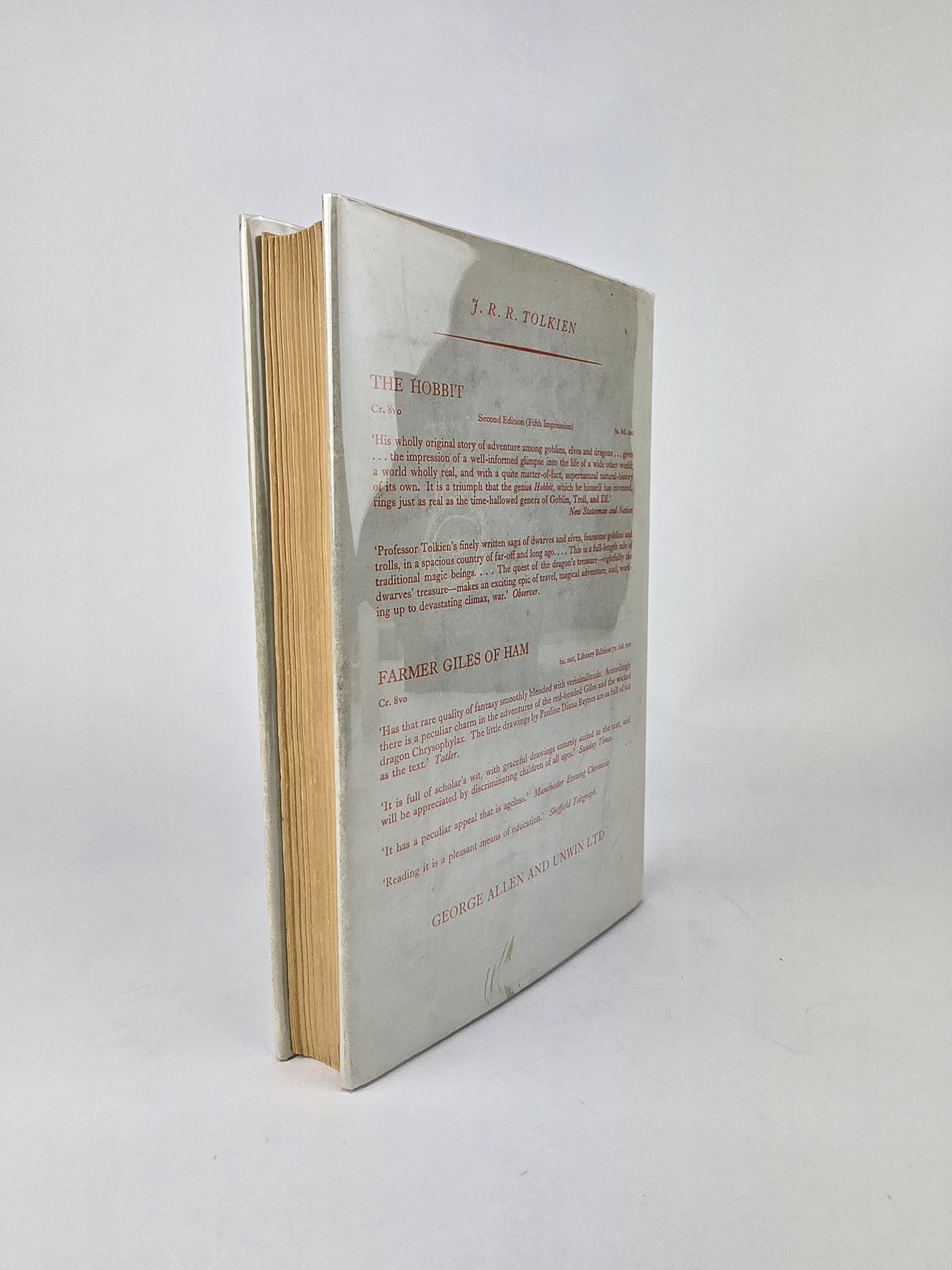
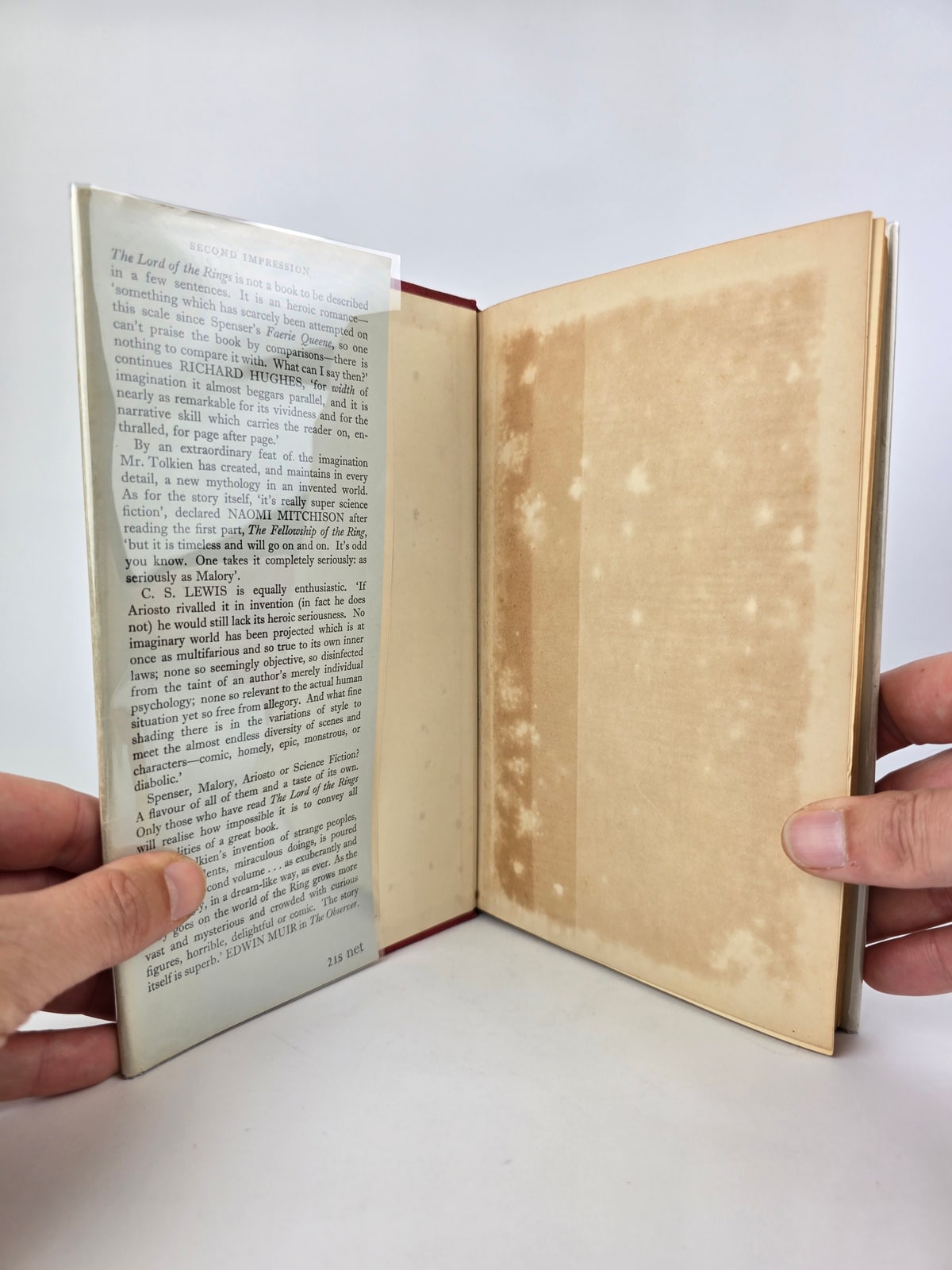
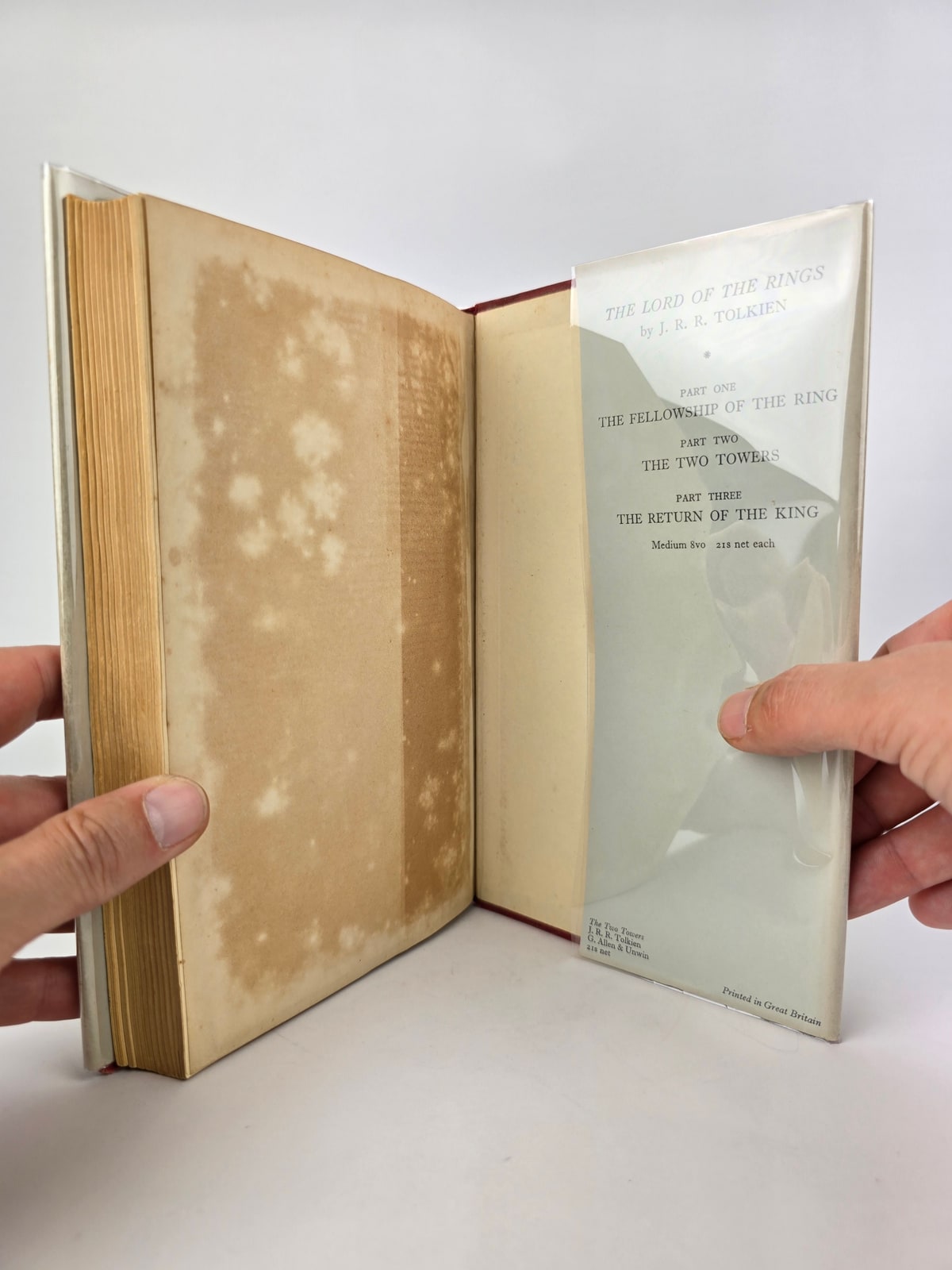
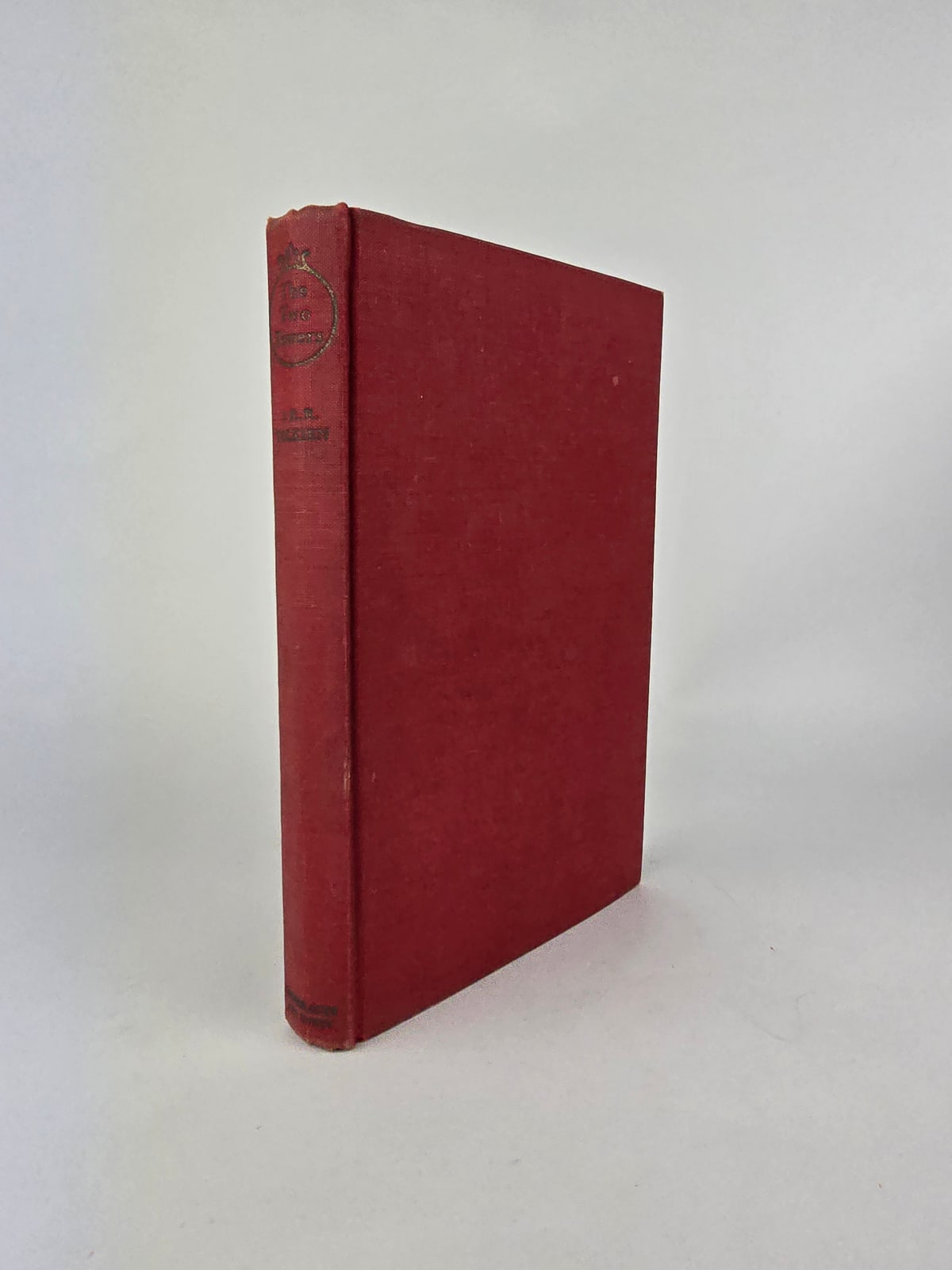
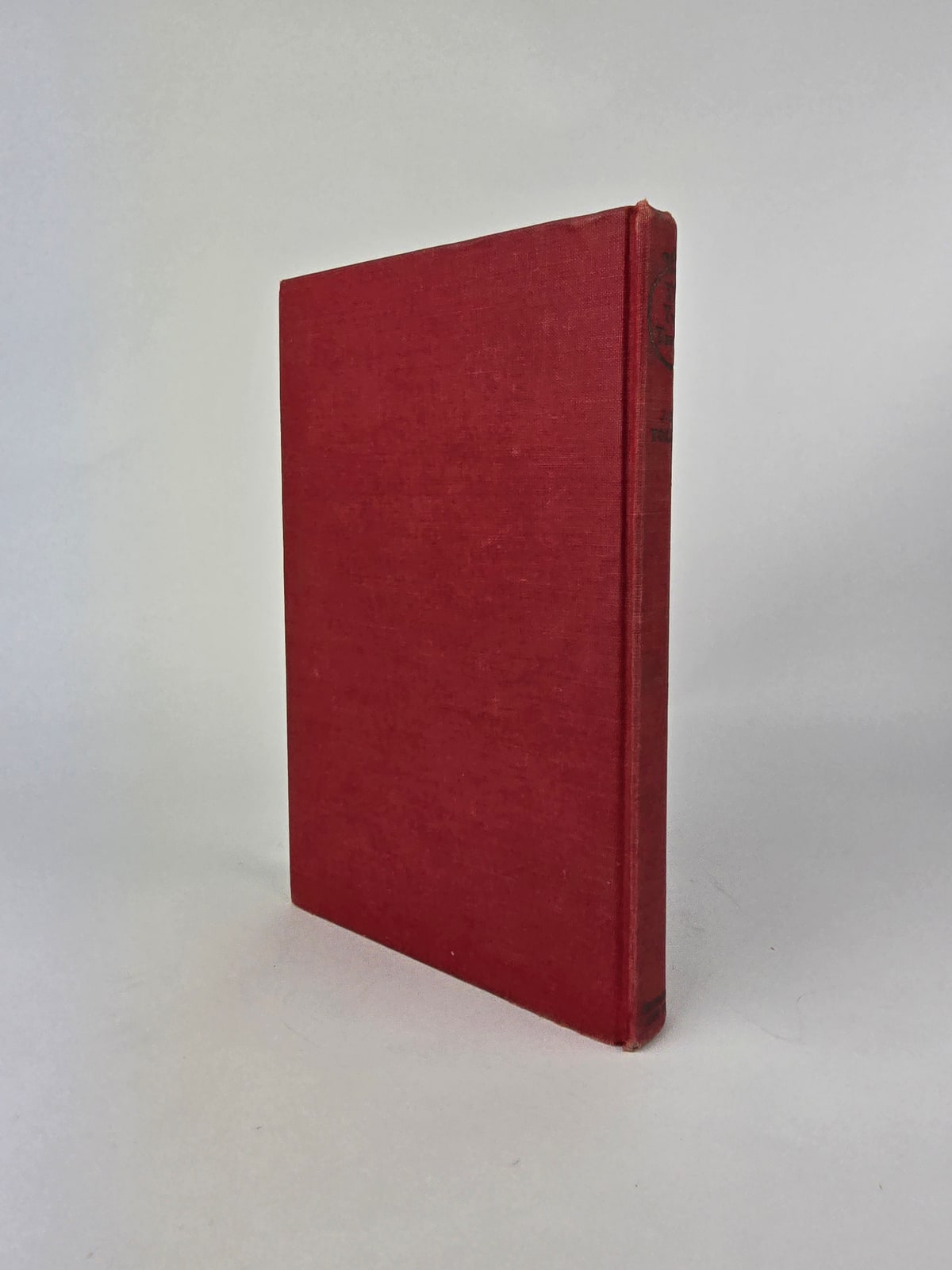
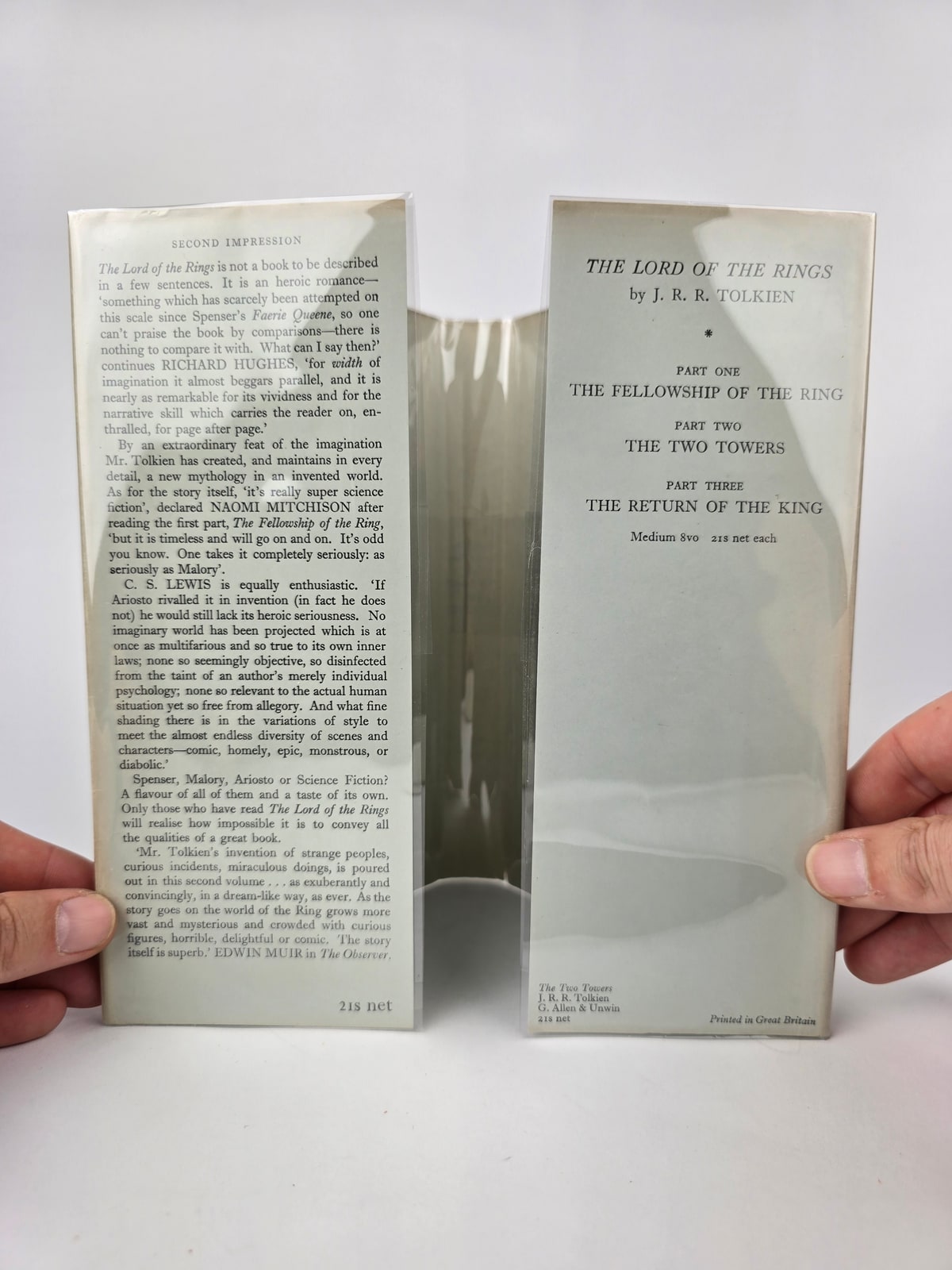
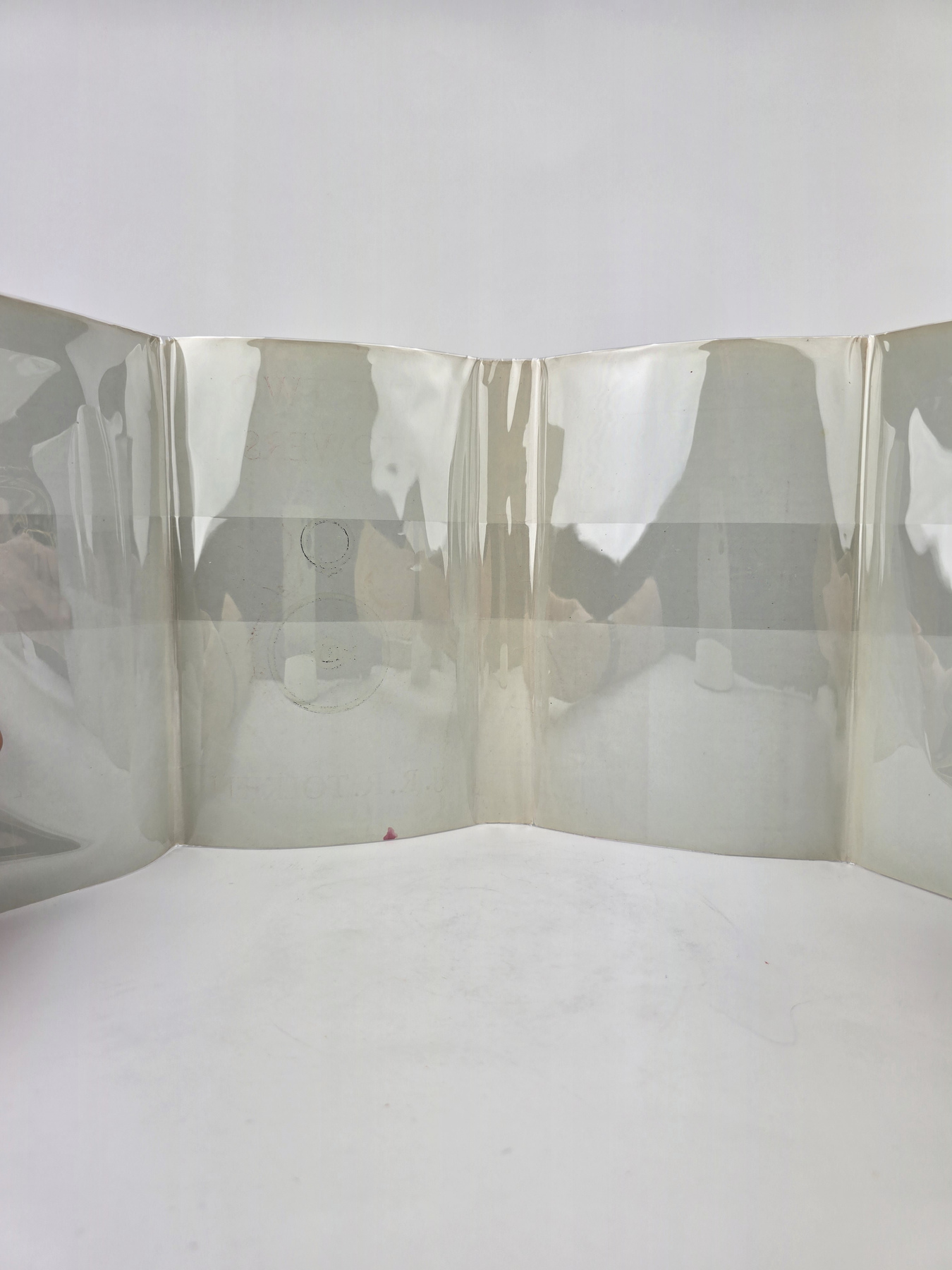
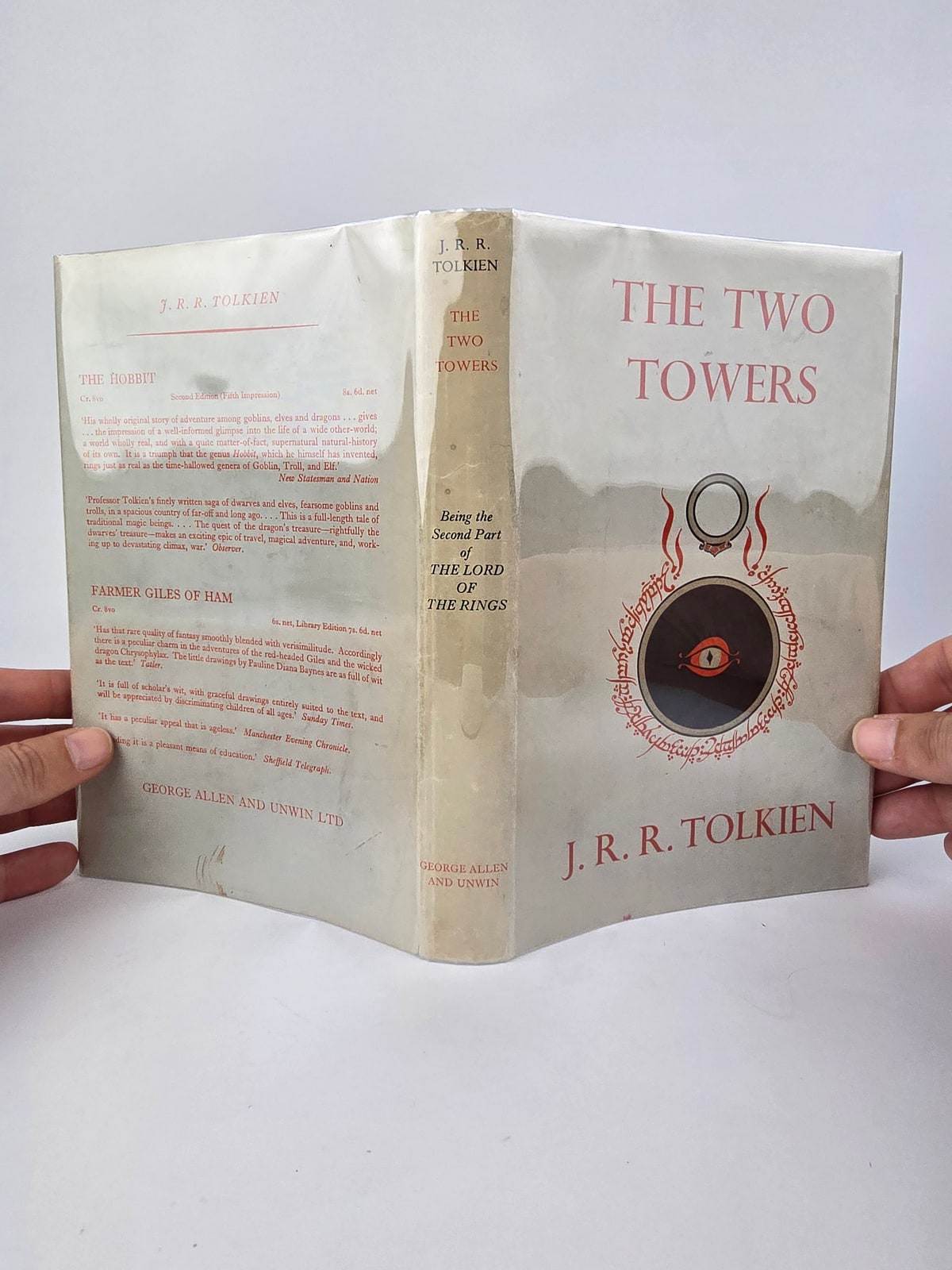
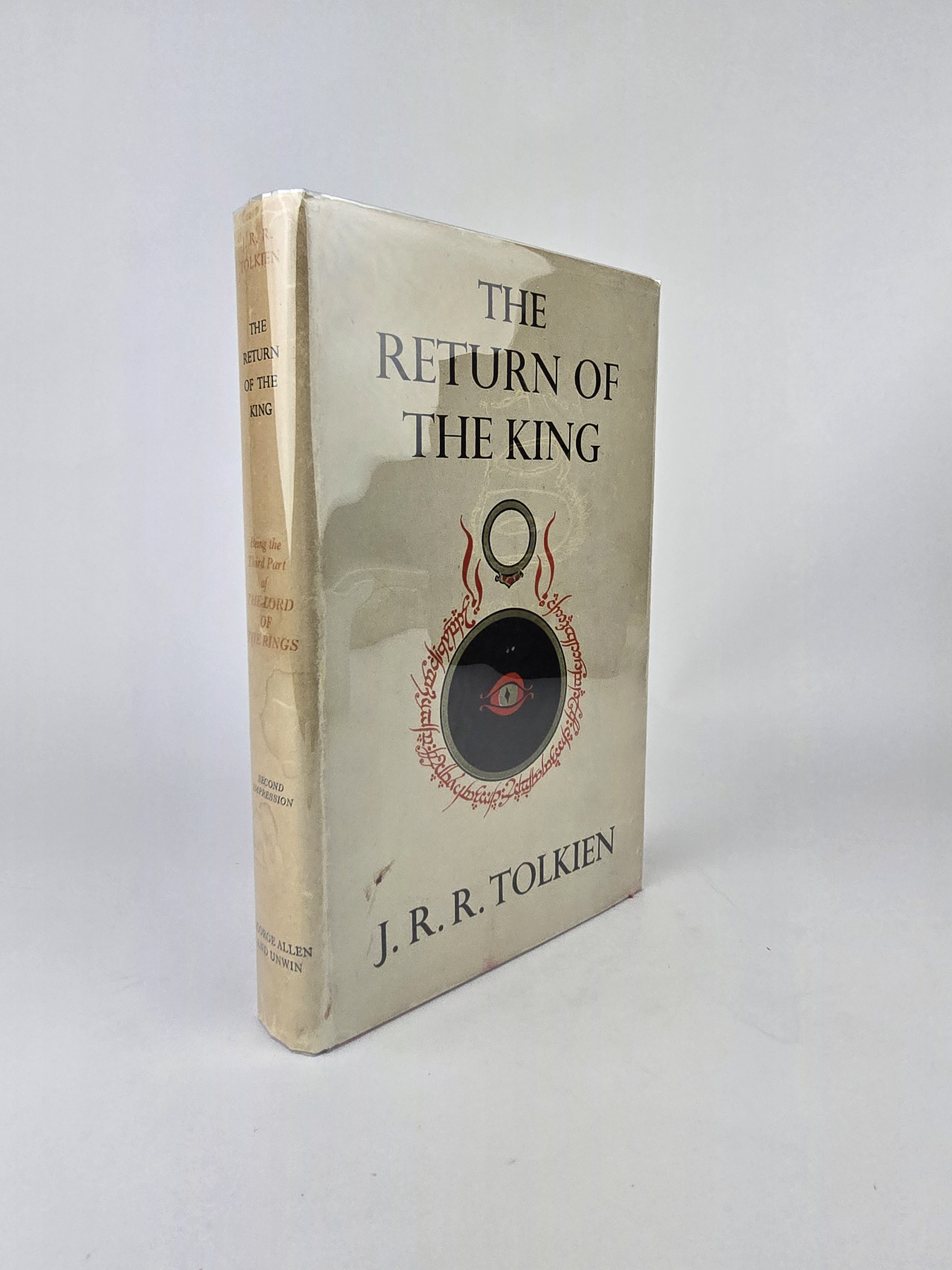
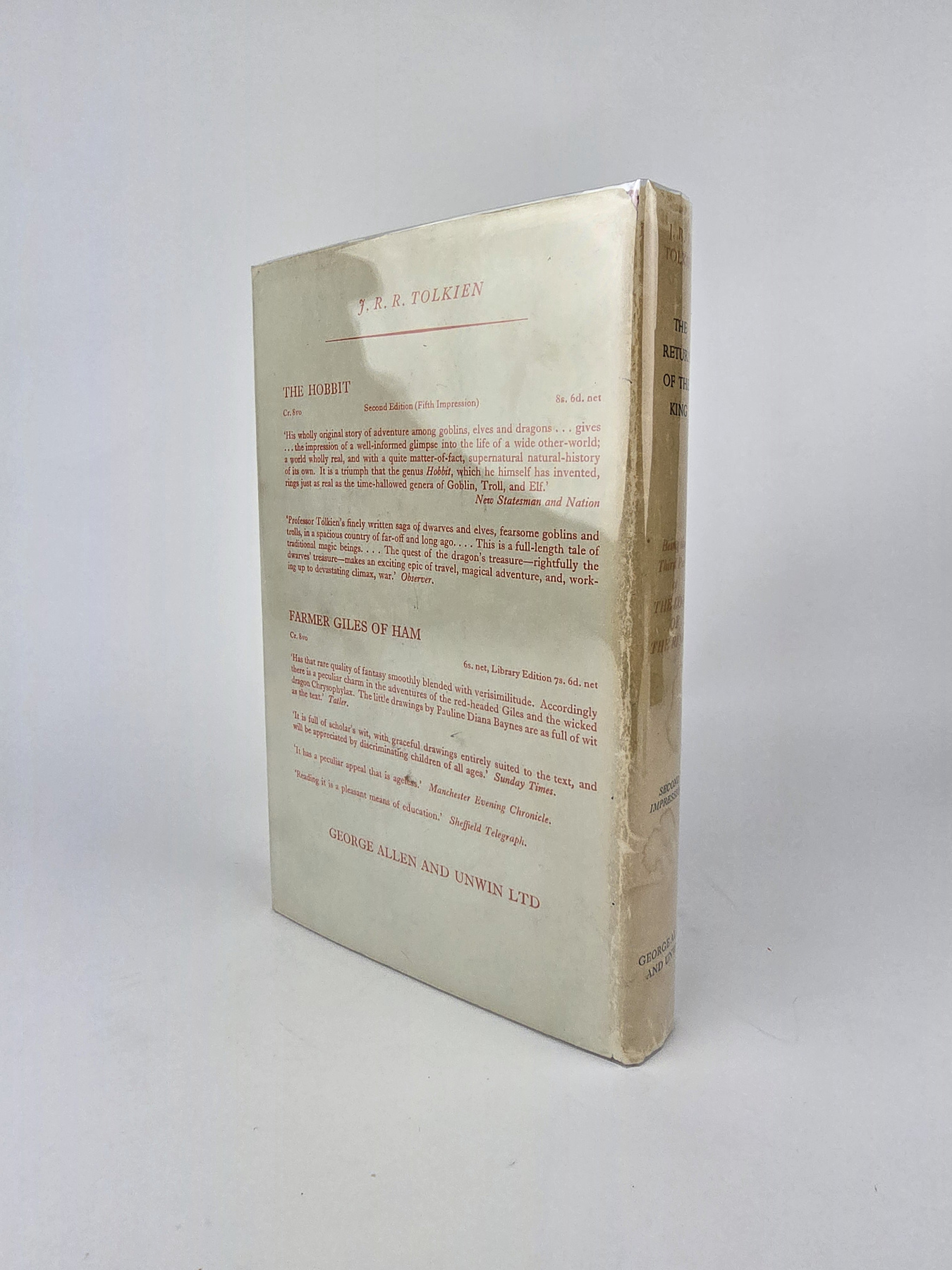
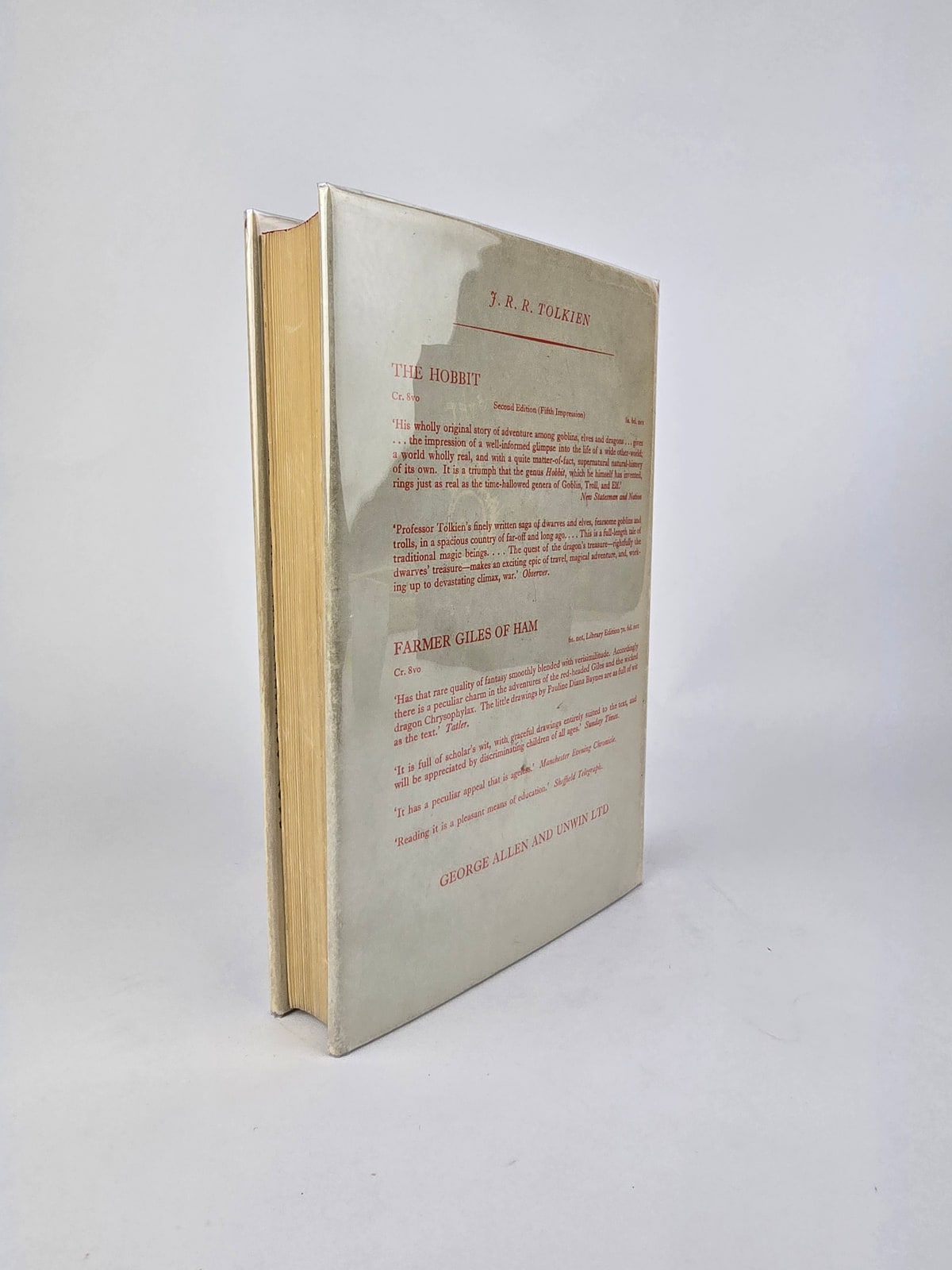
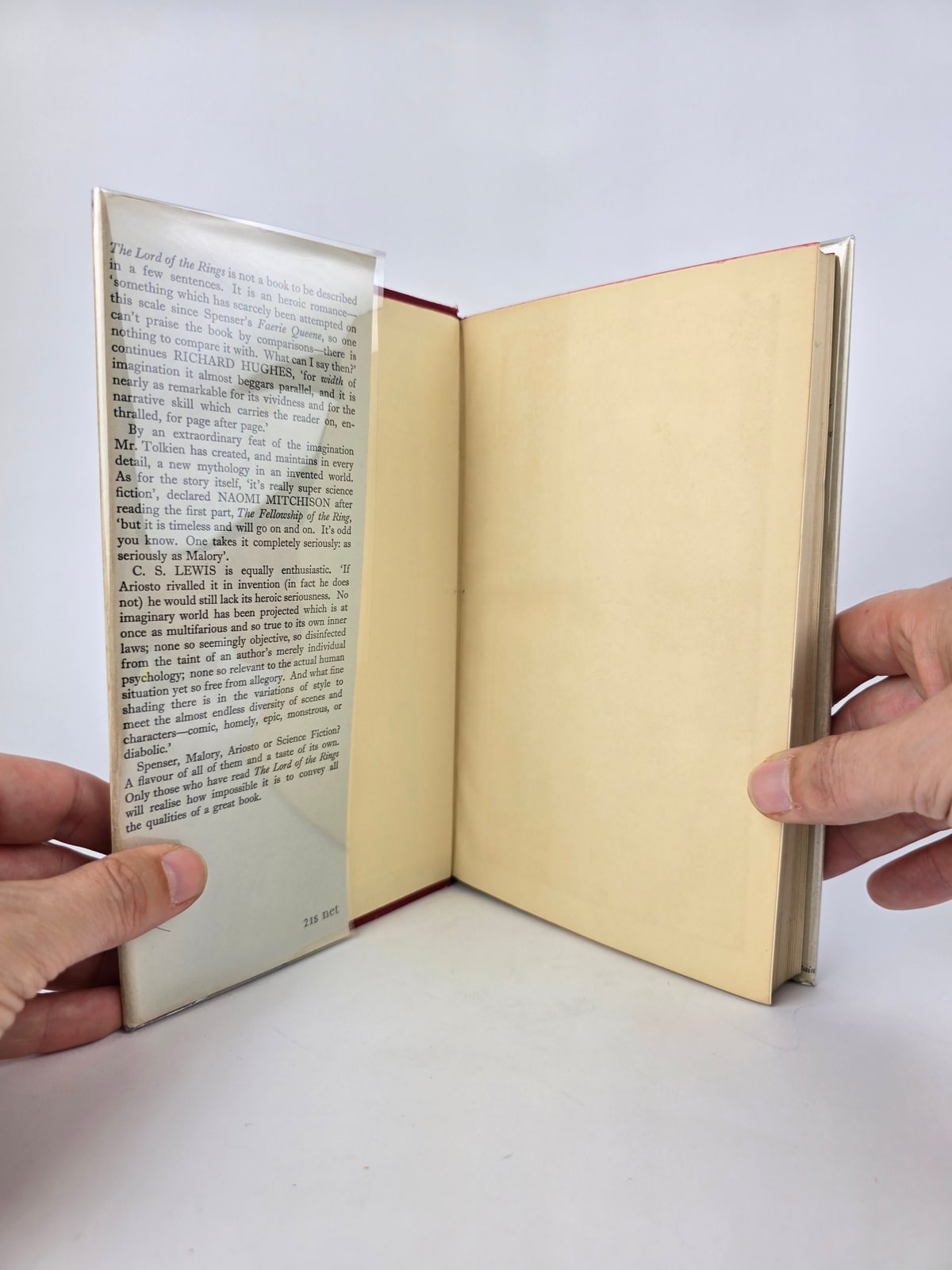
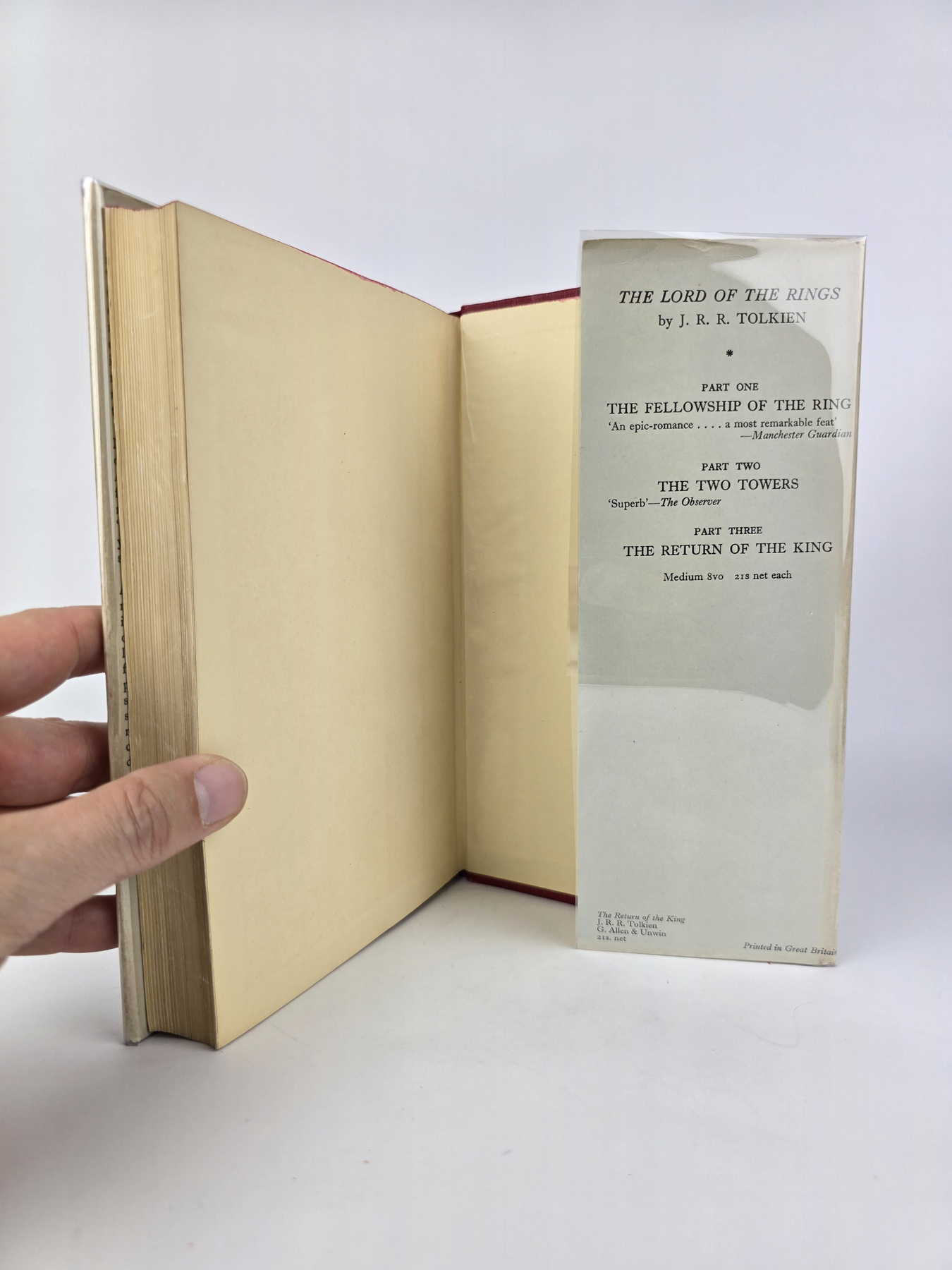
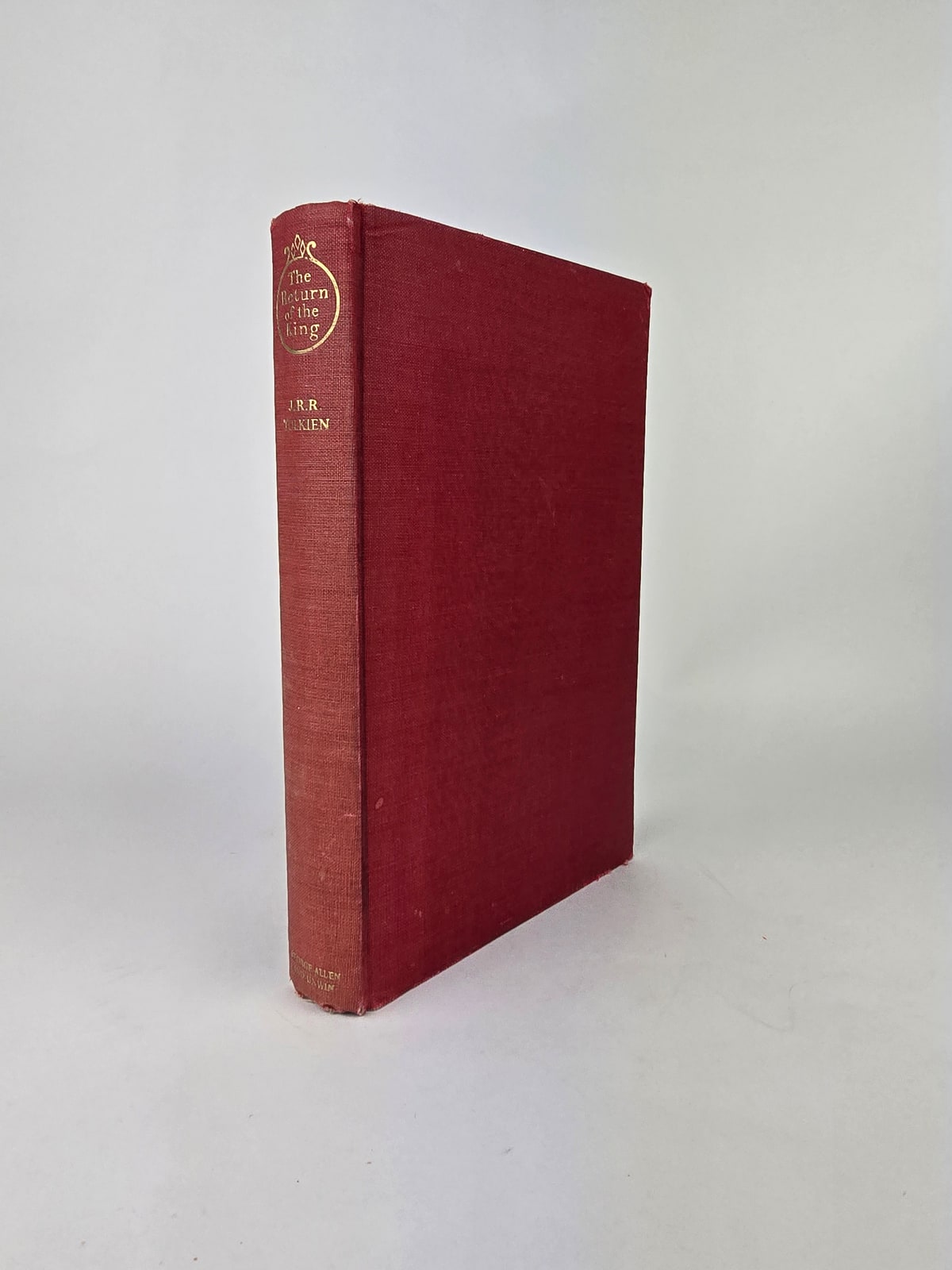
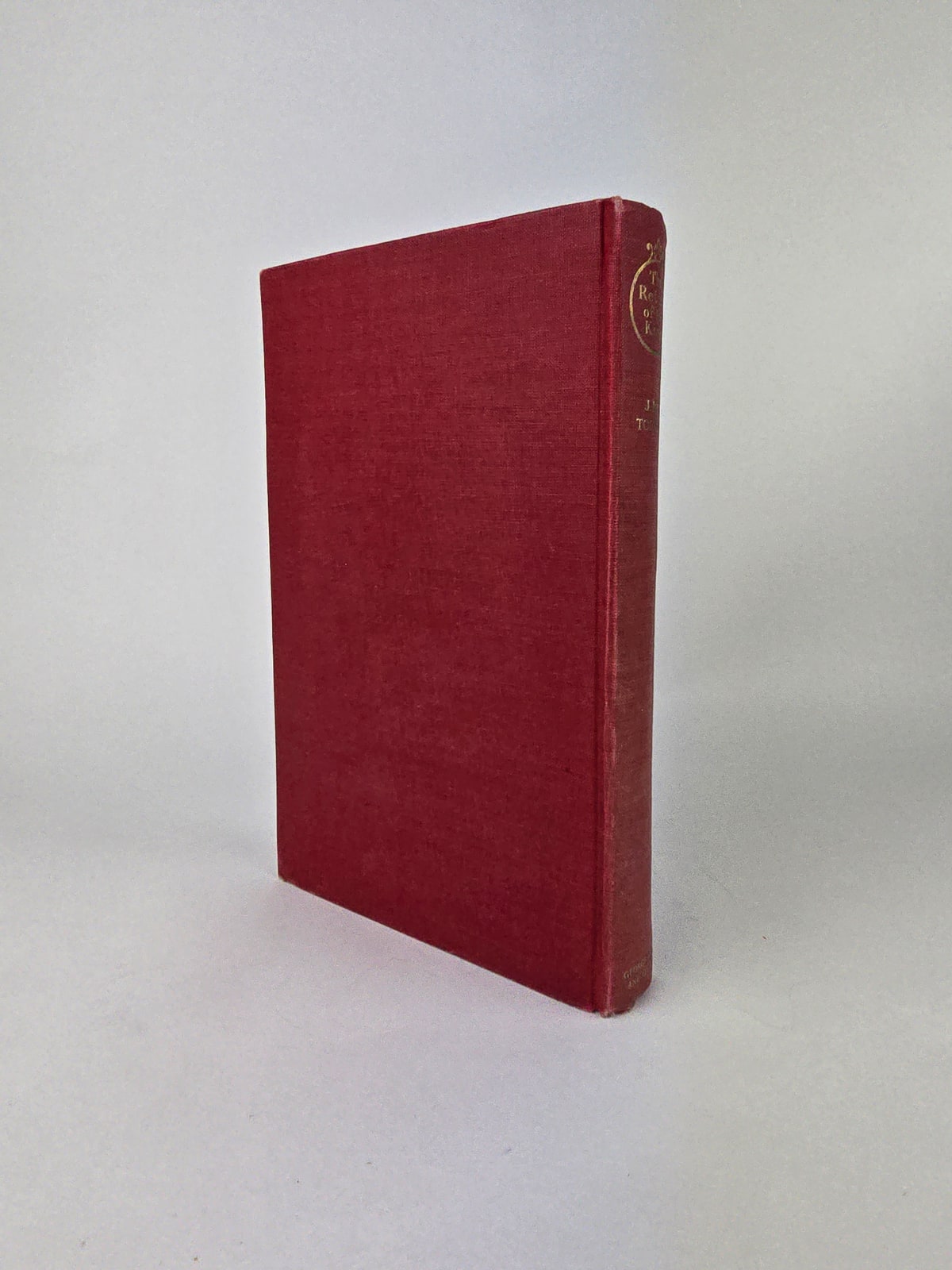
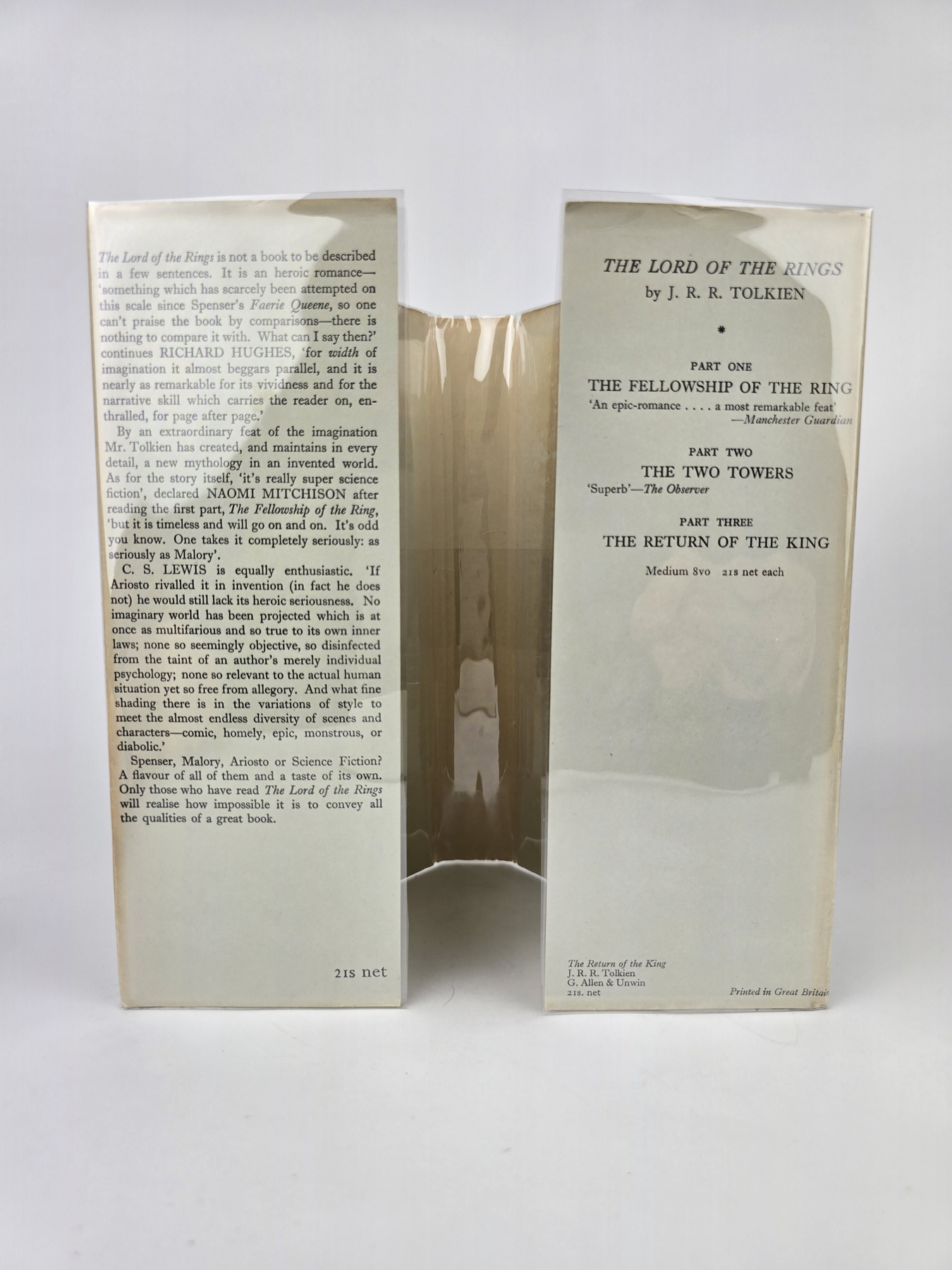
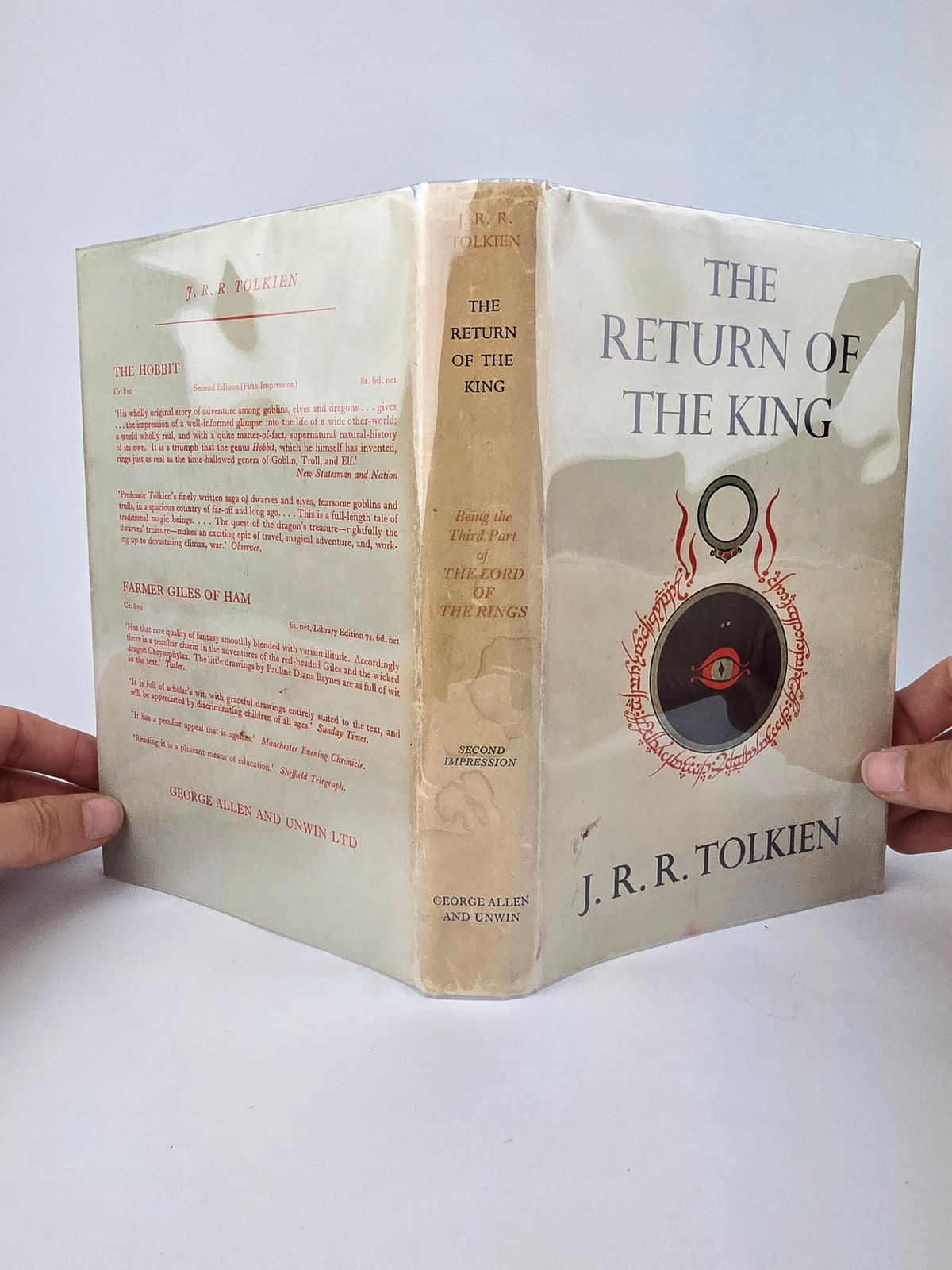
The publisher’s red cloth bindings carry the individual titles, circular ornaments and publisher’s lettering on the spines. The pale dust jackets are printed in red and black with the Ring-and-Eye design based on Tolkien’s artwork. The front flaps of Fellowship and The Two Towers are headed “Second Impression”. All three jackets retain their printed price of 21s. net and are fitted with clear protective sleeves.
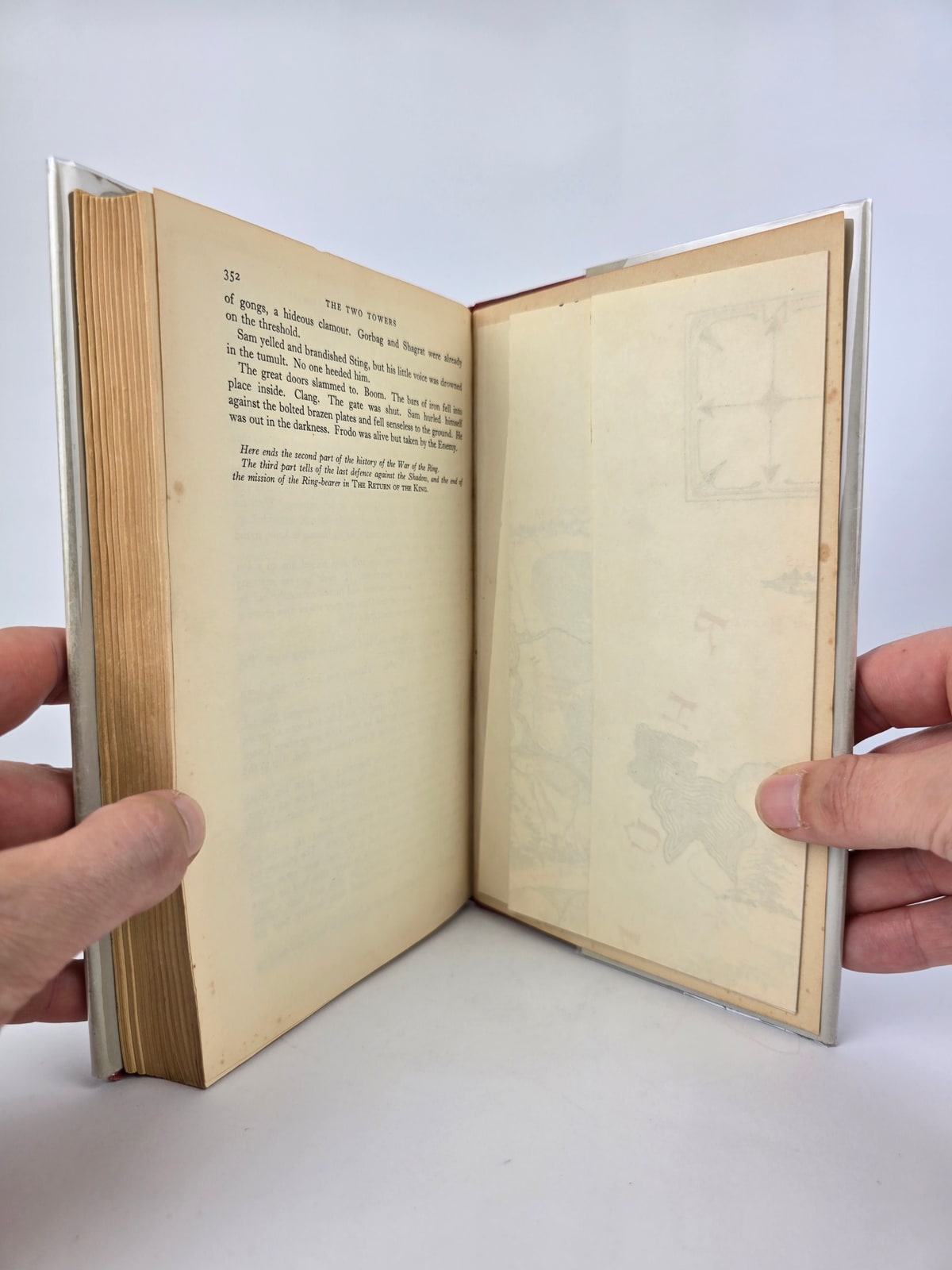
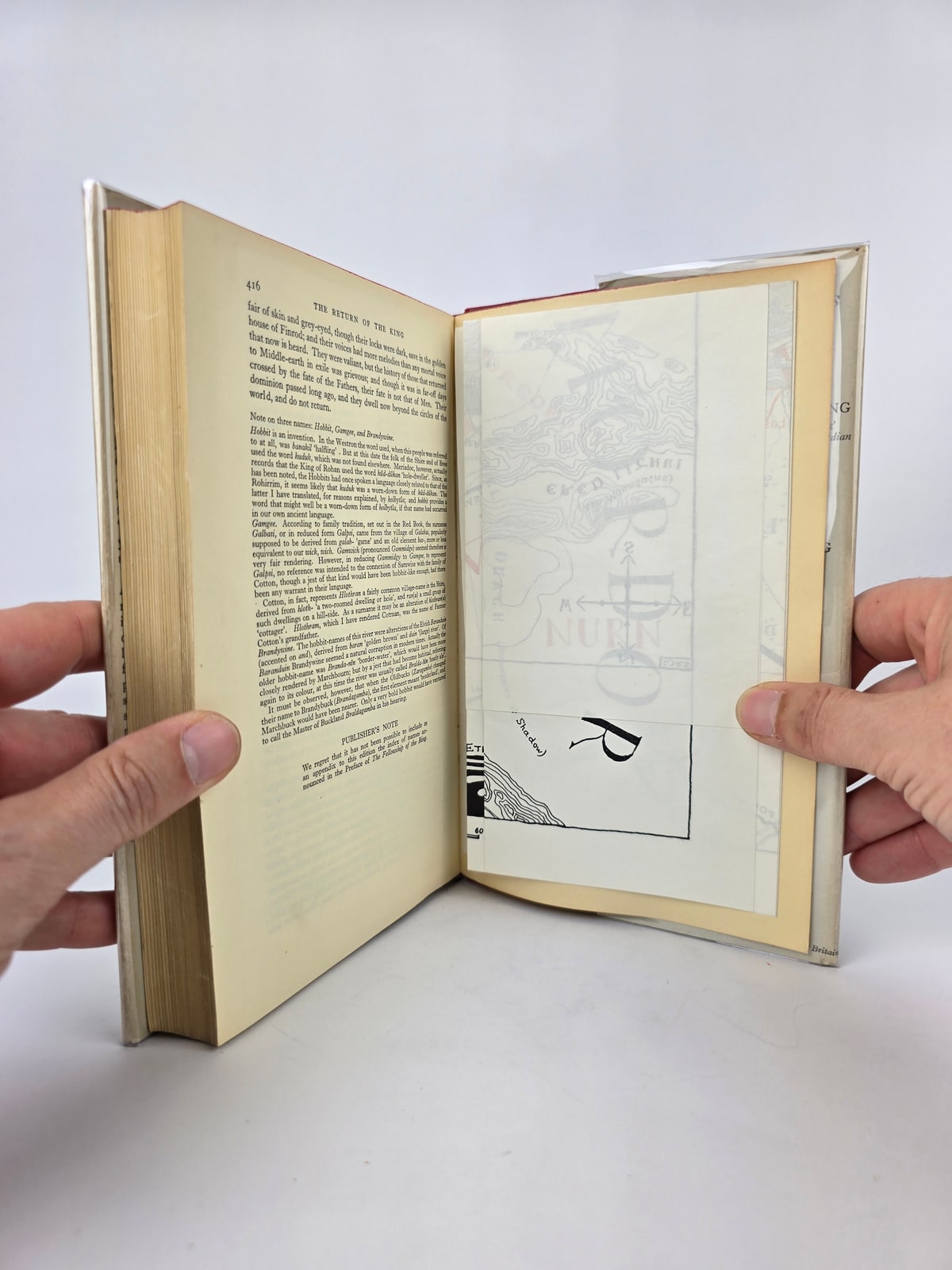
Fellowship and The Two Towers retain the folding map of The West of Middle-earth at the End of the Third Age at the rear. Return retains the folding map of Gondor, Rohan and Mordor. The maps are photographed attached and folded in place. A Part of the Shire appears opposite page 24 in Fellowship; the final volume includes Tolkien’s Appendices on the history, families, calendars, languages and writing systems of Middle-earth.
Black Custom Clamshell Case
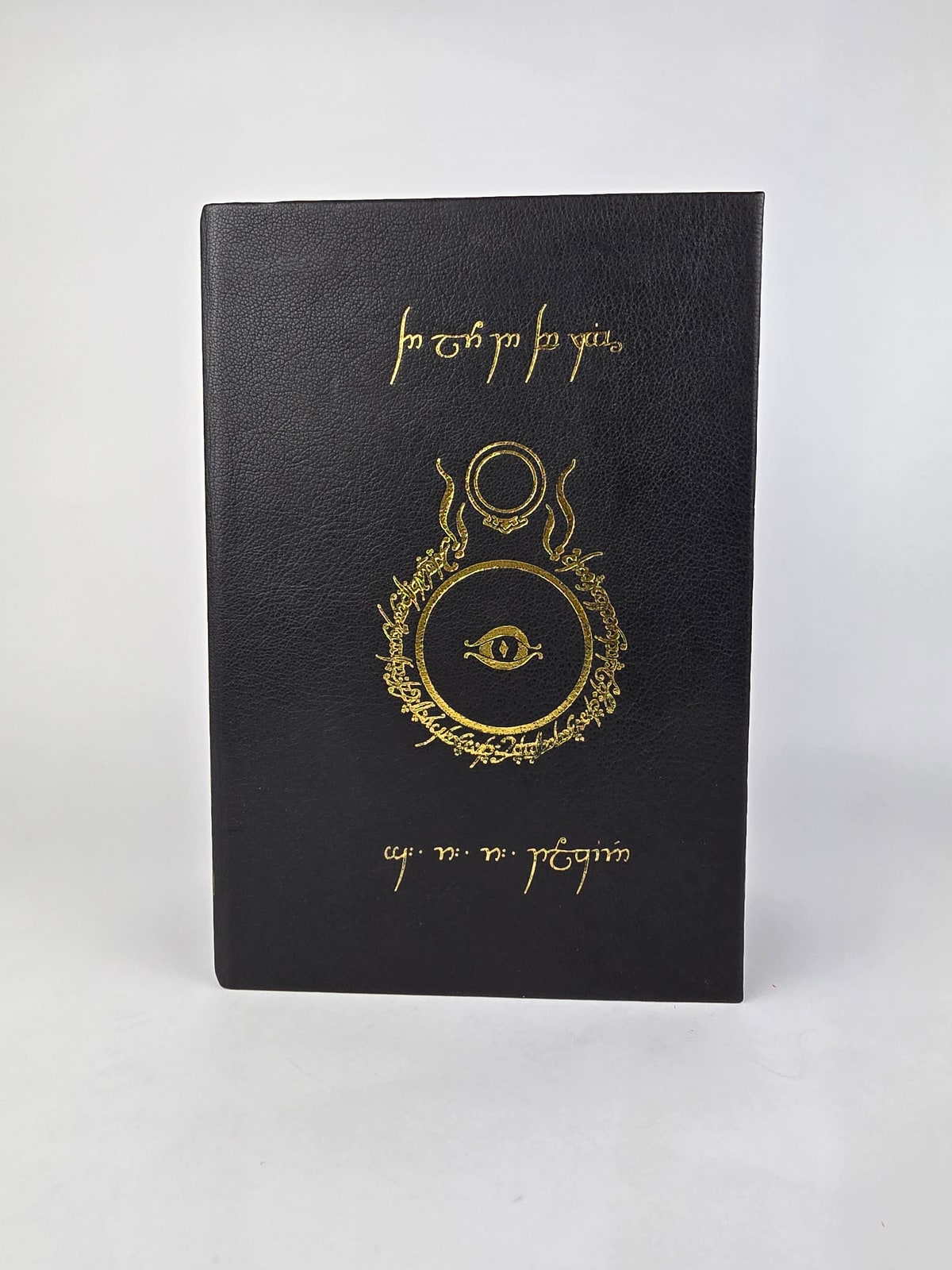
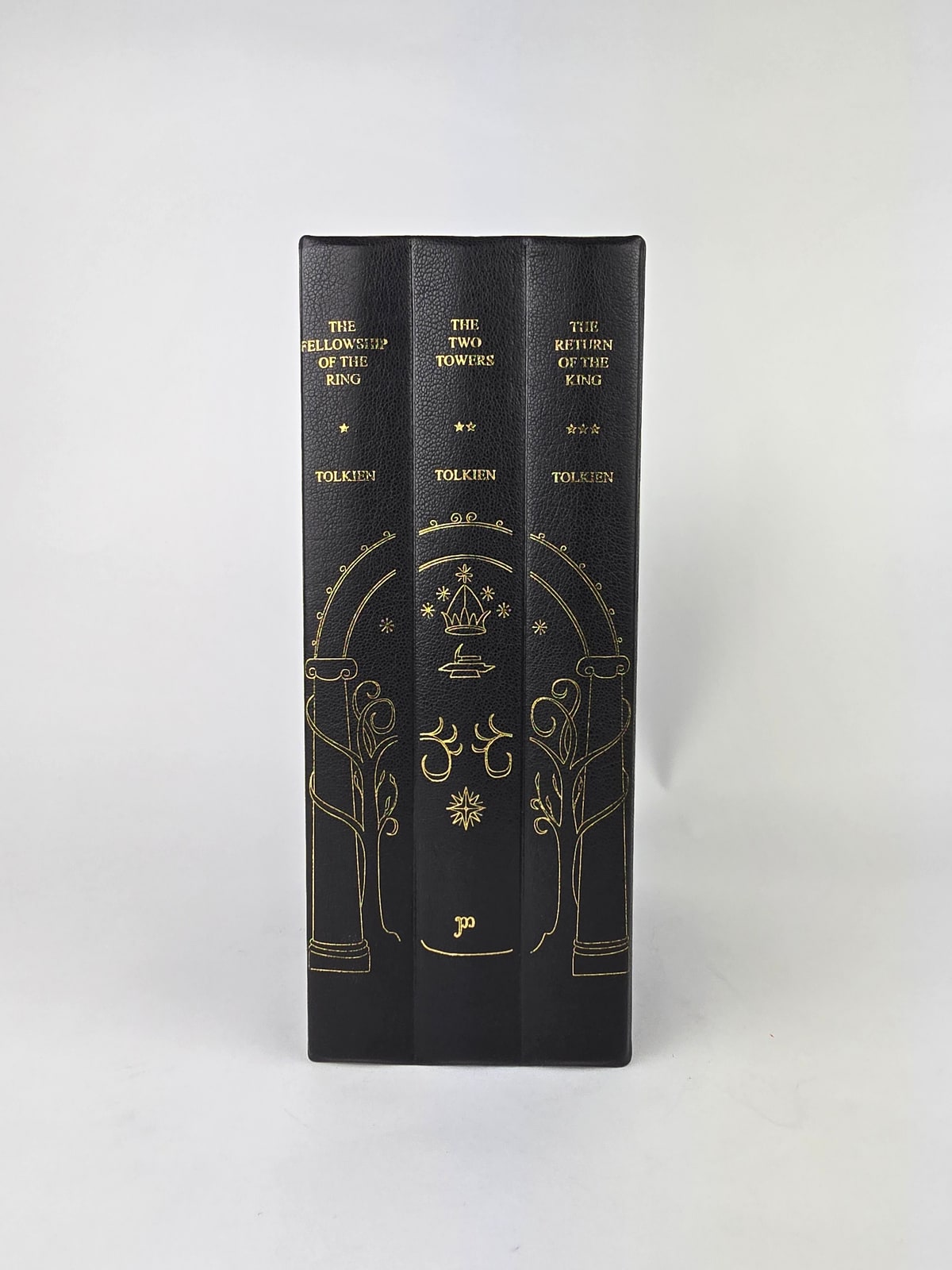
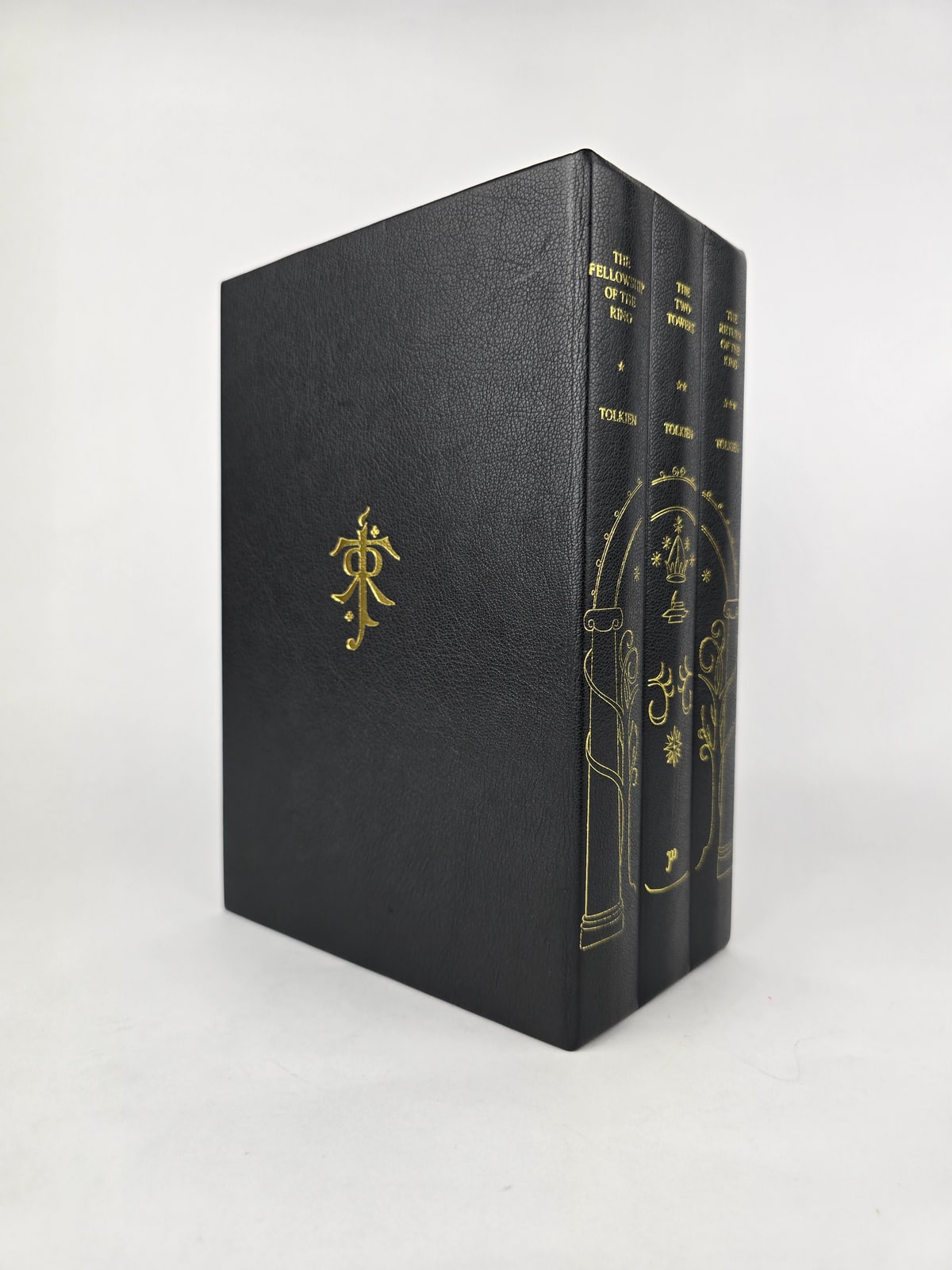
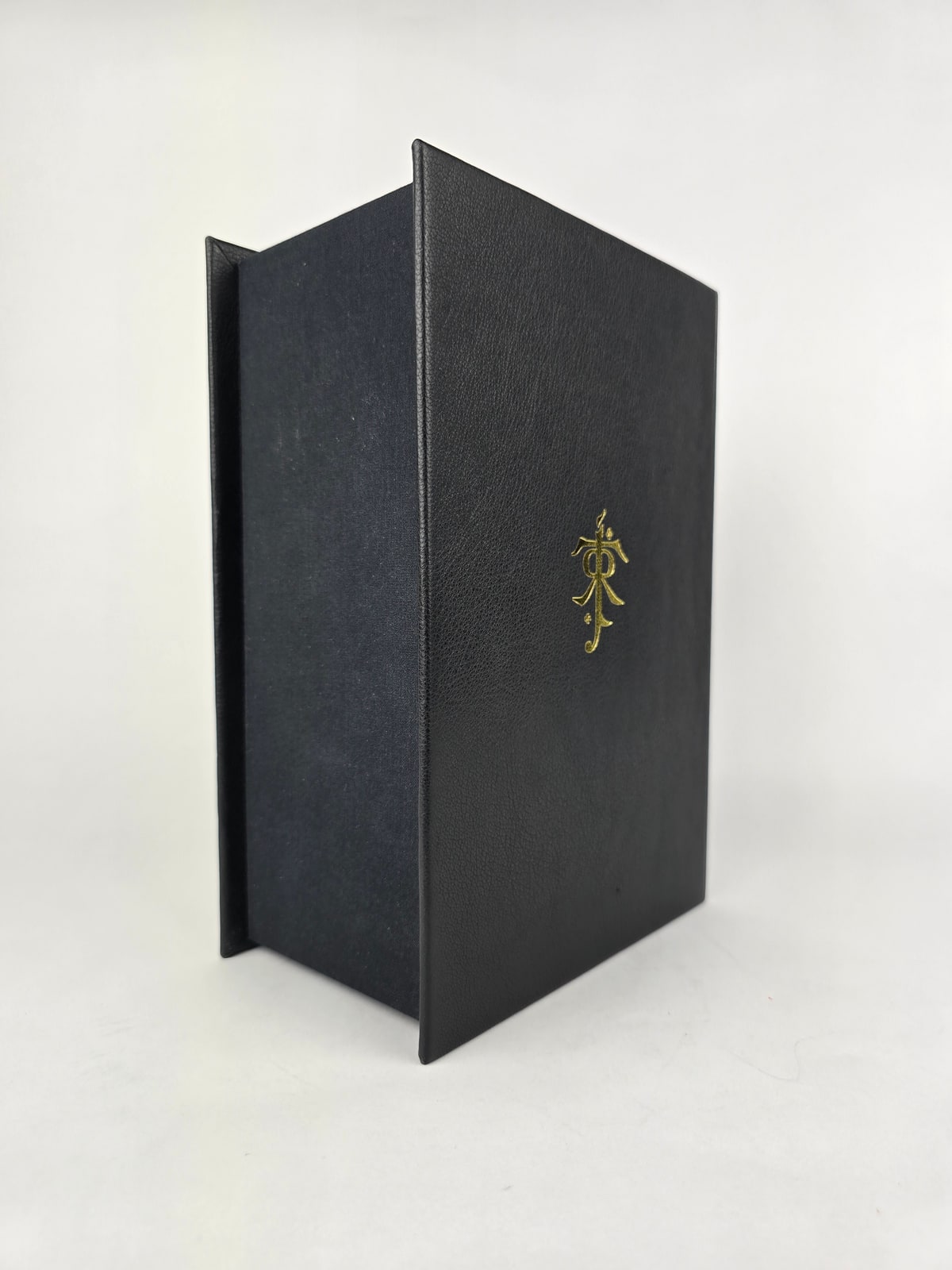
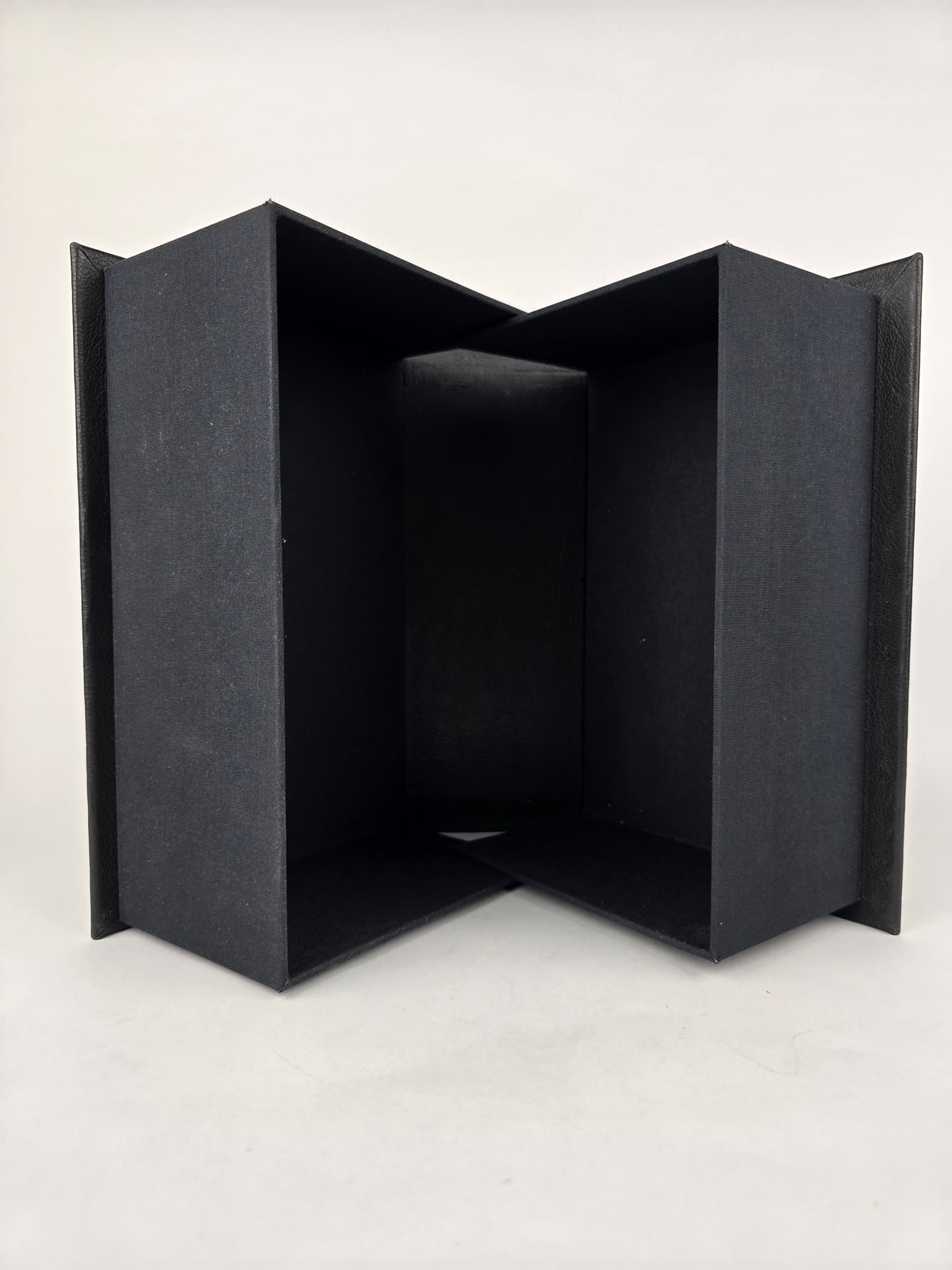
The set is presented in a substantial black custom clamshell with dark inner trays. The spine is divided into three book-like panels bearing the individual titles; a continuous gilt design of the Doors of Durin extends across them. The front carries a gilt Eye-and-Ring motif with script decoration, and the reverse Tolkien’s monogram. This later protective case accompanies the original cloth-bound books.
Condition
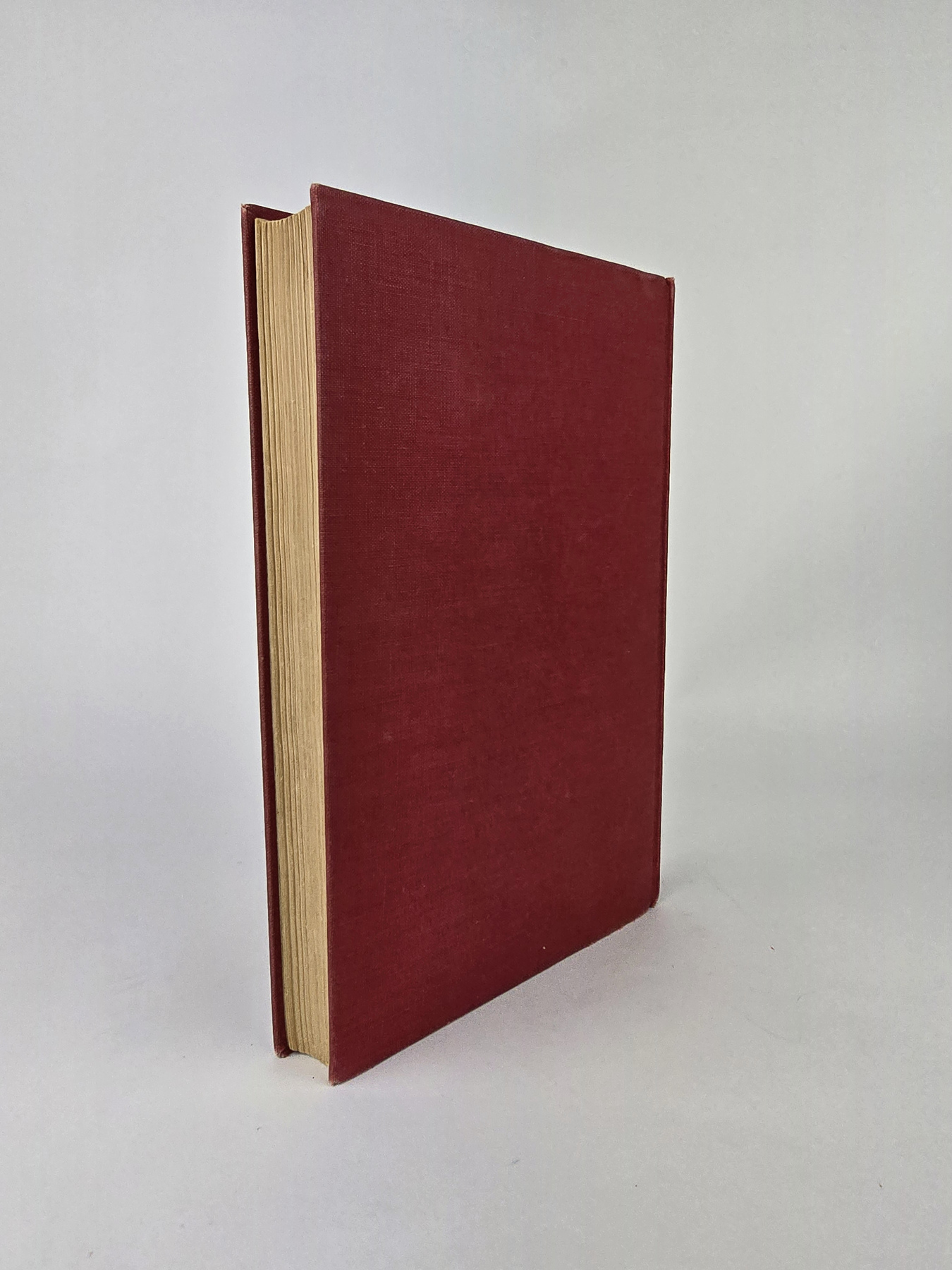
A good, attractive set with rubbing to the cloth, small marks and wear at the spine ends and corners. Fellowship has several pale scuffs towards the lower part of the front board and smaller marks on the rear. The spine lettering remains legible, with some dulling and rubbing, especially on The Two Towers.
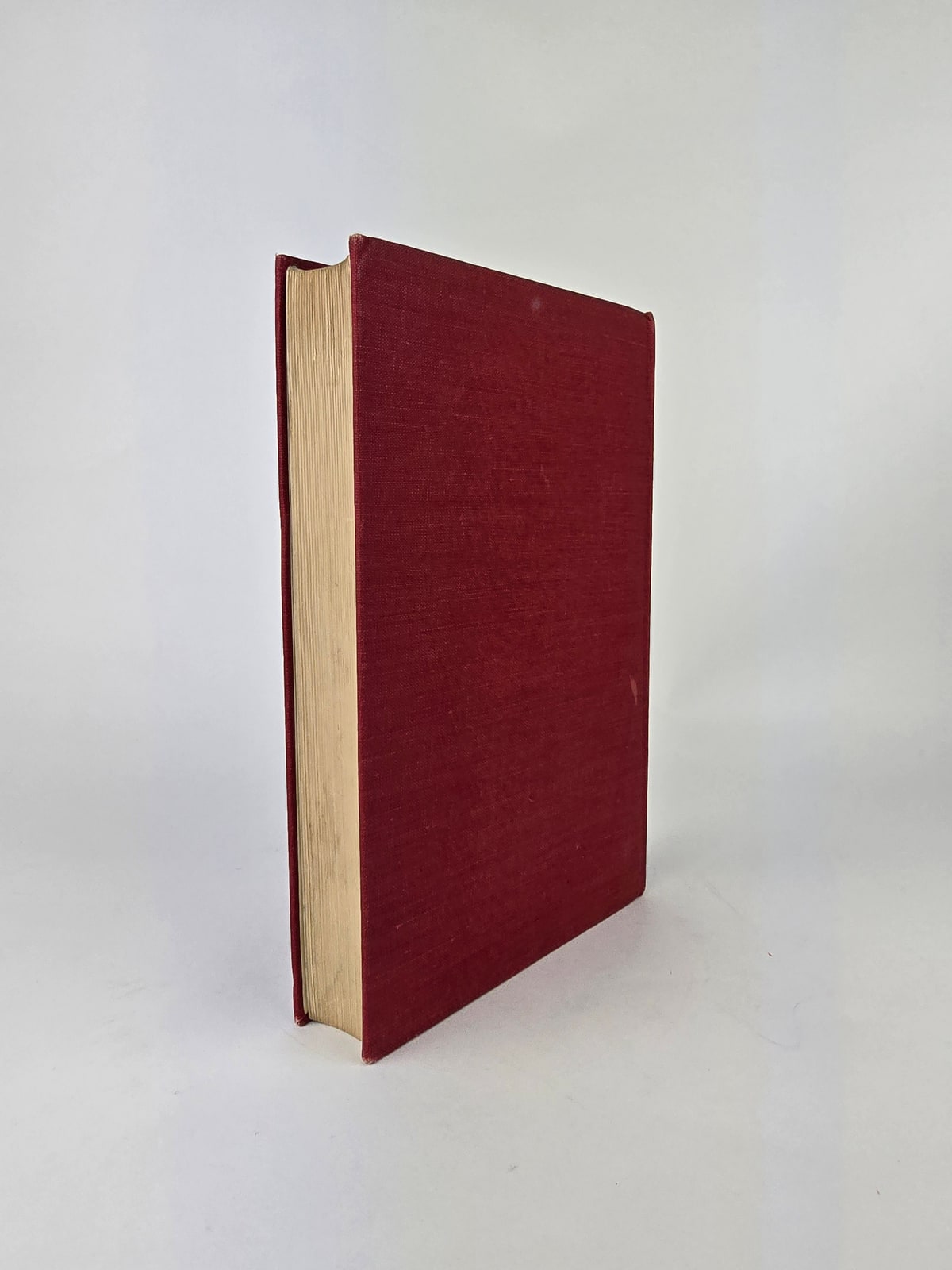
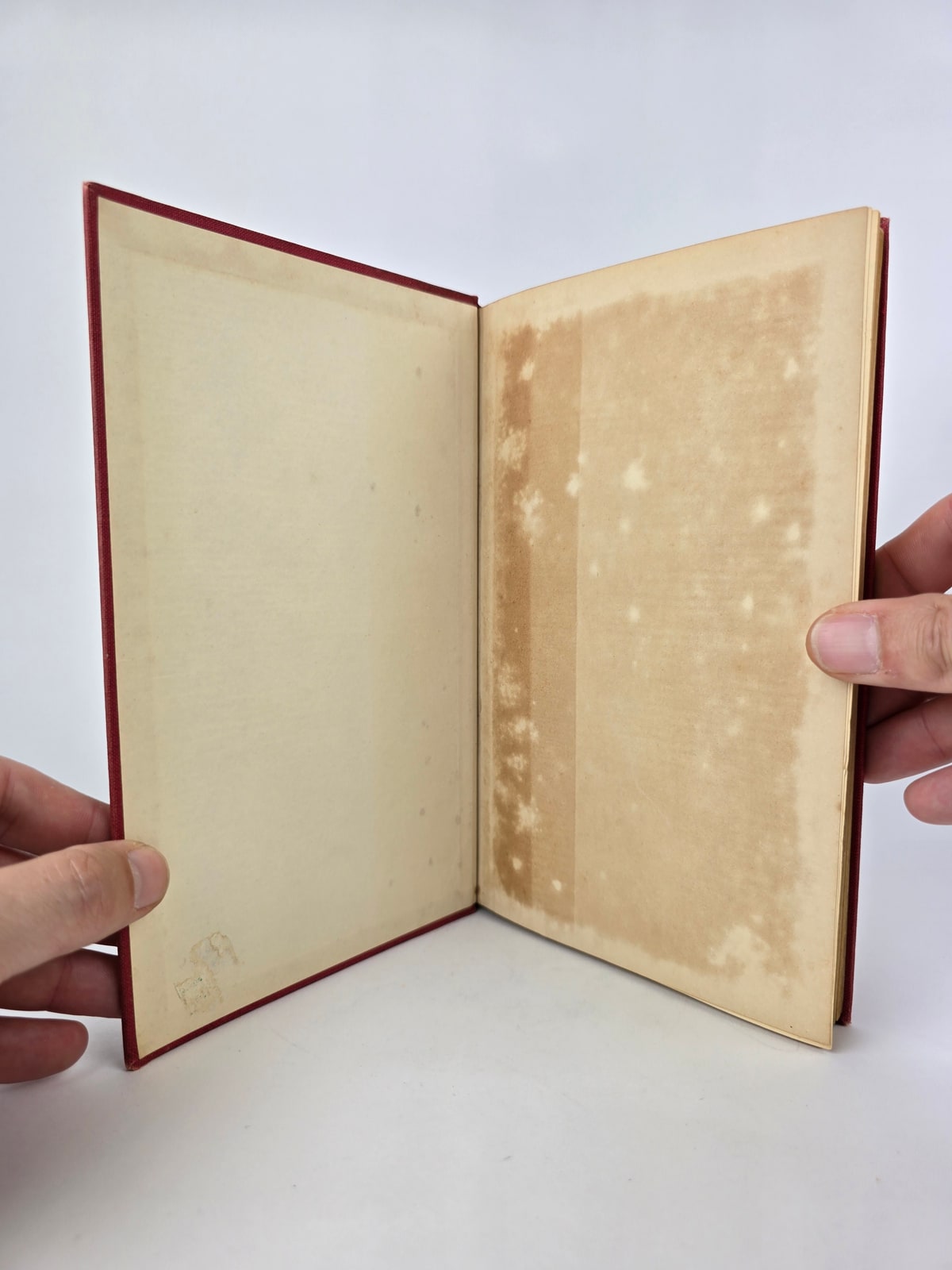
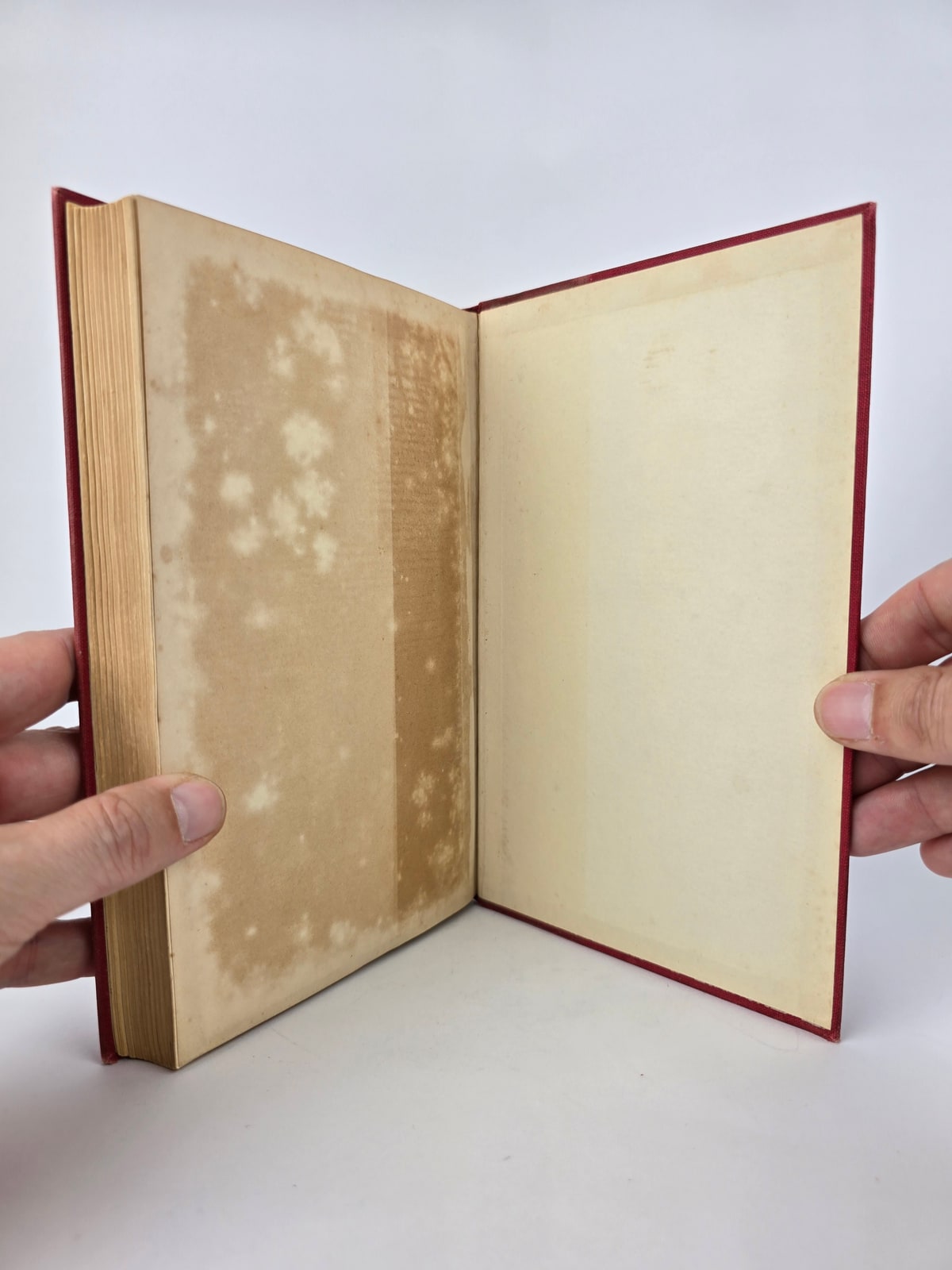
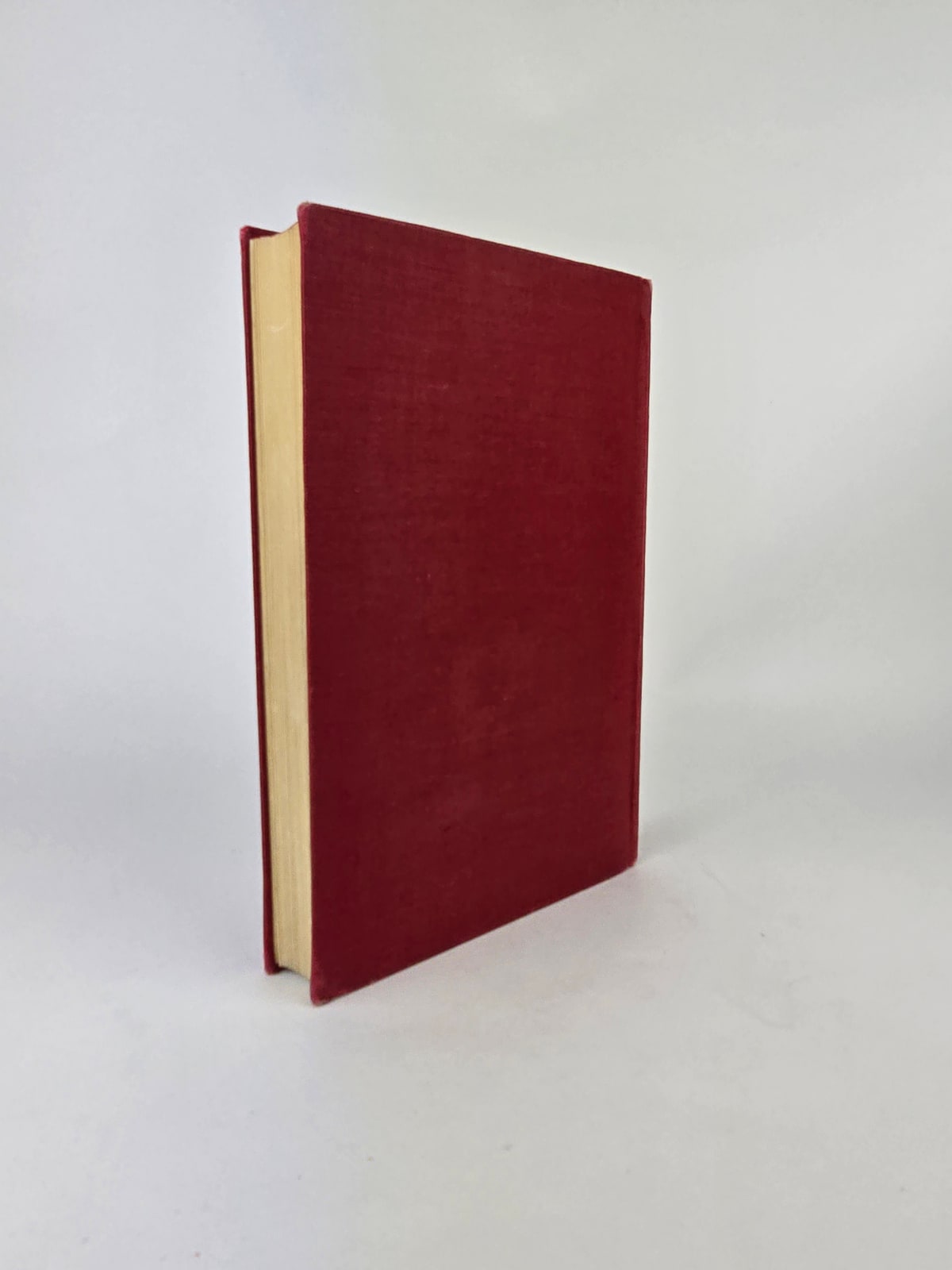
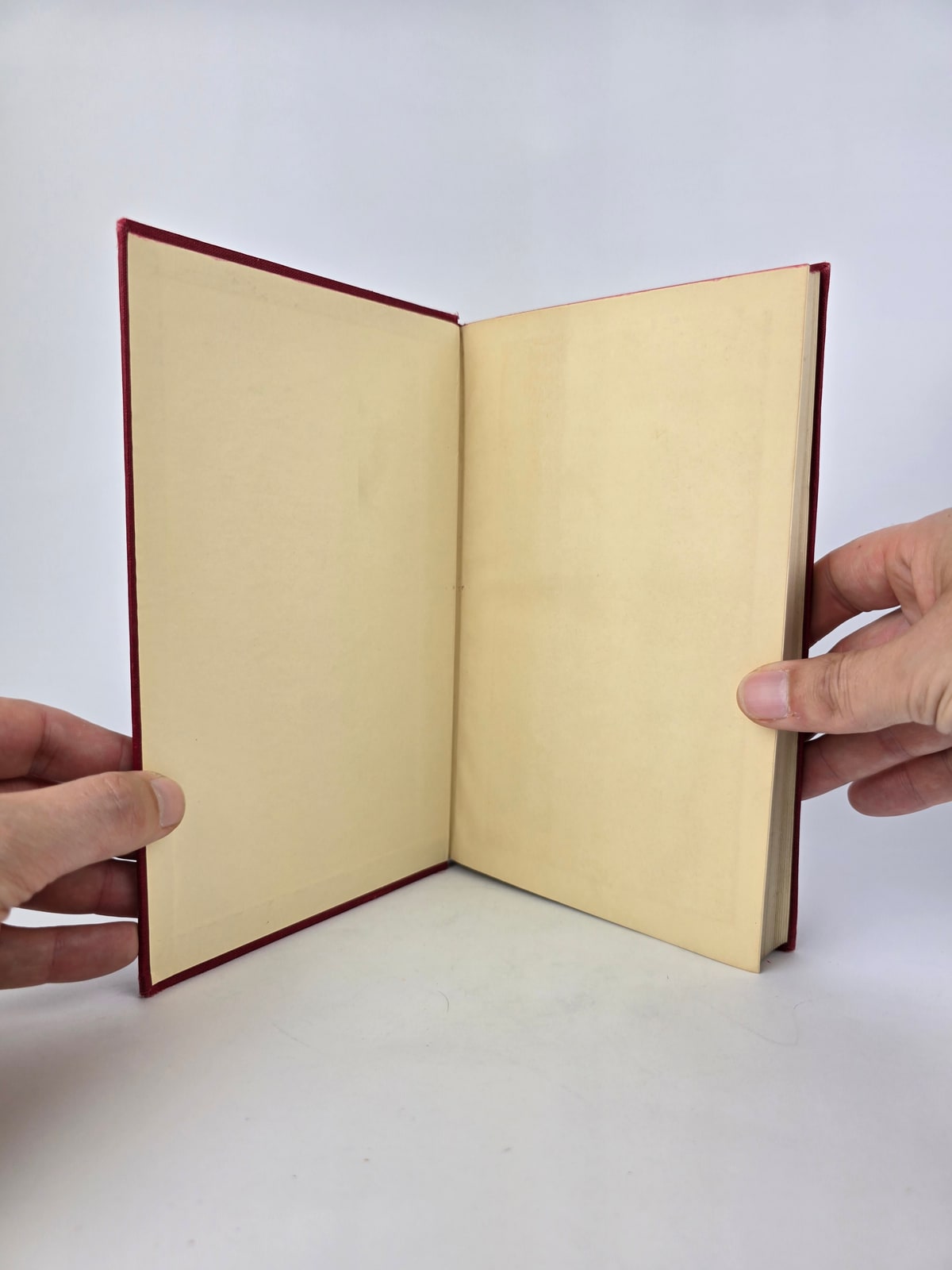
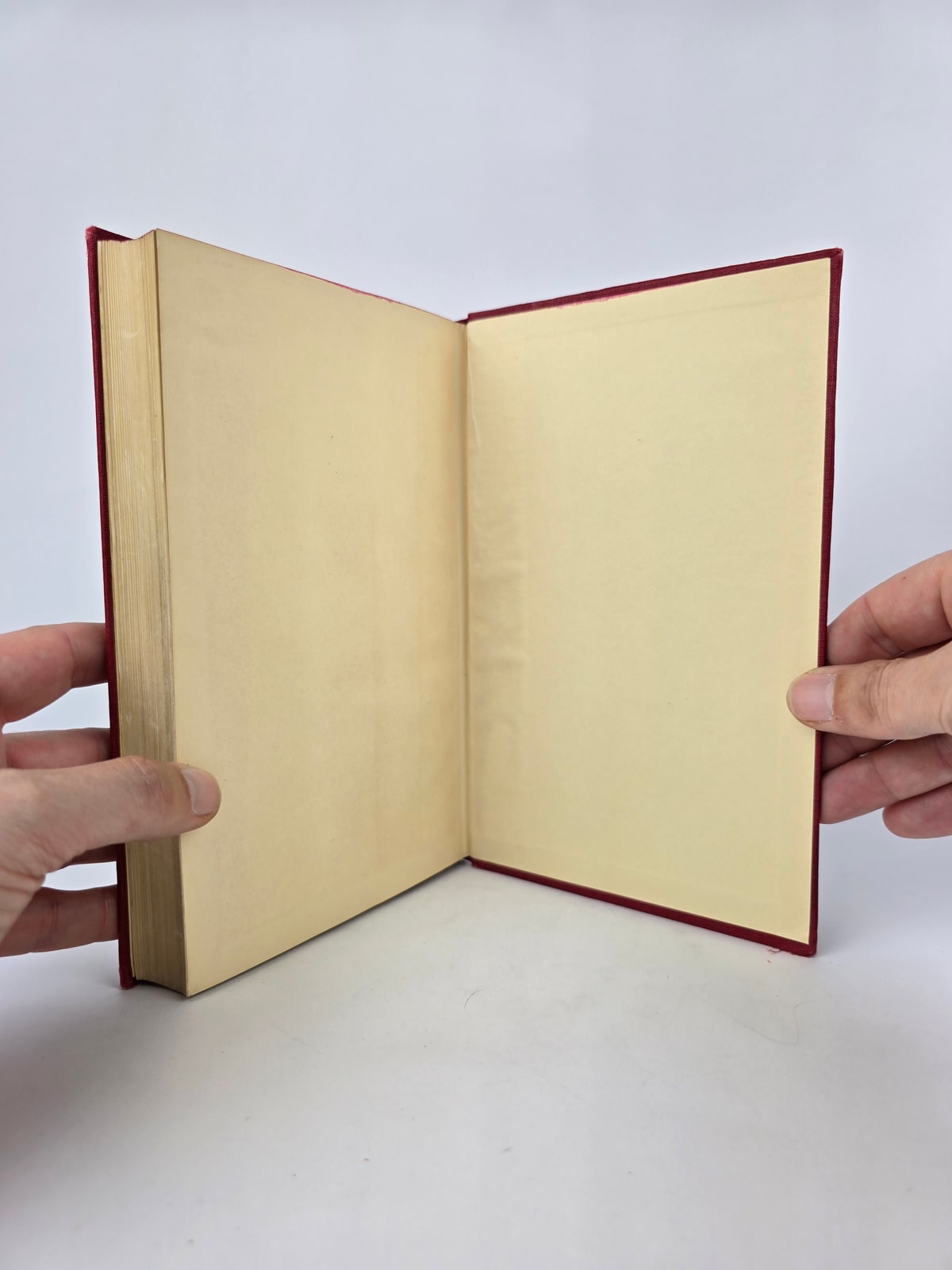
There is light toning to the paper and page edges, with scattered spotting and endpaper discoloration. The free endpapers of The Two Towers have pronounced, mottled browning and offsetting; those of Fellowship and Return are appreciably lighter. The photographed title, copyright and text openings are generally clean and readable.
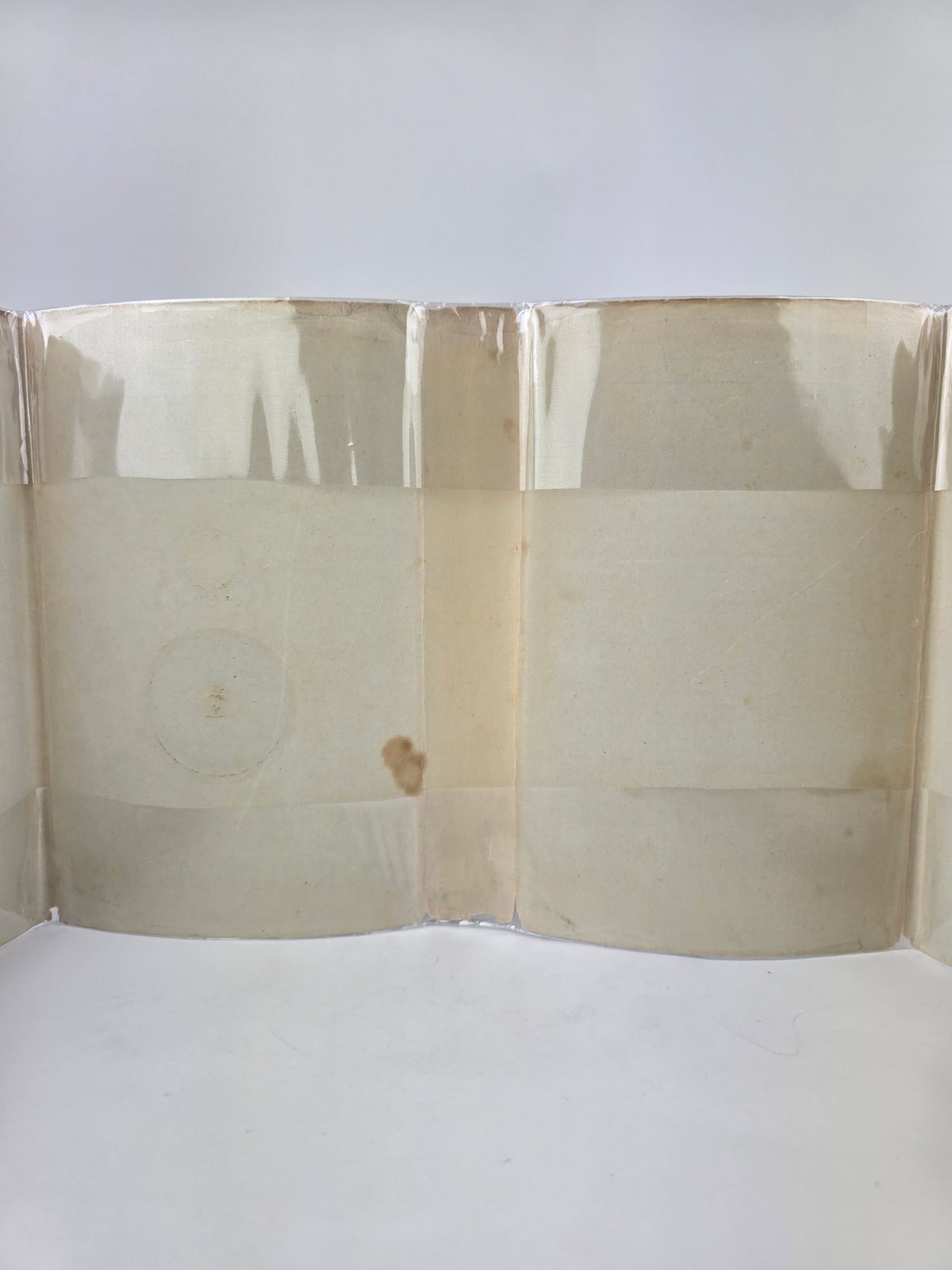
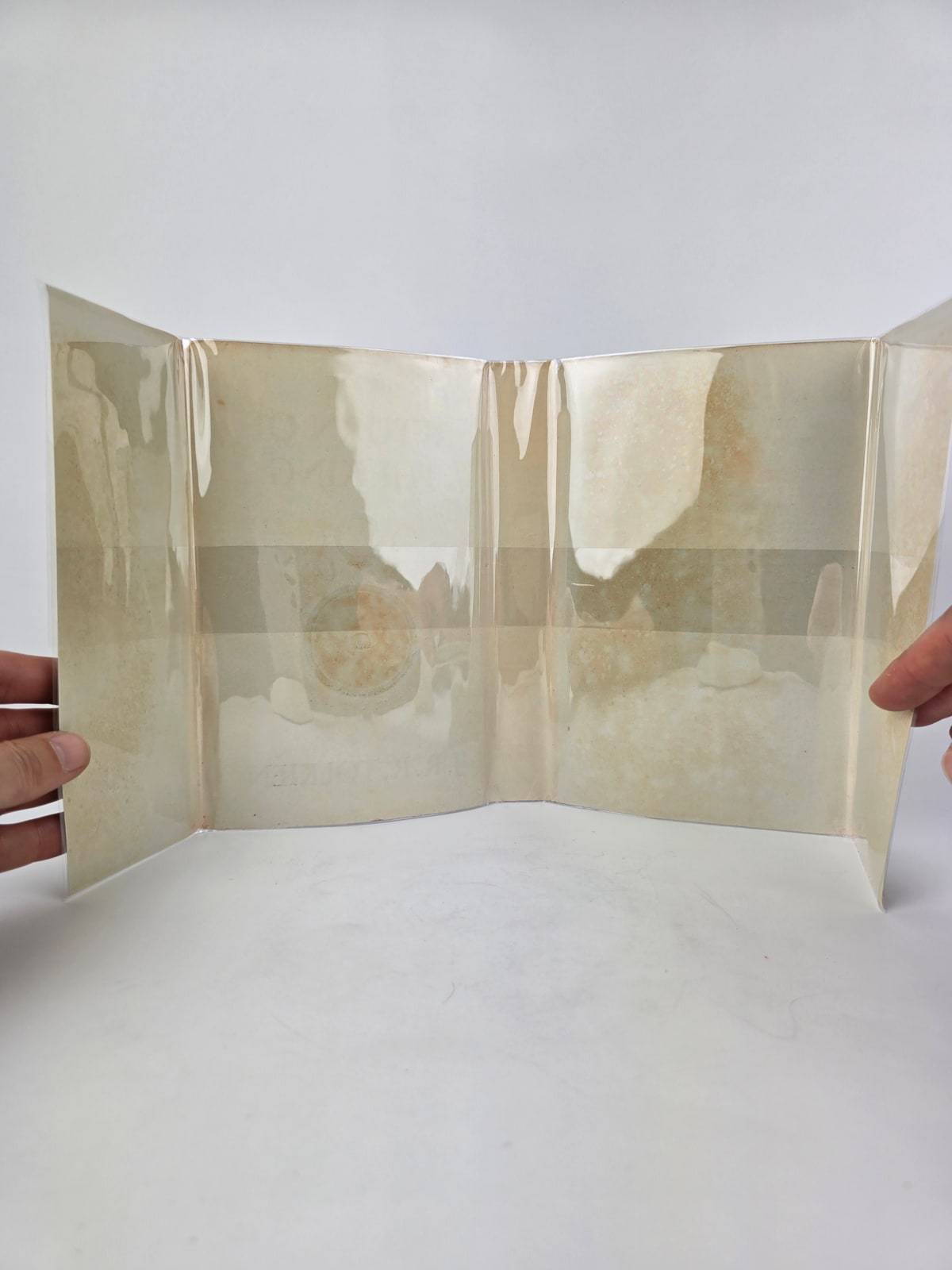
The original illustrated dust jackets are untouched and unrestored, with no repairs or reinforcements. They show surface soiling, uneven browning, creasing and wear at the edges and folds, with short tears and small losses. The spines of Fellowship and Return are notably browned. Clear protective sleeves are fitted. The black custom clamshell is well preserved, with bright gilt decoration and light surface wear.
Bibliographical reference: Wayne G. Hammond and Douglas A. Anderson, J.R.R. Tolkien: A Descriptive Bibliography, pp. 82–99.
> Enquire about this book
Pictures (click to enlarge):
Terms of sale: Prices are only indications,
always inquire if books are still available. We accept Money Orders, cash,
or Credit Cards (paypal) for immediate shipping. Checks will delay
shipment for 10 days for checks to clear. Please inquire for shipping
quotes.
Interested: Please send email to info@tolkienlibrary.com.
Interested: Please send email to info@tolkienlibrary.com.