A Bookshop in Risør
I moved to Risør in September 2025 expecting a quiet office and an online bookshop. Bringing the books together led to a larger idea: a Tolkien Centre at Buene, where exhibitions, a reference library and research could grow around the collections and the knowledge that belongs with them. The room I picture most clearly is still the bookshop. This is how I want it to work, and why a conversation across its counter could lead a visitor much further into the building.
The shop is the part of Buene I can most easily imagine in use. Someone arrives to ask about a jacket or to choose a first Hobbit; we put two books on the counter and take it from there.
Behind that simple exchange is a larger purpose: keeping books, provenance and research available for the people who come after us. The Centre would bring exhibitions, a reference library, an archive and activities for schools and families into the same building. I want the shop to help a visitor find a next book, and a reason to return.
The Tolkien Centre for the North and the shop I want to build at Buene
The room I can picture most clearly at Buene is the bookshop. Someone has come in with a copy of The Hobbit and wants to know which edition it is. I would like to be able to take down another copy and put it next to theirs. We might start with the title page and end up talking about why the picture on the jacket is so different, or why the two books have the same date and a different number of pages. It is the sort of conversation I have had for years through Tolkien Library. At Buene we could have it with both books on the counter.1
I came to Risør in September 2025 with something smaller in mind: an online bookshop run from a quiet office, with room to write and do research. I had also imagined a bookshop in town. The idea of a whole centre grew after I brought my books together and could see them in one place for the first time. Years of finding particular copies had created more than a collection of objects. There was knowledge about those books, and work still to do. I began to think about how other people might use both.2
The Tolkien Centre for the North is the project taking shape around those books at Buene, on Risør’s waterfront. We want to bring exhibitions, an archive, a reference library and research into the same house, with talks and activities that make the material useful to people who are meeting it for the first time. A visitor should be able to enjoy an exhibition and have somewhere to follow a question afterwards. The bookshop would be one of the ways into that larger project. It is also the part through which I can most easily explain what I want a visit to feel like.
From Antwerp to Risør
There is a reason I keep thinking about the visitor who has only just discovered Tolkien. I went several times to the exhibition Johan Vanhecke organised in Antwerp in 1992. I already read Tolkien. What I found there was how much there was to see beyond the books I knew, and how many people had been working on things I would never have known to look for. I came away wanting to find more for myself. Years later, when I started Tolkien Library, it was a bibliography. I wanted to record what I was finding and let other collectors see it. The bookshop grew from the same interest in why one copy was different from the next.3
My own collection has a lot to do with how the books were made and how they have come down to us. I have followed proofs, first editions, inscriptions and books that can tell us something about their previous owners. Jan H.E. Boom began collecting while Tolkien was still alive. Jan has kept things that show what people did after they read Tolkien. There are journals, correspondence, art and material from the communities that grew up around the books. Put a proof next to something a reader made and you are looking at two quite different moments in the life of a story. That is one reason our collections belong in the same project.4
We have established an independent, non-profit foundation in Norway to carry that work on. Its purpose is to preserve the collections and their history for study and public use. That gives the project a life beyond the years Jan and I have spent collecting. A book and the information about it need to stay together. A letter tucked into a volume can tell you when two people knew one another. An annotation can point to a reading that might otherwise be forgotten. If we can record the connection while the evidence is still to hand, somebody who comes after us can ask a better question about it. That is part of what I want from the archive and reference library. There should be somewhere to pursue a question once a book or a picture has started it.5
The first rooms at Buene
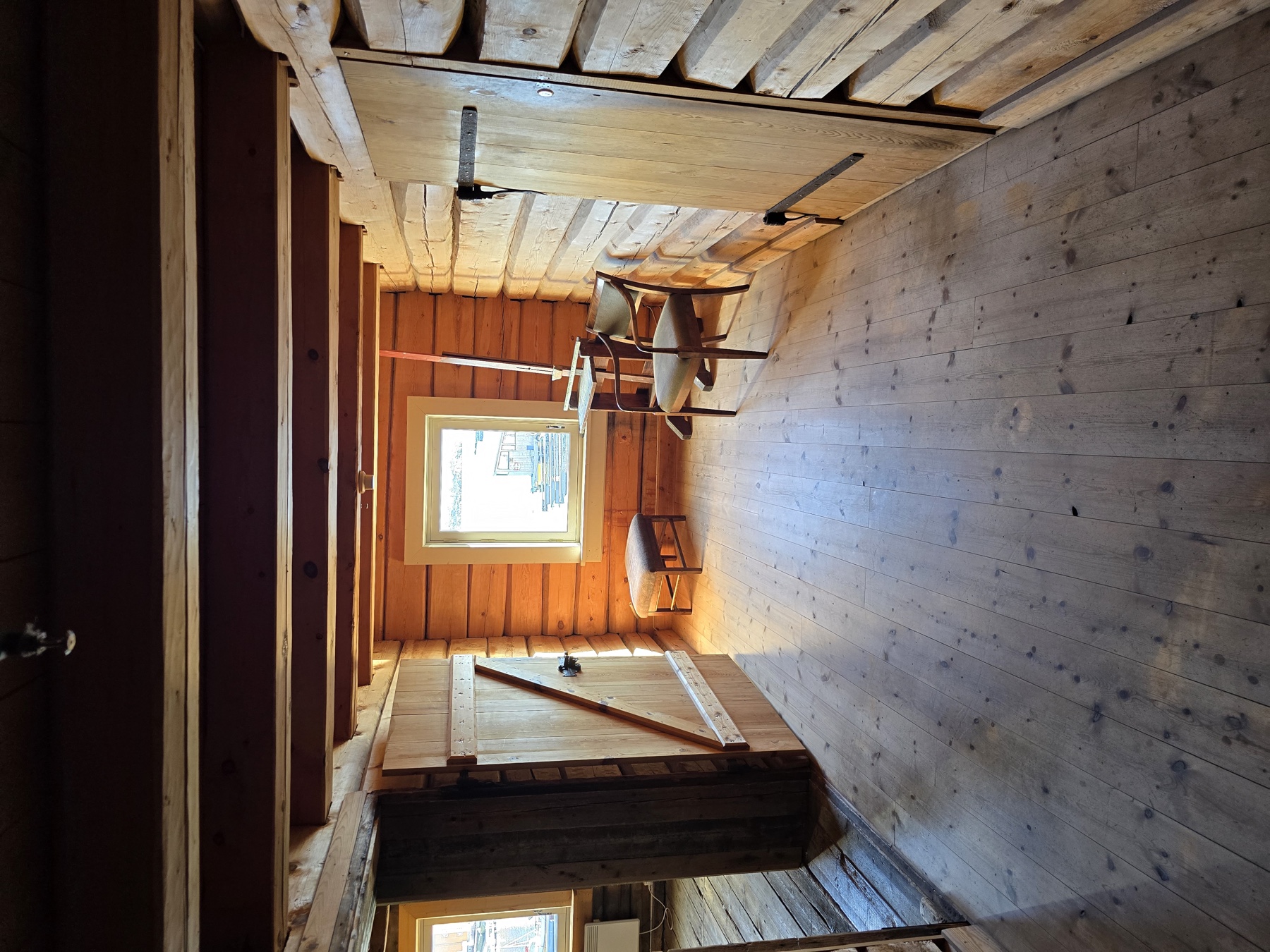
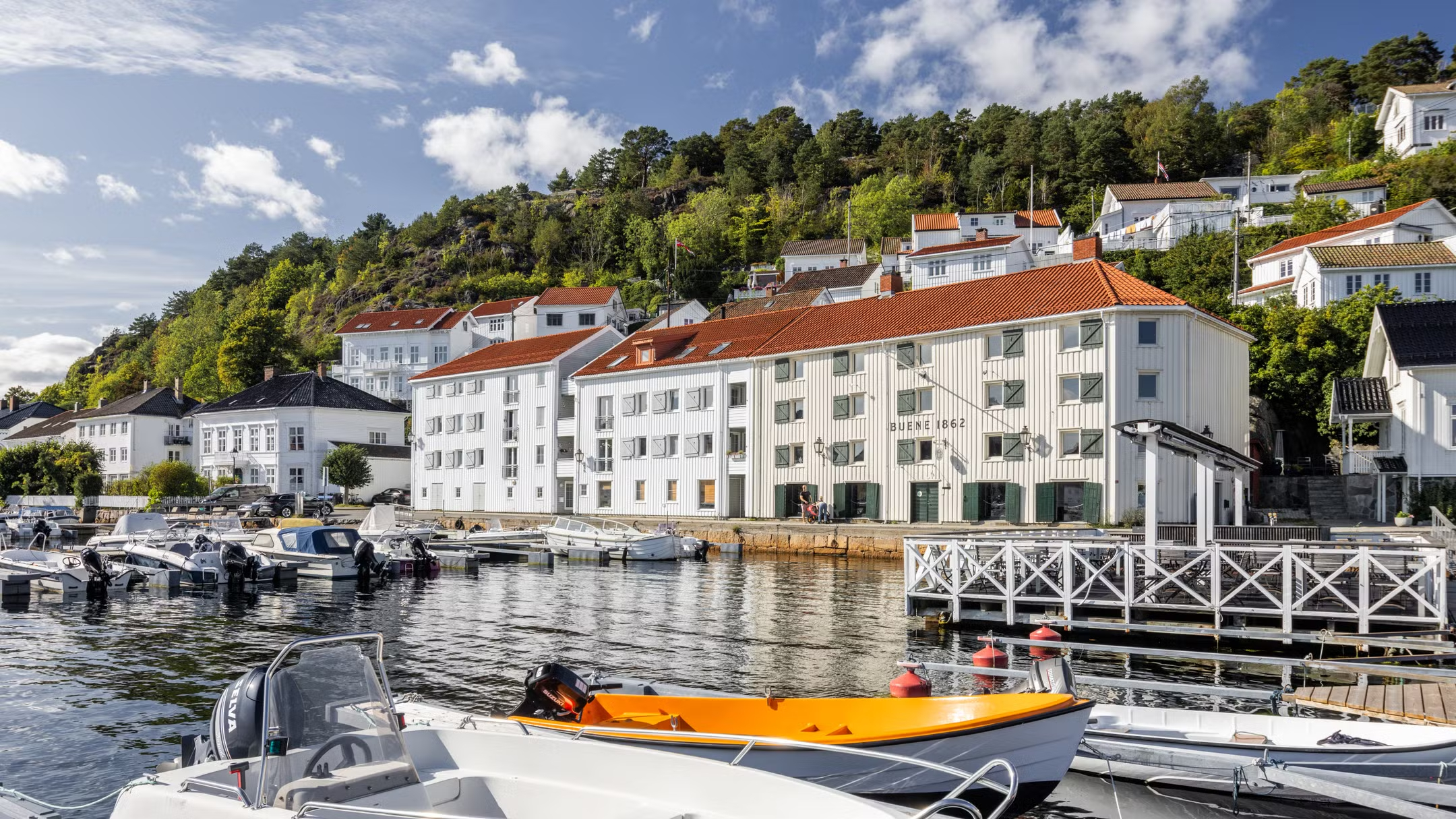
Buene stands on Solsiden, beside the harbour. When I think of how I want people to arrive, I think of the light from the water and of the timber rooms they will step into. The building has its own history. We are working out how to use it for exhibitions, reading, research and events while keeping the qualities that made me want to be there in the first place. It makes sense to prepare the rooms in stages. A room that will hold books for study has different needs from a room where a class will come to read aloud.6
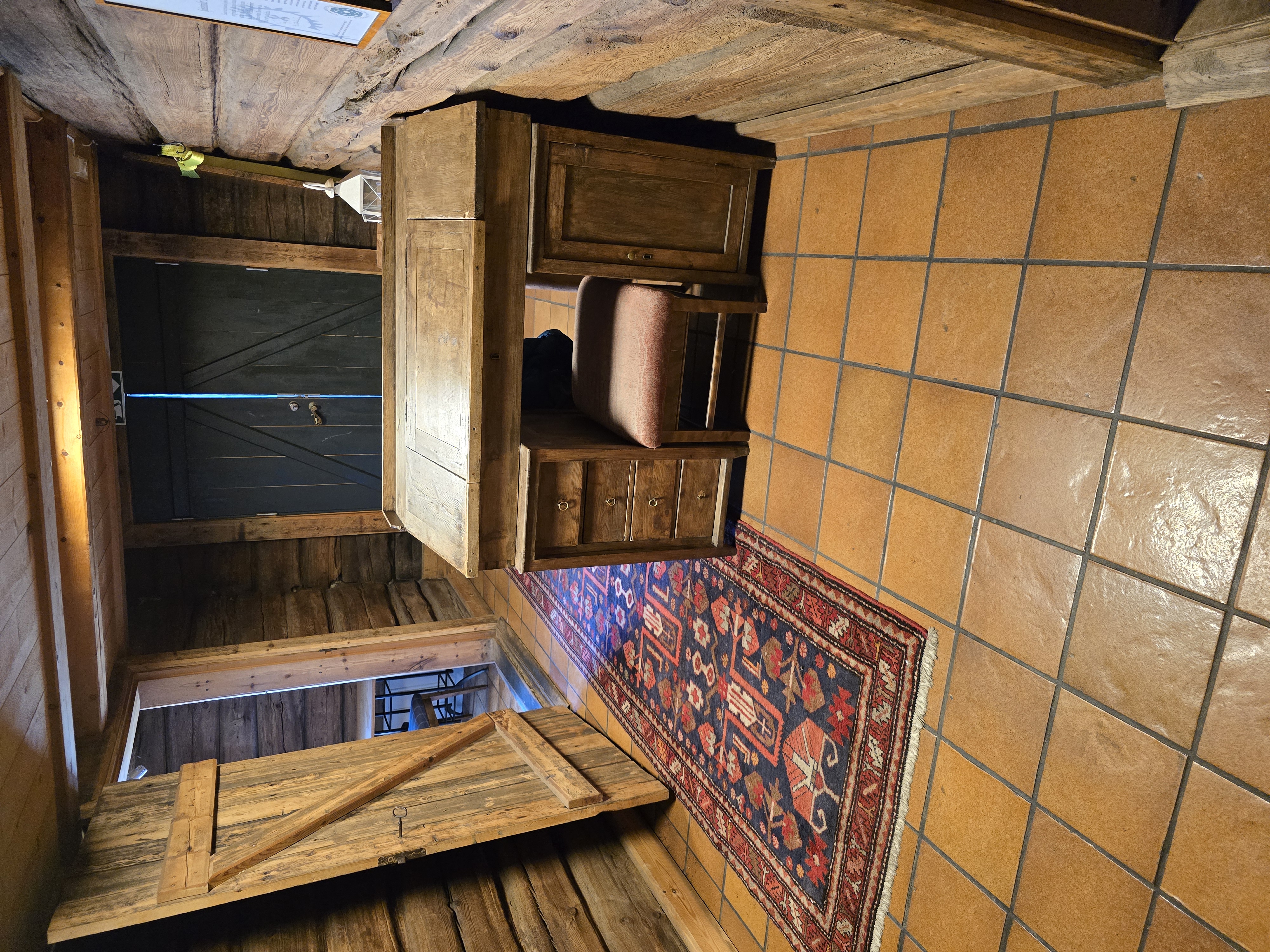
An early visual study places the bookshop and reception together. It explores a possible use of the room; the layout and contents are still to be developed. Books would be among the first things a visitor sees: newer titles within reach, a glass case for objects that need more care, and a counter where two volumes can lie open side by side. The drawing raises practical questions for me. Can someone pause to read without being in the way? Where does a visitor put the book they have brought to show us? Those uses should guide the furniture and the shelves.
The Centre currently lists 27–30 May 2027 as its planned opening weekend, within a phased opening. Buene is not yet open to visitors. The programme and practical visiting arrangements will be announced as they are settled.7
There is a practical difference between a book in a case, a reference copy and a copy on the shop shelf. Some books can show their history in a single opening. Others need several pages, a map or another copy beside them. A display might use an enlarged photograph of a page which can only be opened with care. A reading copy nearby lets someone follow the passage themselves. For research there is the further work of recording the edition, its previous owners and what the evidence establishes.
Those distinctions need to be clear to a visitor too. Seeing a book in an exhibition should not leave someone wondering whether everything around it is for sale. The shop would offer its own copies; the reference library would serve study. What joins them is the question a reader brings. A visitor might first notice the riddle-game in a display, compare the two tellings in a reading copy and then choose an edition to take home. Each room can do its part without asking the rare object to do every job.
I think that could be particularly useful for a reader who is unsure where to begin with Tolkien. A shelf containing The Silmarillion, the later edited books and studies of his work can be bewildering if every title seems to demand knowledge of another. The conversation at the counter can begin with what that person enjoyed: the drawings, the languages, a particular character, or simply Bilbo’s journey. We can open a few pages together. The next book should answer their curiosity, and leave them with somewhere further to go.8
A shelf for the North
The North gives this work a direction. Our home is in Norway, and the books lead outwards through Icelandic poetry, Scandinavian stories and the different languages in which Tolkien has been read. I want the Centre to make those connections visible in particular objects: a page of names, a translator’s choice, a drawing that has travelled from one edition to another. The shop can keep the reading within reach after a visitor has seen the connection in an exhibition.
A shelf for Tolkien and the North could begin with the names of Thorin’s company. Open “Völuspá”, the old Norse poem called the Seeress’s Prophecy, and read the list of dwarfs. Then go to Bag End and listen to the introductions. Gandalf is in the poem among the dwarfs; Tolkien has given him another part to play. An exhibition can put those pages beside each other. The shop should let a visitor take the enquiry further, with an edition of the poem they can read and understand at home.9
There is a journey in the other direction too. I would like to put an English Hobbit beside the 1962 Swedish Bilbo illustrated by Tove Jansson, then follow the pictures into Finland and eventually into the Norwegian edition. An illustration can stay recognisable while the name of the hobbit changes around it. An English reader who has always called him Baggins can meet Lommelun on the page, and a Norwegian reader who knows that name can take up the Nynorsk book and meet Skrepping. I would like a shelf that changes with the exhibition, with the books people can read next arranged close enough together to make the connection. If we are showing how a story came to Tolkien through Norwegian folktales, that is a good time to have a collection of the tales on hand. If we are looking at how his own book travelled, I would want people to be able to open one of those translations.10
We are also developing a learning programme for children and families. A child who first met Bilbo in Norwegian should be able to begin there, with the English book available for comparison. A class could compare two pictures of the same scene or ask why a translator changed a name. The words beside an object need to give them enough to start. The reference library can offer more to the visitor who wants it. I want the rooms to make that movement easy, from noticing a difference to finding out why it is there.11
What I want at the counter
For the shop itself I would begin with books I can talk about, then learn from what people ask for. Reading copies in Norwegian and English, illustrated editions and second-hand books with plenty of use left in them all belong on those shelves. A parent choosing The Hobbit to read aloud has a different immediate need from a collector checking a first printing. Both should be able to ask a question and leave with a book that suits them. Nearby I picture the Eddas, sagas, Norwegian tales and the scholarship that helps a reader go further.
The specialist books belong there too. If a collector is considering an early Hobbit, I want to show the printing statement and look at the jacket with them. The edition of the book and the date of the jacket can be two separate questions. With a book that has an inscription, the handwriting can be fascinating, and I still want to know what can be established about the person who wrote it. The same curiosity applies to a copy somebody brings from home. It might be the book a parent read to them, or the one they have been reading for thirty years. Identifying it can be worth doing for its own sake.12
One comparison I would like to be able to show at the counter is the change to the riddle game. Open a 1937 Hobbit and Gollum makes Bilbo a bargain that reads quite differently from the one Tolkien gave him in the 1951 second edition. A collector can learn a good deal by comparing the chapter and then turning to the copyright page to see what each copy actually is. A child can read the same pages and ask why Gollum would ever give up the ring. I would happily spend an afternoon with either question. It is easier to share that pleasure when someone can see the page you are pointing at.13
Tolkien Library will continue to serve readers and collectors online. I have spent years photographing jackets and title pages so that a person far away can see what I see. In Risør I want to add the things that take longer over a screen. Someone can see how small an edition is beside a later one, look at a fold-out map in the light or hear how two translations sound aloud. The Foundation’s preservation, research and public programme have their own work to do. The proposed shop can complement it by putting reading copies and books for sale within reach of the people whose curiosity brought them in.14
A place to come back to
When I think about the town, I think about who might want to come back after their first visit. A bookshop ought to have something for people who live nearby and can drop in again, as well as for somebody who has come a long way. I would like a local reader to be able to find a few different books on the table when the exhibition changes. At the Risør Folkeakademi talk in October, I spoke in English with Norwegian text on the slides. I would like people to have the same ease about which language they start with when they come through the door at Buene.15 A talk might bring people into the building for the first time. Someone who comes in to ask about an illustrated edition might return when there is a chance to hear the illustrator’s work discussed. That is the sort of use I hope the rooms will have through the year.
As the work moves forward, I want to share what we learn here: how an object is chosen for a display, how a school activity develops, and what it takes to prepare a room for books and visitors. Some pieces will be about a collection or a person, others about the building. I would like readers who have followed Tolkien Library for years to be able to follow Buene taking shape as well.
There is still plenty to do at Buene before I can stand at that counter. For now, when somebody writes about a copy, I ask for a photograph and we take it from there. I look forward to the day somebody can walk in, put the book down between us and tell me where they got it. I will probably start by asking if I can see the title page.
Footnotes
- Tolkien Centre for the North, “The Centre,” especially “Library, bookshop & gathering,” on the proposed specialist shop and its relationship to the reference library and programme. Source online. ↩
- Hans Petter Bjerva, interview with Pieter Collier on the purchase of Buene, Aust-Agder Blad, 1 July 2026, updated 2 July. See the account of the first plans for a quiet office and bookshop and bringing the collection together in Risør. ↩
- Pieter Collier, “Collector Profile: Pieter Collier & His Tolkien Library,” on the 1992 Antwerp exhibition and the start of Tolkien Library in November 2002. Source online. ↩
- Tolkien Centre for the North, “Our story,” on the founding collections and the different collecting histories of Pieter Collier and Jan H.E. Boom. Source online. ↩
- Tolkien Centre for the North, “Mission & foundation.” Stiftelsen Tolkien-senteret for Norden i Risør was formally registered on 15 September 2026. The published mission covers preservation, research and education. Source online. ↩
- Tolkien Centre for the North, “Buene & Risør,” on Solsiden 22, the historic rooms and phased adaptation. Source online. ↩
- Tolkien Centre for the North, “Buene & Risør” and “Project updates”, checked 29 November 2026: planned opening weekend 27–30 May 2027, phased public access, and early visual studies explicitly labelled as possible uses rather than final architectural plans. Buene page. Project updates. ↩
- Tolkien Centre for the North, “Collections & research,” on provenance, cataloguing, digitisation and study. The examples of display, reference and reading copies describe how these functions could work together. Source online. ↩
- “Völuspá”, stanzas 9–16, in Edward Pettit, ed. and trans., The Poetic Edda: A Dual-Language Edition (Open Book Publishers, 2023). J.R.R. Tolkien confirms the source of the names in The Letters of J.R.R. Tolkien, revised and expanded ed., no. 25 to The Observer, 1938. Source online. ↩
- J.R.R. Tolkien, Bilbo, en hobbits äventyr, trans. Britt G. Hallqvist, illus. Tove Jansson (Rabén & Sjögren, 1962); Lohikäärmevuori, trans. Risto Pitkänen (Tammi, 1973); Hobbiten, trans. Nils Ivar Agøy (Tiden, Jansson illustrated edition, 2023); Hobbiten, eller Ditut og attende, trans. Eilev Groven Myhren (Tiden, 2008). Source online. ↩
- Tolkien Centre for the North, “Project updates,” 14 October 2026, on exhibitions and a learning programme for children and families in development. The classroom examples here are possible activities. Source online. ↩
- Tolkien Library, “Buying Tolkien Books Online,” and the copy descriptions in the Tolkien Library Rare Book Store. Source online. ↩
- J.R.R. Tolkien, The Hobbit (George Allen & Unwin, 1937 and 1951), ch. 5, “Riddles in the Dark.” See the Tolkien Library record for the 1951 second edition, fifth impression, PC0093. Source online. ↩
- Tolkien Library, “Collector Profile,” on the origins and work of Tolkien Library; Tolkien Centre for the North, “Mission & foundation,” on the independent Foundation’s public purpose. Source online. ↩
- Risør Folkeakademi, “Fra Tolkien-samling til kultursenter i Risør,” programme for Pieter Collier’s talk at Risørhuset, 29 October 2026. The Centre’s homepage links to its account of the event. Source online. ↩
Cover. The timber room at Buene in Risør, photographed for the Tolkien Centre for the North.
Related reading: Between Ink and Memory, Welcome back to Tolkien Library and From Soria Moria to Moria.
Related Articles
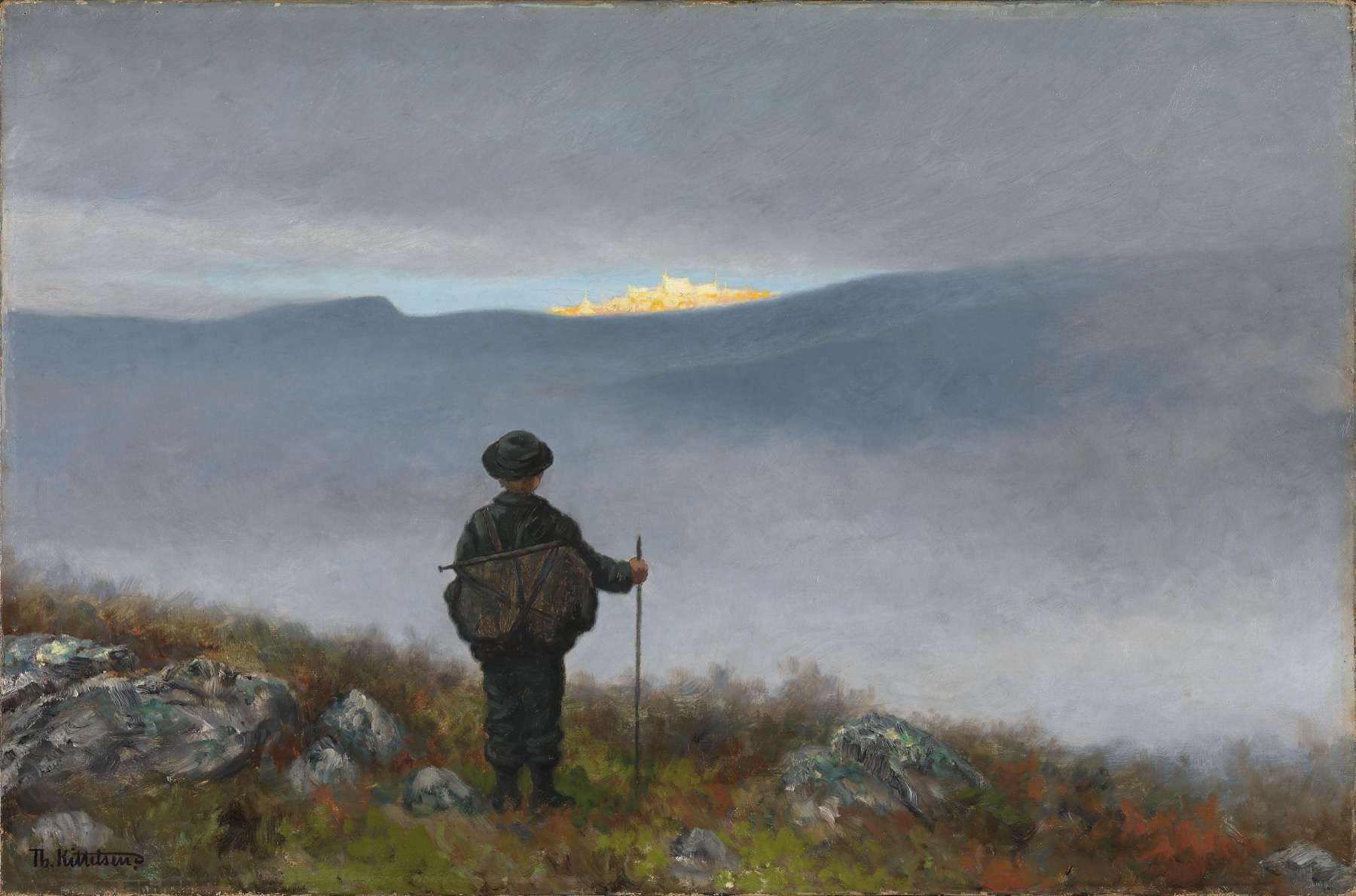
One of Kittelsen’s paintings shows a boy looking out towards a palace he can barely see. The hills near Kragerø make me think of the picture. The name of the palace was still in Tolkien’s ear when he wrote about the Mines of Moria. His letter to Mr Rang tells us how it got there.
I followed the name back to George Webbe Dasent’s book. Along the way I found a cat who could keep a troll talking until sunrise, and a set of directions that Frodo turns round on his way to the Grey Havens.
Tolkien Library returns with a rebuilt website and new writing from Norway. I look back at the books and people behind it, explain what you can find in the online bookshop and archive, and share the plans for a Tolkien Centre and a physical bookshop in Risør. Two personal reflections tell more of the journey that brought the library here.
The Hylestad doorway tells Sigurd’s story in wood. There is a sword at the forge, a dragon, a horse carrying gold, and a man playing a harp among snakes. Each scene asks the eye to pick out a few details.
When The Legend of Sigurd and Gudrún appeared in 2009, one of those details reached the cover. I went back to the doorway and to my interview with Bill Sanderson to see what the book’s designers and illustrator had chosen to carry over.