J.R.R. Tolkien & his works » Tolkien and his life » Published letters » The Letters of J.R.R. Tolkien
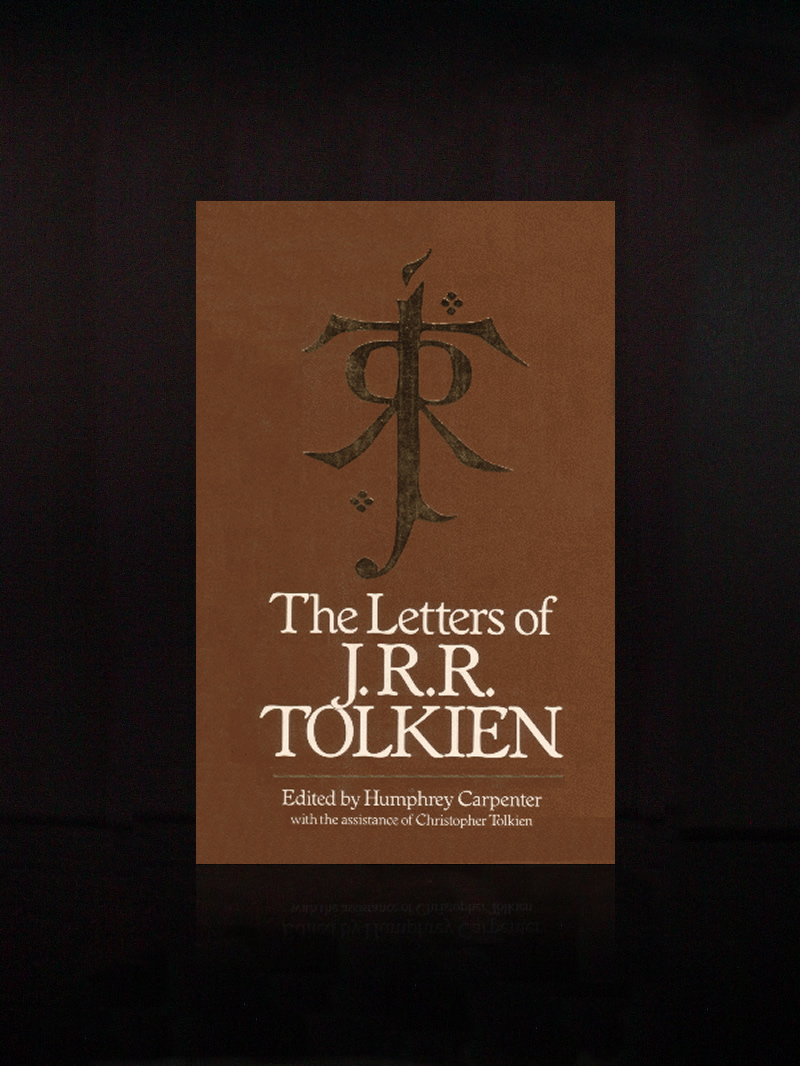
The Letters of J.R.R. Tolkien
By J.R.R. Tolkien; edited by Humphrey Carpenter, with the assistance of Christopher Tolkien (1981)
The original collection of Tolkien’s correspondence, offering insights into his life, languages and the creation of Middle-earth.
About the book
J.R.R. Tolkien, one of the most influential authors of the 20th century, was also a prolific letter writer. Over the course of his life, he wrote an astounding number of letters—many to his publishers, friends, and family, and even to fans of his works. These letters offer an intimate glimpse into Tolkien’s personal and creative life, revealing the depth of thought behind his works, his responses to critical events, and the many layers of his personality, which ranged from the scholarly to the impish.
Contents and Significance
The Letters of J.R.R. Tolkien was published in 1981, edited by Humphrey Carpenter with assistance from Tolkien’s son, Christopher Tolkien. This collection contains 354 selected letters from Tolkien, spanning the entirety of his adult life. The letters provide unique insights into both Tolkien’s personal experiences and his creative process, including the development of The Hobbit, The Lord of the Rings, and The Silmarillion. This book is invaluable for scholars and fans alike, as it presents Tolkien’s reflections on mythology, literature, and language, as well as more private subjects such as his Catholic faith, family life, and friendships.
In the introduction, Carpenter highlights how Tolkien’s letters reveal his internal dialogue on the creation of Middle-earth, his frustrations with publishers, and his heartfelt conversations with his future wife, Edith. Readers can witness Tolkien’s mind at work as he discusses intricate details of his legendarium with friends and correspondents, sometimes revealing plot points before they had been fully fleshed out in his books.
Editions and Publishing History
The book was originally published in hardcover by George Allen & Unwin in 1981, priced at £9.95, with between 7,500 and 10,000 copies printed. The U.S. edition, published by Houghton Mifflin, was priced at $16.95, with 100,000 copies printed. A paperback edition followed in 1990, published by Unwin Paperbacks at £6.99.
The volume includes an index; a substantially expanded index by Wayne G. Hammond and Christina Scull was introduced in 1999. This later index helps scholars and fans find specific topics, characters and events mentioned in Tolkien’s letters. Carpenter also added helpful introductions to many letters, explaining the context and significance of the correspondence, as well as brief descriptions of the recipients.
The revised and expanded edition of 2023 restores substantial material omitted from the original selection. Choose the original collection for its place in Tolkien publishing history, or the expanded edition for a fuller reading text.
Highlights of the Letters
In his letter to W. H. Auden of 7 June 1955 (no. 163), Tolkien recalls how much of The Lord of the Rings surprised him as he wrote it. He knew Tom Bombadil already, but when Strider turned up in the inn at Bree, Tolkien had as little idea who he was as Frodo did.
In a draft to ‘Mr Thompson’ of 14 January 1956 (no. 180), Tolkien describes how the story came to him as he wrote:
“I wait till I seem to know what really happened. Or till it writes itself.”
He gives the example of Treebeard. For years he expected Frodo to have an adventure involving trees farther down the Great River. When he finally wrote the chapter, he saw that it had happened to someone else.
Other significant letters include his correspondence with readers and fans, some of whom asked detailed questions about the lore of Middle-earth. In one such letter, Tolkien meticulously explains elements of Elvish language, geography, and the broader context of his world. These letters provide a rich vein of detail for readers fascinated by the construction of Tolkien’s mythological framework.
Finding a letter in both editions
If a book sends you to letter 15, you can look under that number in either edition. It is Tolkien’s letter of 31 August 1937 to Allen & Unwin, sent with a colour version of his frontispiece for The Hobbit. Letter 15a is a separate letter, written to Stanley Unwin on 17 September to thank him for an advance on his royalties. You will only find it in the revised and expanded edition of 2023. The editors added a letter after the number to fit the restored correspondence between the existing entries.
Keep the suffix when you cite a letter. If you quote a passage, give the edition as well. Some letters that were already in the 1981 book appear in fuller form in 2023. See the guide to choosing an edition of The Letters of J.R.R. Tolkien.
Key Letters to Explore
- Tolkien to W.H. Auden (1955): Discusses how much of The Lord of the Rings “wrote itself,” including the unexpected appearance of Strider and the development of the Ents.
- Tolkien to his publishers: Explores the practical difficulties of publishing The Lord of the Rings, including its length, format and division into volumes.
- Tolkien to Christopher Tolkien (1944): Reflects on war and heroism while sharing the progress of his writing with his son during the Second World War.
Critical Reception and Reviews
Scholars and fans alike have praised The Letters of J.R.R. Tolkien for its depth and the unparalleled access it provides into Tolkien’s life. As an editorial review from Amazon notes, this collection sheds light on both Tolkien’s academic and literary pursuits, while also showing his private, personal side. Carpenter’s skillful editing allows the letters to speak for themselves, presenting a well-rounded view of Tolkien as a scholar, a devoted husband, a father, and a mythmaker.
Reviewers from Library Journal and other outlets have remarked that the letters provide great insight into Tolkien’s mind but note that they may be more appealing to committed fans rather than casual readers. However, for those interested in understanding the man behind The Lord of the Rings, this collection is indispensable. The letters also offer scholars crucial material for studying Tolkien’s creative process, particularly the creation of his invented languages and his thoughts on world-building.
From the Critics
The collection shows why The Letters of J.R.R. Tolkien is essential reading for anyone hoping to understand the author’s mind. It includes the correspondence where Tolkien explains the “unexpected” development of his major characters, such as Strider and the Ents. These letters demonstrate Tolkien’s creative process, where characters and locations often came to life with little forethought, emphasizing the organic way in which Middle-earth evolved over time.
In contrast, the review from Library Journal considers the letters “fun but not essential,” arguing that while they are fascinating for die-hard fans, they may not appeal to a broader audience unfamiliar with Tolkien’s works.
Book details
Author: J.R.R. Tolkien
Editor: Humphrey Carpenter, with the assistance of Christopher Tolkien
First published: 1981
Original UK publisher: George Allen & Unwin
Language: English
Original UK hardback ISBN: 0048260053 / 9780048260055
Find a copy
Buy from AbeBooks.
Buy from Amazon.co.uk.
Buy from Amazon.com.
These are affiliate links. Tolkien Library may earn a commission from qualifying purchases, at no extra cost to you. The cover shown is an earlier edition; check the seller’s edition and ISBN before ordering.