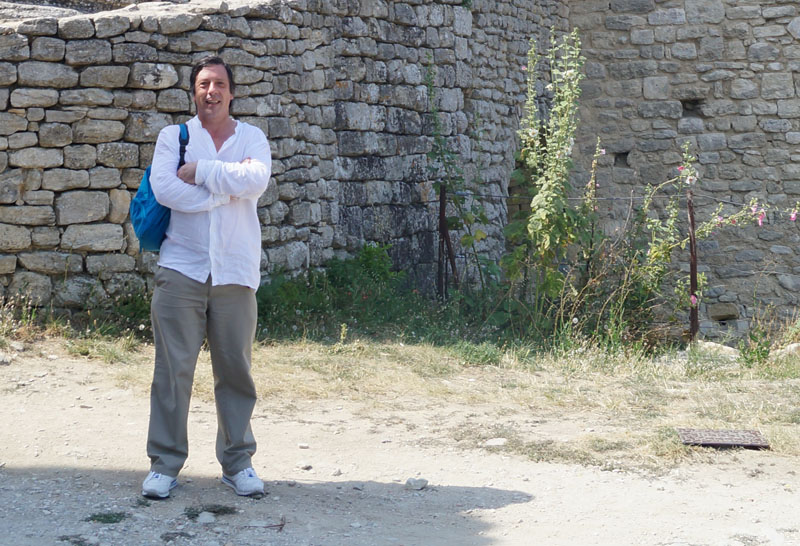
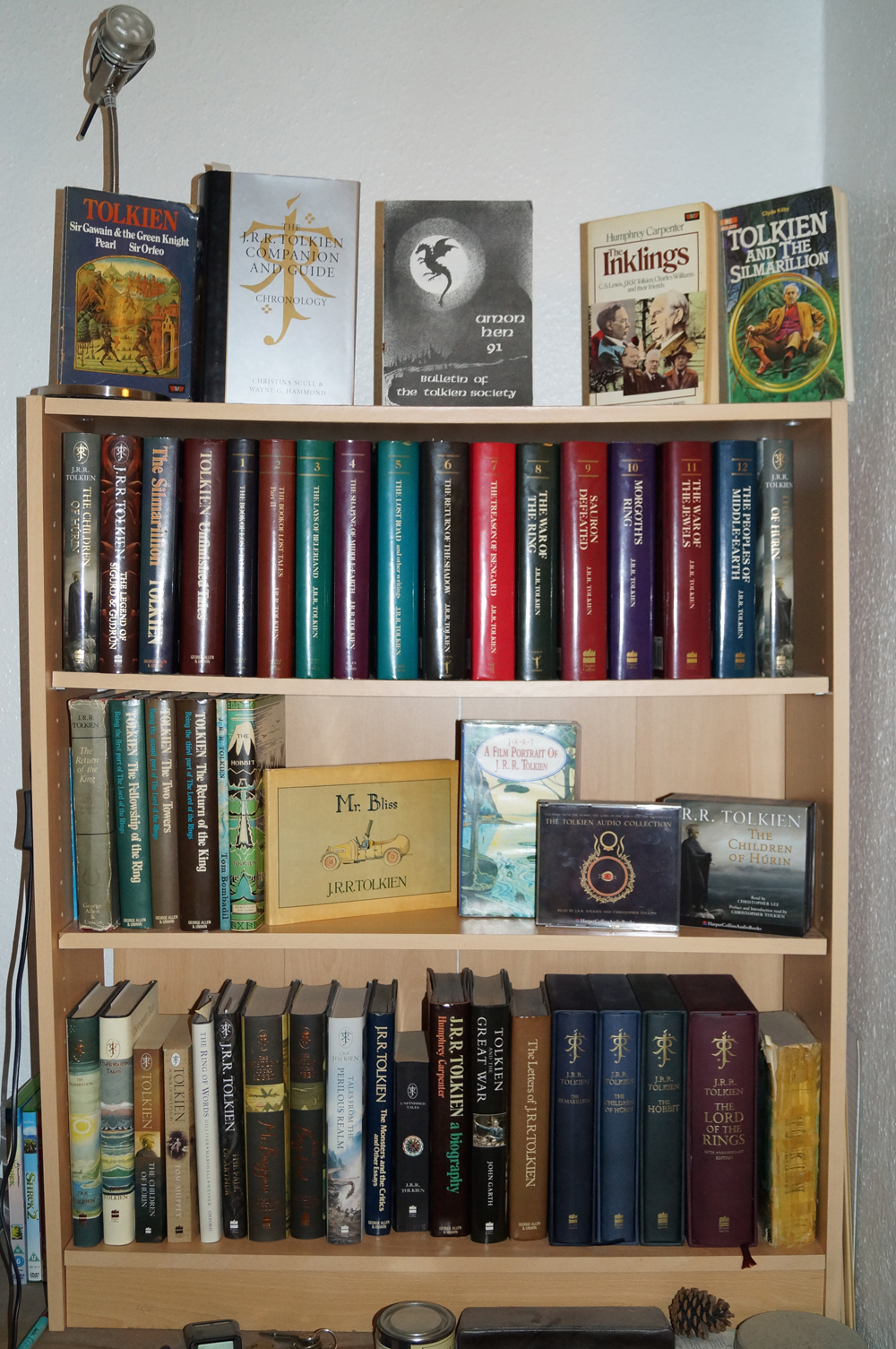
Barry Stead is a British Tolkien collector, writer, and teacher whose collection focuses on posthumous first editions, deluxe editions, and the publications that followed the lifetime of J.R.R. Tolkien. Originally featured on Tolkien Library in 2013, this updated collector profile explores Barry’s collecting journey, his reflections on the changing Tolkien market, and the books that have accompanied him through decades of reading and collecting.
Collector Profile: Barry Stead
Updated May 2026
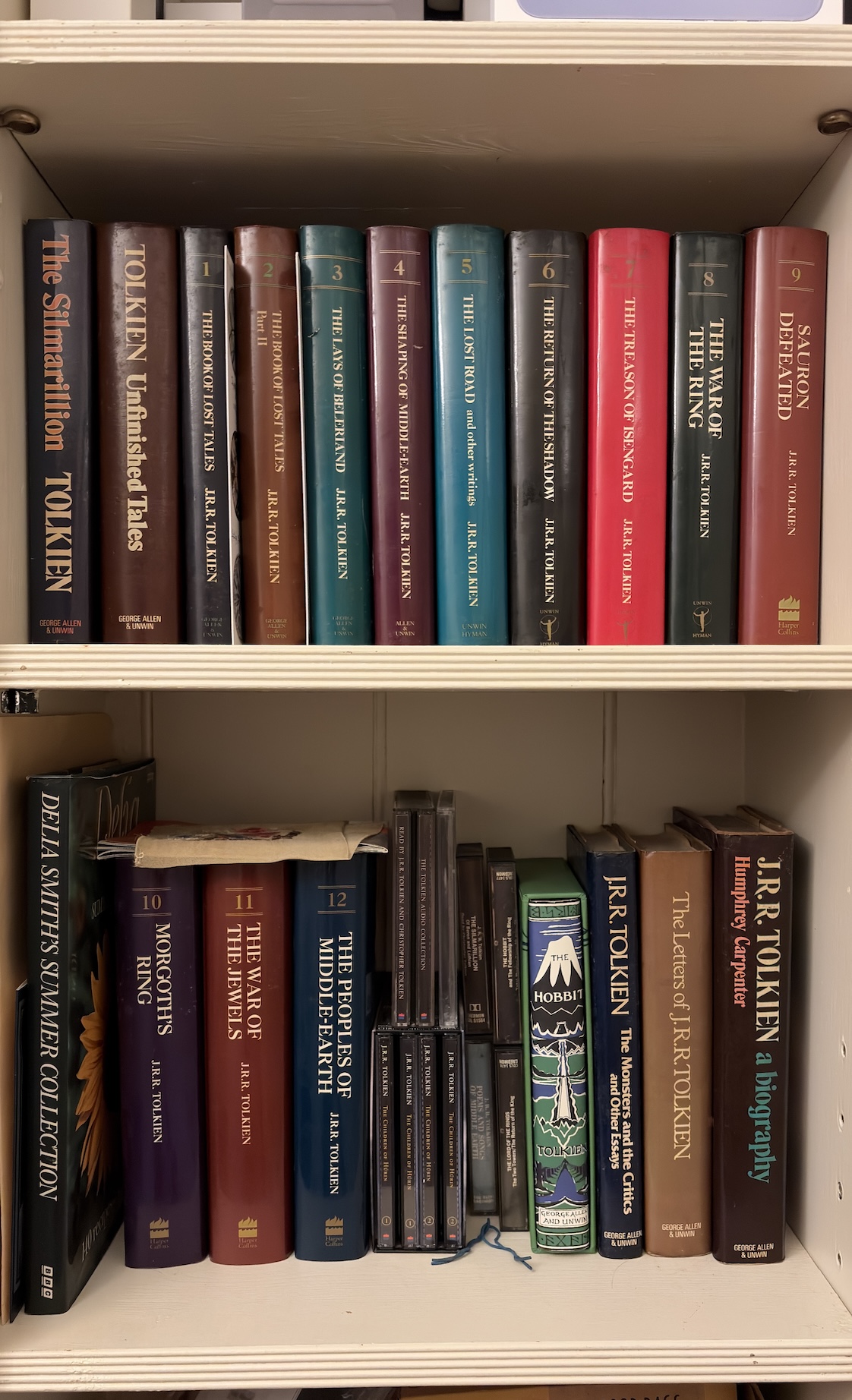
My collection began inadvertently and in ignorance as I bought and read each of the immediate posthumous publications, starting with The Silmarillion, as a boy, and going through annually each volume of the History of Middle-earth: indeed I can picture the chair, the settee, the flat, the city where I initially read each book.
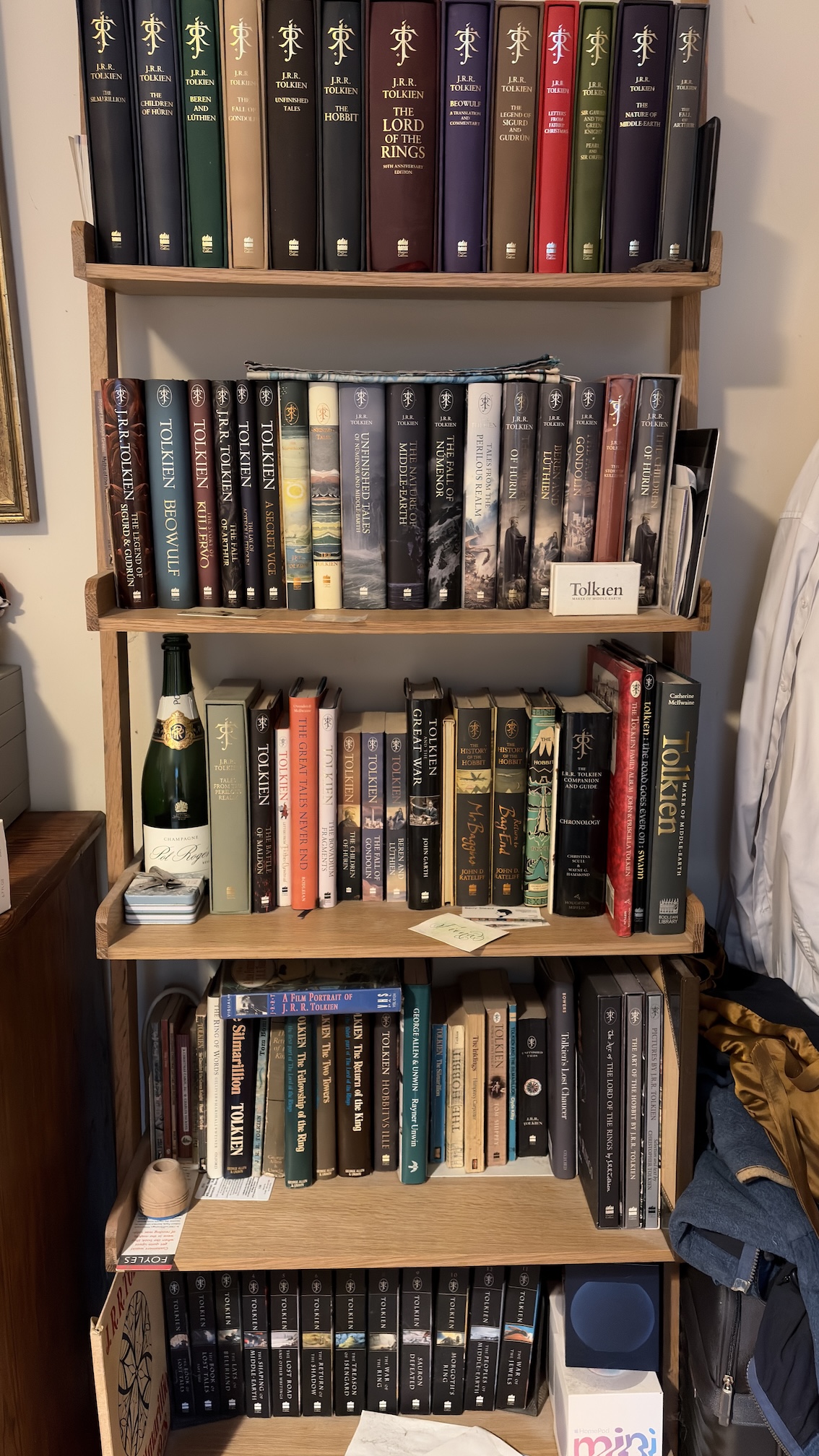
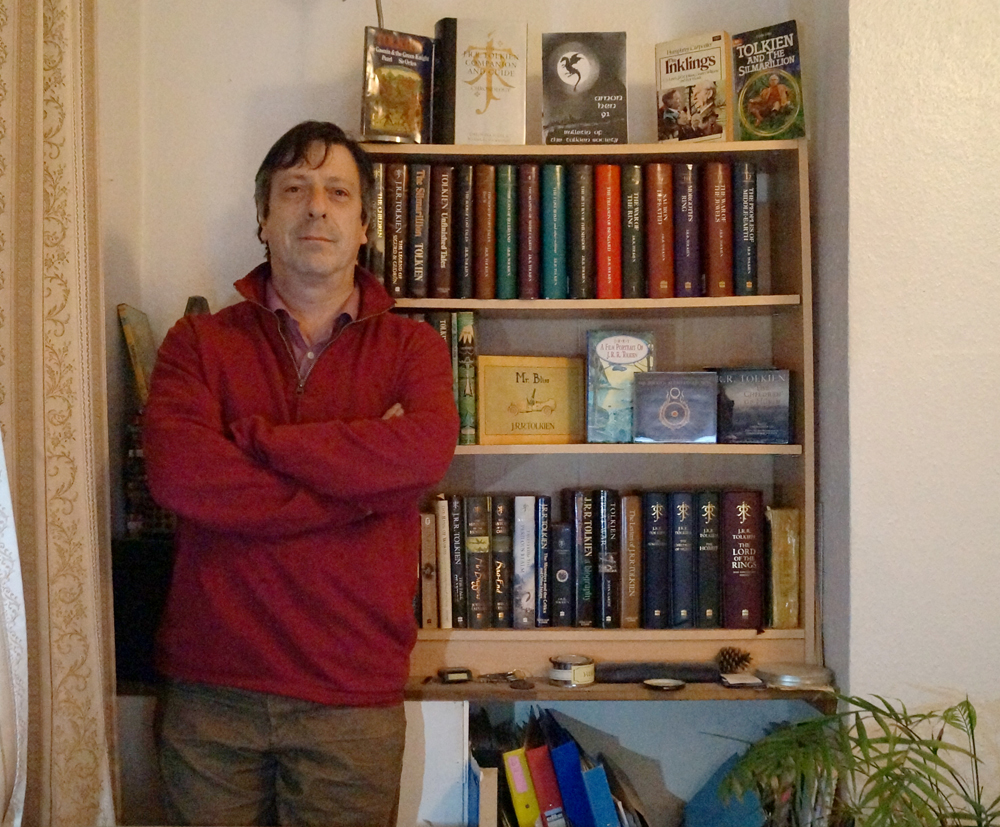
For me the associated memories are more important than the monetary value of these books. It was not until the publication of The Children of Húrin, that I realised I had a collection. For between the Peoples of Middle-earth and the Children of Húrin the internet had happened, making me aware others had collected and were actively collecting. These first editions are now behind glass away from the depredations of dust, light and cat. And into this array of first editions fell the deluxe copies of The Lord of the Rings, The Silmarillion and eventually The Hobbit, which I had bought as occasional treats. I have added volumes too on the grounds their covers are attractive, to wit The Silmarillion and Unfinished Tales of around 2006, but sadly the paper inside is a cheap, yellowish off-white. It was at about this point I contacted Pieter Collier with my story after appreciating others already on his website, now so long ago.
Of course the deluge of posthumous publications after The Children of Húrin almost forced me to collect actively, for after buying the first hardback of The Legend of Sigurd and Gudrun, out came the deluxe, and so on all the way to The Bovadium Fragments via side publications like The History of the Hobbit and the Art Of— books. After The Fall of Númenor, I stopped. I have not bought any of the newest special editions, as I feel this would devalue the ones I have (in emotional value) and indeed devalue themselves. It is enough that I can read a deluxe edition and use the first edition for casual browsing. I also think HarperCollins are announcing new Special Editions at the drop of a hat.
Then there are the electronic versions. These I have bought for convenience reading when travelling; and although they are not hard paper, items of the real world, I like the idea that the front covers keep automatically updating.
What’s the motivation?
Certainly not to have a “collection” per se (though I suppose it is) but it’s just because I like them, and they look nice on my shelves; and a sense of completeness. My wife used to like peeking out of the bedroom door on waking to see them on the bookshelf in the hall. So I suppose they can be appreciated from an artistic or sculptural perspective.
Certainly, it is not a monetarily driven impulse for books can change value like colours and styles go out of fashion. Look at G. A. Henty, once eminently collectable but now you can barely give them away for kindling.
I have stopped collecting now: I don’t even have the hardback edition, 3 vols, of his poems: instead I have the (much much cheaper) e-book. So I stop with no regrets.
Ah, but yes there are two. I saw the advertisement material and announcements for the fifth anniversary red leather special edition of The Silmarillion in 1982. I had the money - I could have afforded it, I could have bought it. But did not. I keep popping into second hand bookshops and charity shops in the hope that one day...
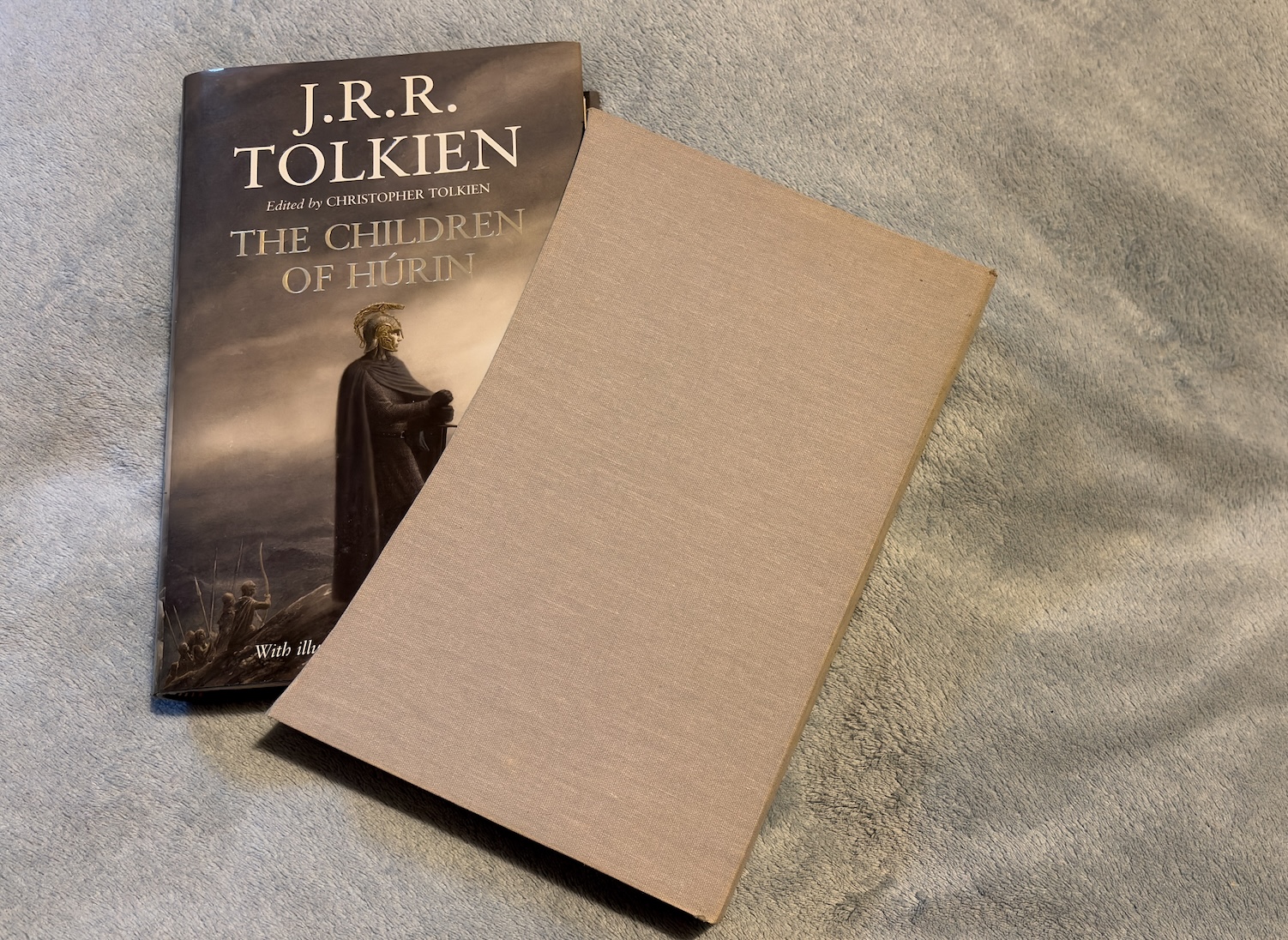
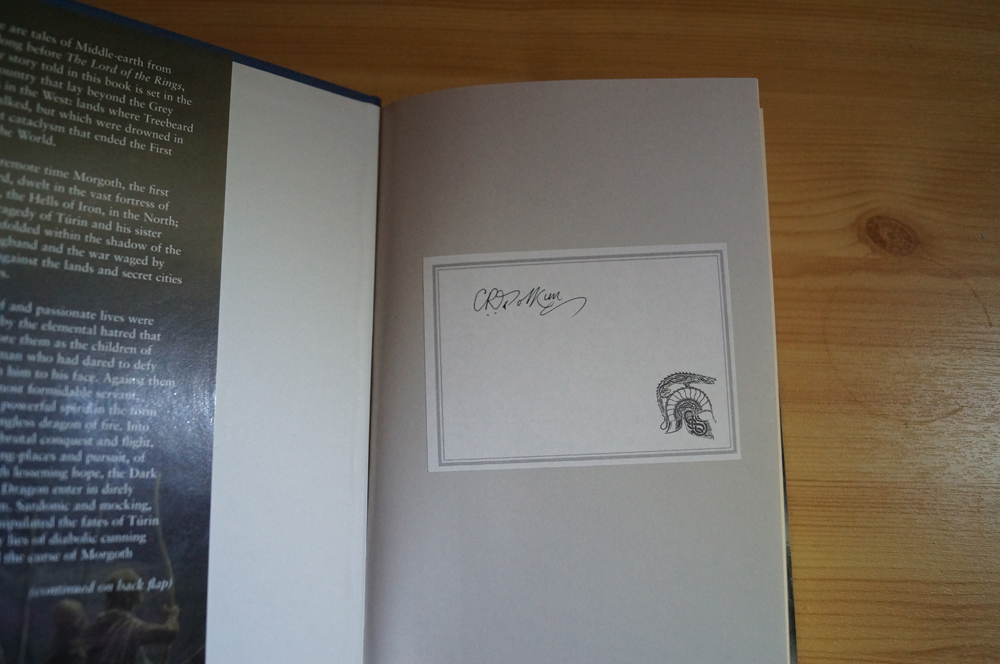
And the other was not buying the super deluxe version of the Children of Húrin. Again I could have afforded it etc etc. I drool over pictures of both of these volumes. But I have been blessed with the lucky find of an edition of The Children of Húrin signed by Christopher Tolkien several months after its publication in the London bookshop where a great brouhaha was made of its appearance. It must have got lost and buried under all the other books. It is a prized possession for which my wife made a special covered case to protect it, thereby making me treasure it even more.
Original archived collector profile of Barry Stead (December 2013)
Collector Profile: Barry Stead
I am a writer and teacher of graphics and multimedia in London whose main interests are classical history, astronomy, evolution, and English Literature and Language. It is great to see that the films of The Lord of the Rings and The Hobbit are inspiring students to enquire into the realms of mythology and literature.
How did you get started in collecting?
I didn’t actually realise I was a collector until a few years ago, when I bought a deluxe edition of The Silmarillion as a treat. My collection crept up on me gradually, and even now I am not a huge collector. It began with buying the first edition of The Silmarillion as a boy, then as each posthumous publication came out I bought it, and lo! some thirty years later I have a full collection of all posthumous first editions.
What do you collect?
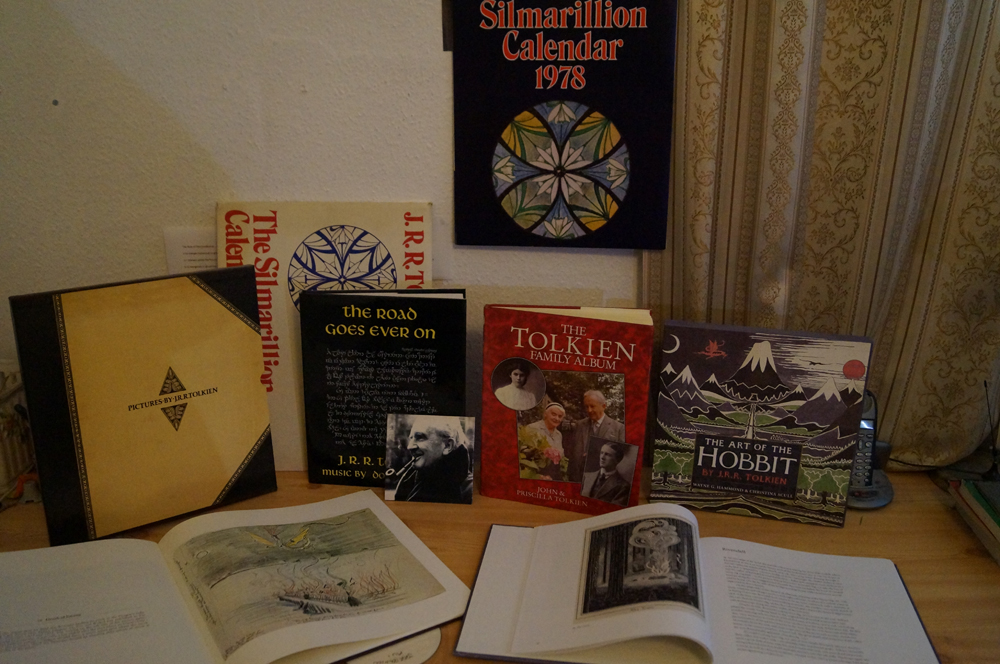
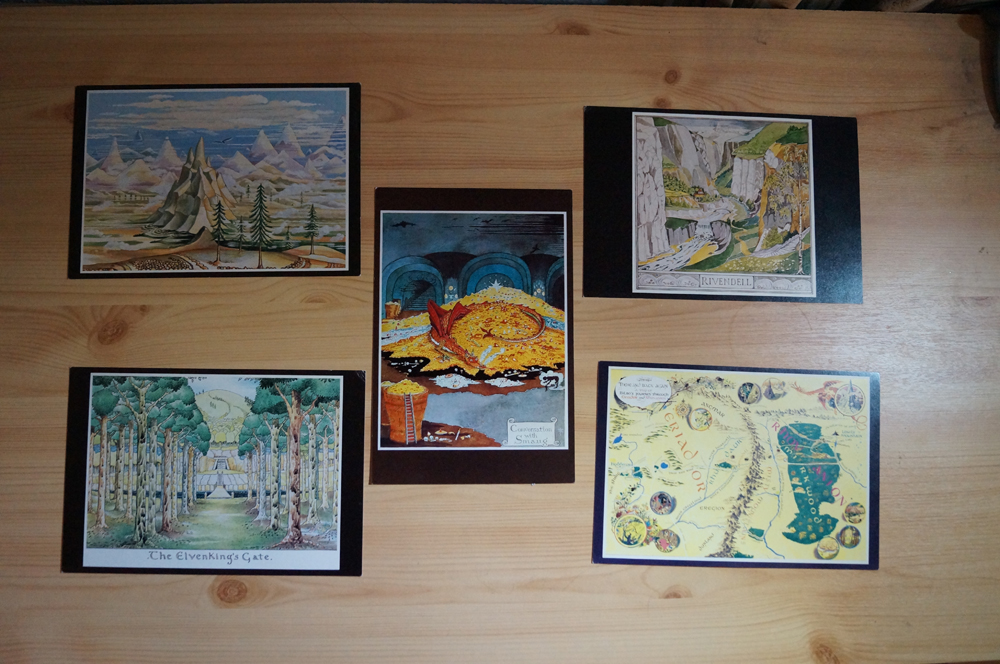
Posthumous first editions and deluxe editions related to Middle-earth and associated reference books on Tolkien. I also have an original The Silmarillion calendar and a selection of Tolkien art-cards that were published by Allen & Unwin in the seventies. I have the Pauline Baynes’s poster map but alas I have lost my original The Silmarillion poster map.
How big is your collection?
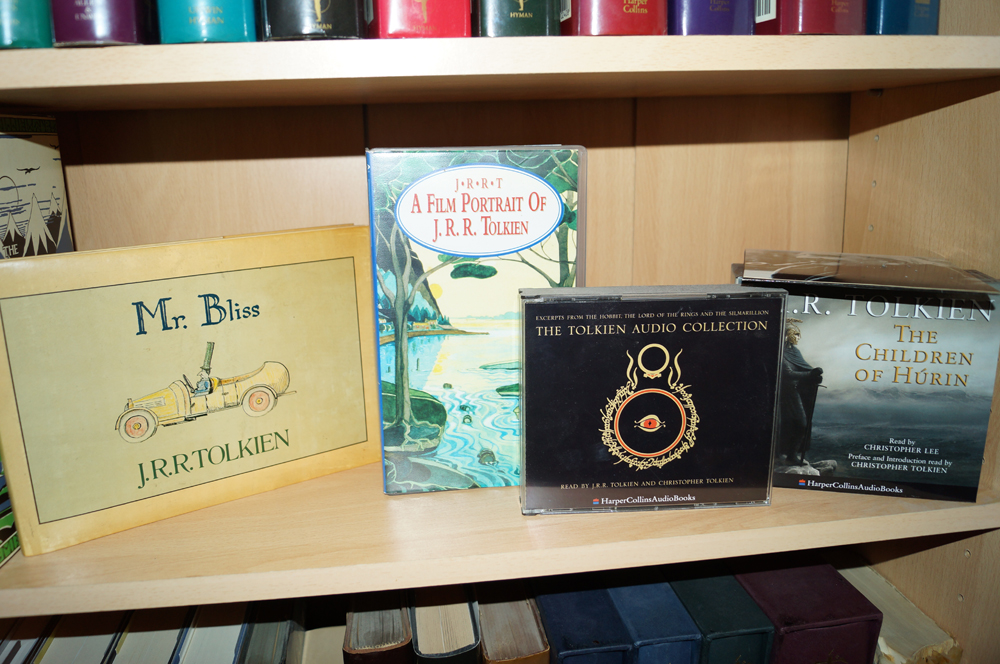
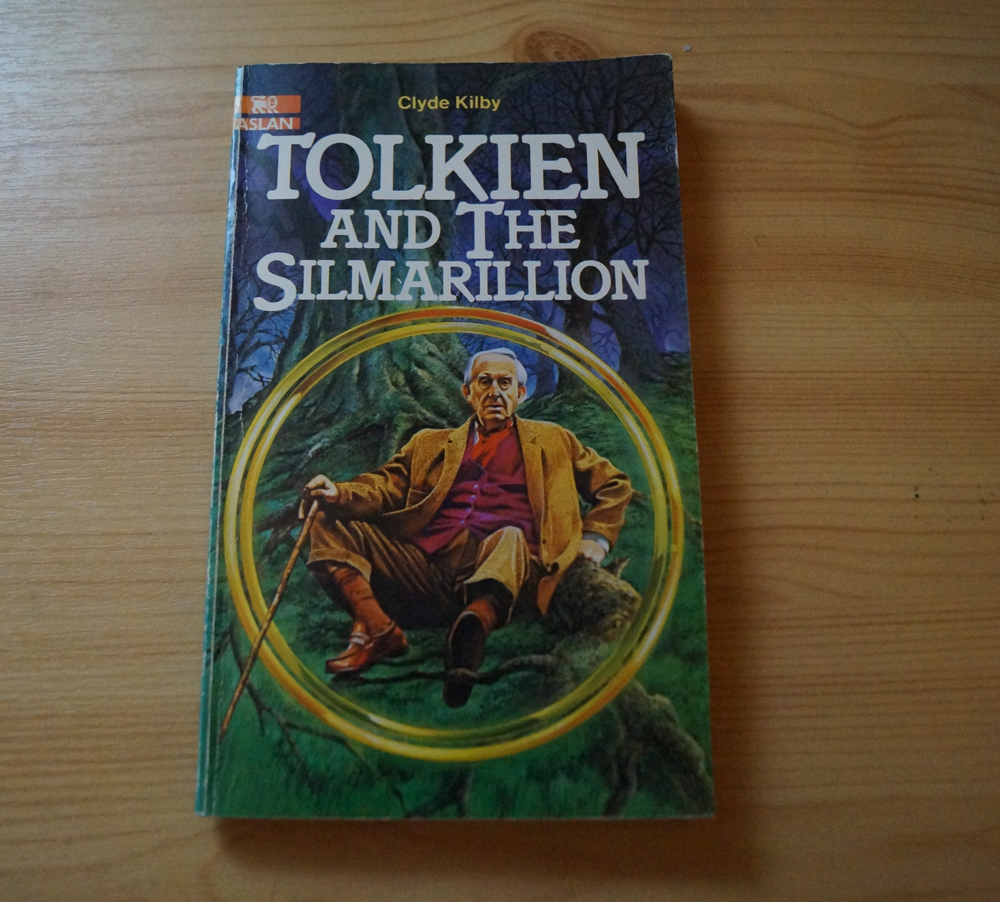
Probably round about fifty books - all posthumous first editions and a variety of paperbacks, and reference/biographical books. I also have an audio collection on CD of both JRRT and CRT reading from The Lord of the Rings and The Silmarillion, plus Donald Swann’s settings of the poems from The Lord of the Rings. One book, Tolkien and the Silmarillion by Clyde Kilby, reminds me of the feverish time between the announcement of The Silmarillion and its publication when you would trawl anything for clues to the book’s contents.
What has been your greatest find so far?
A first edition of The Children of Húrin autographed by Christopher Tolkien. I was hoping to go down to the central London official release but I was dragged into college to some unspeakably tedious meeting, thus missing the event. Then fast forward to the following Christmas when I was in Waterstones in central London when I saw a COH edition with a sticker on it, advertising it as special to Waterstones. I seized it and saw that it had the plate inside signed by Christopher Tolkien. I snapped it up. It is also autographed by Alan Lee, and an actor who was in the films, Bernard Hill.
Tell us about your website?
I have two: one is related to my work and is little more than an online CV, though it does show some of my work in Photoshop and fantasy landscapes in Bryce. I also have a website dedicated to a novel I have published via the Kindle store. It is a science fiction novel, called Lights Over Sheel, about recovered UFOs, secret government agencies and a scientist on the run. It sounds a far cry from Tolkien yet the way he describes landscape—in fact almost making it a performer in the narrative—has had some influence on me. Part of it is set in North West Scotland – very Misty Mountainish.
What does collecting mean to you?
Collecting the books per se has no meaning, I am not an instinctive acquirer, though I am proud of the result, and the collection is like a rhythm in my life. I pick up one of the volumes of The History of Middle-earth, and I am transported back in time to the place I first read it, various flats and locations (and chairs!) in Newcastle, Manchester and London. But having said that I am now waiting for the Bovadium Fragments….if it ever appears!